
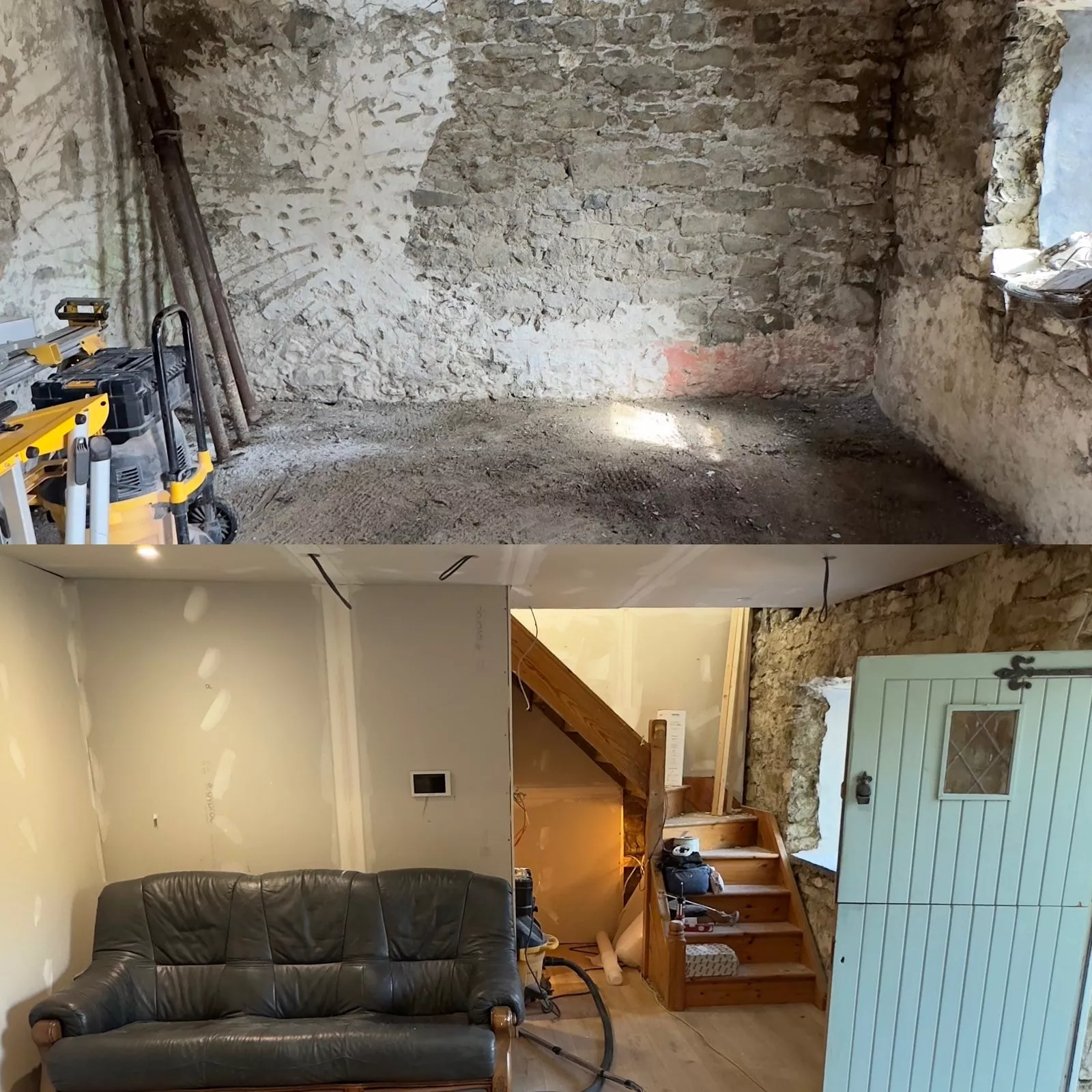
The vacant homes tax in Cork is the same charge as everywhere in the State: seven times the basic Local Property Tax on a house that is fit to live in but was occupied for fewer than 30 days between 1 November and 31 October, declared and paid by the owner. A house that passed to you on a death, a house honestly on the market, and a house under structural works for six months or more of the year each have an exemption, and a shell nobody could sleep in is outside the tax altogether until it is made a home again.
Cork has more than its share of the houses this tax was written for: the farmhouse nobody moved back to, the terrace locked up since a parent went into care, the cottage that sat in probate for years. This guide walks through the vacant homes tax the way a Cork owner or buyer meets it, from the first question (is it a residential property at all) to the return, then the Derelict Property Tax that the Finance (No. 2) Bill 2026 brings to Cork's towns from 2027. Every figure was checked on 28 November 2026 against Revenue, gov.ie and Citizens Information; nothing here replaces advice on your own return.
Step one: is it a residential property for Local Property Tax?
The vacant homes tax applies only to a residential property for Local Property Tax purposes, which means that on 1 November it was either occupied as a dwelling, even if it is in bad condition, or not occupied but suitable for use as a dwelling. A damp bungalow with a sound roof, a kitchen and a bathroom is suitable for use as a dwelling, and it is in. A stone cottage with the roof open and the floor gone is not, and it stays outside the tax until it is habitable again, though Revenue may write to ask the owner to confirm the status.
Step two: the 30 day test for the vacant homes tax
The tax applies when the property was in use as a dwelling for fewer than 30 days in the chargeable period, 1 November to 31 October. In use means normal living and overnight occupation; storing furniture or tools in the house does not count, and Revenue's own example of a house used every second weekend plus the summer and Christmas holidays owes nothing. The current period is the fifth, 1 November 2026 to 31 October 2027.
Step three: what a Cork house pays
The charge is seven times the basic Local Property Tax for the valuation band, and has been since the period that began on 1 November 2024. It uses the basic rate before the Local Adjustment Factor, which matters in Cork because Cork City Council and Cork County Council have both set their 2027 LPT at 15% above the basic rate: that 15% raises your LPT but is not multiplied into the vacant homes tax. Revenue's worked example is a house valued at €325,000, in the €315,001 to €420,000 band, where the basic LPT is €333 and the vacant homes tax is €2,331, on top of the LPT itself. In the lowest band, up to €240,000, which covers a great many rural Cork houses, it is €665; in the €240,001 to €315,000 band, €1,645.
Step four: the cases where it does not apply, and the exemptions
The tax does not apply at all to a period in which the property was sold and its owners changed (a gift, an inheritance or a compulsory purchase counts), in which it was let for at least 30 days to an unconnected tenant under a tenancy registered with the Residential Tenancies Board, or in which it was exempt from Local Property Tax for the year the period ends in. Then there are six exemptions, each claimed in the return for each period:
- The owner died, the common Cork case of a cottage left as it was while the family decides.
- A Grant of Representation was issued, so the estate is being administered.
- The property was actively marketed for sale or rent: a genuine and sustained effort to sell or let it, at a price or rent that did not exceed the market and with no conditions designed to impede a sale or a tenancy.
- Certain court orders kept the property empty.
- Structural works, substantial repairs or substantial refurbishment ran for six months or more in the period without undue delay, and either a registered architect, quantity surveyor, building surveyor or chartered engineer certified that occupying the house would have threatened the occupants' health and safety (with any planning permission obtained first), or the works cost more than 20% of the house's market value before they began.
- The owner's illness kept them out of the house.
The works exemption is the one that matters once the house is yours. Under the Vacant Property Refurbishment Grant, up to €50,000 inclusive of VAT for a house empty two years and built before 2008, and up to €70,000 with the derelict top up, the works must be finished within 18 months of approval, so a grant project spans at least one full chargeable period. Plan the start so that six months of real building work falls inside each period you claim for, and have the engineer who writes the top up report write the health and safety certificate for Revenue as well. Keep the invoices for the 20% test; the free Ivy Cottage renovation tracker holds every receipt against the grant's own categories and a dated timeline.
Step five: the return, the payment and the penalties
The tax is self assessed. You file through myAccount, ROS or the LPT online service by 7 November after the period ends, confirming whether the house was vacant, occupied or changed hands, claiming any exemption and choosing to pay by direct debit over the following year, a single annual debit instruction or a card payment. Joint owners file one return through the designated chargeable person. Revenue may ask for evidence that the house was occupied, sold or let, or for the documents behind an exemption, through the portal or by post. File late or wrong and the surcharge is 5% of the tax, 10% if a correct return is more than two months late, and unpaid tax gathers interest at 0.0219% a day, 8% a year, from 1 January.
The Derelict Property Tax reaches Cork's towns from 2027
For a building past the point of being a dwelling, the charge until now has been the Derelict Sites Levy, 7% of market value under the Derelict Sites Act 1990 on the properties a council has placed on its Derelict Sites Register; RTÉ reported in April 2026 that only about 2,100 properties were on the registers against an estimate of up to 19,000 derelict properties. Budget 2027, on 6 October 2026, confirmed its replacement, and the Finance (No. 2) Bill 2026, published on 19 October 2026, legislates for a Derelict Property Tax administered by the Revenue Commissioners and based on registers compiled by local authorities. From January 2027 the councils identify derelict properties in towns with a population of 4,000 and above and transmit the details to Revenue, Citizens Information gives 1 September 2027 for the preliminary national register, and owners pay 7% of the value of the property by June 2028 unless they take action to remediate it.
In Cork that first round takes in the city and the county's larger towns, and the advisers' summaries of the Bill say the threshold falls to 2,000 people from the second year. The same summaries describe the signs a council officer looks for (boarded or blocked openings, a failed roof or elevation, a building no longer weatherproof), an appeal against the preliminary register, deferrals while remediation is under way or after an unconnected buyer takes over, a liability date of 1 March 2028 and a first payment on 23 June 2028. All of that is Bill text that can change before it becomes law. What is already clear is the choice it puts to the owner of a derelict building in a Cork town: fix it, sell it, or pay Revenue 7% of its value a year.
Ivy Cottage: from outside the tax to a home that minds itself
Ivy Cottage is the derelict stone cottage in Roscommon that Kieran McGuire, our founder, bought as a personal project and brought back as a home, posted on Instagram as @myhomestead.ie. The photos are his own.


When Kieran bought it, the cottage was the building in step one: bare stone walls, a floor that had given way, daylight through the roof timbers. Nobody could have slept there, so no vacant homes tax could attach to it until it was a dwelling again. He did not apply for the refurbishment grant; he paid for the work from his savings, and the spreadsheet he kept, one line per receipt with a weekly timeline, became the tracker above. The work ran in the order the grant inspectors like to see: joists and roof timbers first, then stud walls, insulation and first fix cabling while everything was open, then floors, paint and the finished rooms.


The cottage now runs on Crestron: lighting, heating, audio, CCTV and the alarm from one system, and the water pump and the septic tank with them; our rural property automation page tells that part. For a Cork family with a second house in the county, a house whose heating, lights and cameras you can see from your phone is a house that is used and looked after, and provably so. The cable costs least at first fix, as our guide to what to wire at first fix sets out, and smart home cost in Ireland gives the figures. If the house is outside the town, the private well grant and septic tank grant guides cover the services, and the purchase and renovation loan guide covers paying for it all until the grant lands.
Questions we are often asked
Does the vacant homes tax apply to a house I inherited in Cork?
Not for the period in which the property passed to you, because an inheritance is a change of owner. Around it, Revenue has exemptions where the owner died and where a Grant of Representation was issued, each claimed in the return. Once the house is yours and habitable, the 30 day test applies.
How much is the vacant homes tax on a €325,000 house in Cork?
€2,331 for the period, which is seven times the €333 basic Local Property Tax for the €315,001 to €420,000 band, on top of the LPT. The 15% that Cork City and Cork County Council add to the LPT for 2027 is not applied to the vacant homes tax.
I am renovating a vacant house under the grant. Is it exempt?
Usually, under the structural works exemption: six months or more of structural works or substantial refurbishment in the period, plus either a registered professional's or chartered engineer's certificate that the house was unsafe to live in, or works costing more than 20% of its value before they started. Claim it in the return for each period.
Is a derelict cottage with no roof liable for the vacant homes tax?
No. A building that is not suitable for use as a dwelling is not residential property for Local Property Tax, so the vacant homes tax does not apply. It is the building the Derelict Property Tax is aimed at from 2028, if it stands in a town on the register.
When is the vacant homes tax return due and what if I miss it?
By 7 November after the period ends; the current period, to 31 October 2027, is returned by 7 November 2027 and paid by 1 January 2028. A late or incorrect return carries a 5% surcharge, 10% after two months, and late payment carries interest at 8% a year.
Which Cork towns does the Derelict Property Tax cover first?
The Bill, as published on 19 October 2026, starts with towns of 4,000 people and above, so Cork city and the larger county towns are in the first registers from 2027; the advisers' summaries say the line falls to 2,000 from the second year.
Sources, read on 28 November 2026: Revenue's pages on residential property for LPT, how VHT applies, the rate, when it does not apply, the exemptions including properties actively marketed for sale or rent and properties that underwent structural works, the VHT return and what happens if you do not comply, and LPT valuation bands and rates (27 October 2026); the Department of Finance press release that published the Finance (No. 2) Bill 2026 on 19 October 2026; Citizens Information's Budget 2027 page (edited 17 November 2026); RTÉ News of 2 April 2026; KPMG's Finance Bill note and the Irish Times of 6 October 2026 for the working dates; and gov.ie's Vacant Property Refurbishment Grant page from the Department of Housing, updated 22 October 2026.
If there is an empty house in Cork in your family or in your sights, and you want it wired, heated and watched over properly once the works begin, we would be glad to walk it with you.
Book a consultation or call our Cork office on 021 202 8107.
- Log in to post comments