In 2026 the septic tank grant is 85% of the approved cost of works to repair, upgrade or replace a domestic waste water treatment system, capped at €12,000, and it is paid by the county or city council. The catch is the way in: the council has to have inspected the tank and failed it, or the house has to sit in an Area for Action or a High Status Objective catchment and you have to hold a letter saying so before you apply.
Most of the vacant cottages Cork buyers show us are on their own tank, and most of the tanks are older than the buyers. Before you go sale agreed it is worth knowing where the tank is, when it was last emptied, and whether anyone from the council has ever looked at it. This guide is written around those questions: what to find out before you buy, the three routes to the septic tank grant, what an inspector looks for, the paperwork, and how the tank at our founder's own cottage in Roscommon came to be run from the same Crestron system as the heating. We checked every figure on 31 October 2026 against the Department of Housing's domestic waste water page (last updated 15 October 2026), the three 2026 terms and conditions documents behind it, and the EPA's latest inspection figures. Cork County Council and Cork City Council administer the grants in their own areas; the rules and the money are set nationally.
Four things to find out about the tank before you buy
- Is it registered? Every domestic treatment system has had to be registered since 2012. The register is at protectourwater.ie, the fee is €50, and the fine for not registering is up to €5,000 on conviction. An unregistered tank is the first thing an inspector notices.
- Has it been inspected? Ask the seller for any Advisory Notice from the council. A notice is bad news for the drains and good news for the grant, because a failed inspection under the National Inspection Plan is the most direct route to the money. The EPA counted 442 notices in 2025 that had been outstanding for more than two years.
- Is the house in an Area for Action or a High Status Objective catchment? The Department publishes an Eircode map for the High Status Objective areas; put the cottage's Eircode in before you make an offer. The River Basin Management Service and the council hold the lists for Areas for Action.
- When was it last desludged? The councils quote every one to five years. The grant application form asks the question, and so will the inspector.
The three routes to the septic tank grant
| Route | What you need in hand | Grant and minimum |
|---|---|---|
| National Inspection Plan | An Advisory Notice after the council inspected the system and failed it | 85% up to €12,000; no minimum spend |
| Areas for Action | A letter of potential eligibility from the River Basin Management Service or the council | 85% up to €12,000; at least €750 of works |
| High Status Objective catchment | A letter from the council confirming the house is in the catchment and the system is a risk | 85% up to €12,000; at least €750 of works |
Three points hold for all of them. The approved cost is the lower of your bill and the council's view of a reasonable price, so €12,000 is a ceiling, not an entitlement. The works must follow the EPA's 2021 Code of Practice, drawn up by a competent person, and only the approved proposal is paid for. And if a public sewer connection would cost less than fixing the tank, the council can pay for that instead.
What the inspector looks for, and what happens next
You cannot book an inspection; the council chooses systems under the EPA's National Inspection Plan and writes to the householder at least ten working days ahead. Nobody needs to come inside. The inspector checks that the system is registered, is not leaking or ponding, is not piped to a stream or a drain, is keeping rainwater out, is maintained and desludged, and is not a risk to health or to water. If it fails, an Advisory Notice arrives within 21 days with the reasons, the works and a deadline; a second look costs €20 if you disagree.
The figures say a notice is more likely than not. The EPA reported in May 2026 that 1,466 systems were inspected in 2025 and 863 failed, almost six in ten, because they were not built or maintained properly; the same report counts 460 grants in 2025, worth nearly €4.77 million. Since the plan began in 2013, 7,212 systems have failed and 84% of them had been fixed by the end of 2025.
The rules that decide who qualifies
- The house is your primary residence, not a holiday home; a long term private rental may qualify. A cottage you have not moved into yet is a timing question, so ring the council's rural water section before you apply.
- The house is not connected to a public sewer, is not under construction, and was not built within the last seven years.
- No septic tank grant has been paid on the system in the previous seven years.
- Every contractor has tax clearance (a Tax Clearance Access Number and tax reference, or a current eTax Clearance printout from ROS) or the council must refuse. If public grants to you pass €10,000 in the year, you need a certificate yourself.
- No work starts before the council says so: before written approval under the Areas for Action and High Status Objective schemes, and before the council's visit under the National Inspection Plan. Jump the gun and the application is not considered.
- Maintenance, servicing and desludging are never grant aided, on their own or as part of a bigger job.
Forms and deadlines
Each route has its own forms: DWWTS AfA (a) and (b) for an Area for Action, DWWTS HSOCA (a) and (b) for a High Status Objective catchment, and DWWTS NIP (a) as the claim after a failed inspection. The (a) form carries the proposal of works and the reference of your letter; the claim goes in within six months of finishing with itemised receipts and the competent person's certificate. The council may inspect before it pays 85% of what you actually spent, subject to the year's funding. A refusal can be appealed in writing within three weeks; a different officer decides within four weeks.
Where the septic tank grant sits beside the other grants
A Cork buyer taking on an empty cottage will usually be running three applications through the same council. The Vacant Property Refurbishment Grant is the big one, up to €50,000 for a house vacant for at least two years and built before 2008 on the figures gov.ie confirmed on 22 October 2026, with the derelict top up taking it to €70,000; our derelict property grant guide explains how the top up is proved. The private well grant covers the water coming in, and the septic tank grant the water going out. The rule across all three is that an item is paid for once: the tank, its percolation area and the pipe to it belong to the septic tank grant, and the plumbing, heating and electrics inside the walls to the refurbishment grant's Services category.
Keeping the receipts straight is the whole job at claim time. The free renovation tracker Kieran built for his own cottage follows the categories on the refurbishment form, so give the tank its own lines and note which grant each receipt is going to.
Ivy Cottage: the field, the tank and the system that watches both
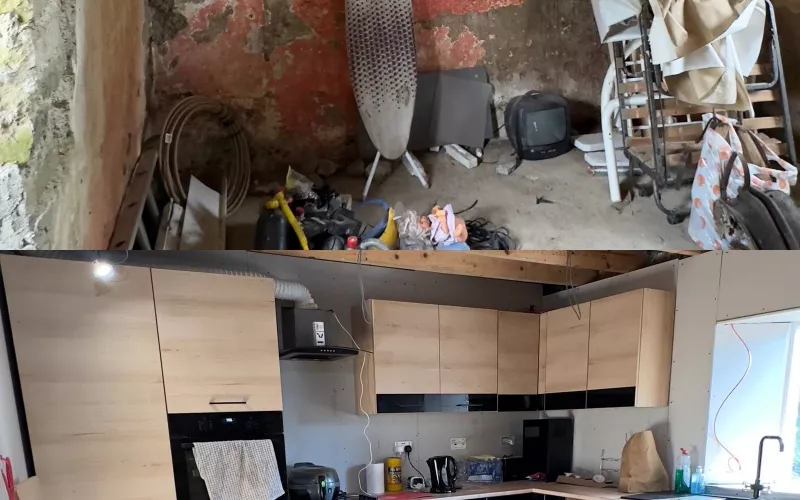
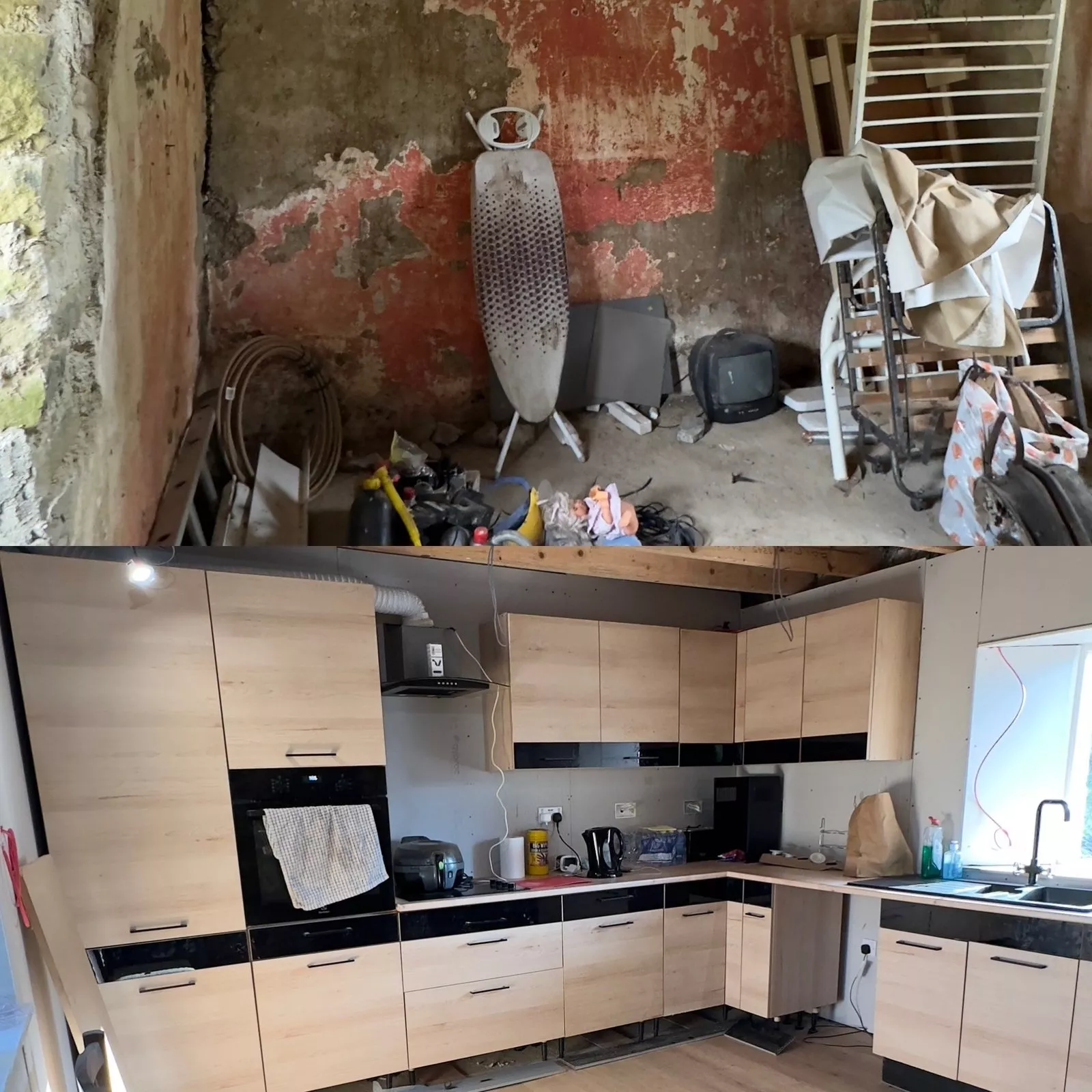
Ivy Cottage is the derelict stone cottage in Roscommon that Kieran McGuire, our founder, bought as a personal project and brought back as a home. The whole job, start to finish, is on his Instagram account @myhomestead.ie. It is a rural house on its own well and its own septic tank, with farmland around it, and these are his photographs.


Everything in the house runs on Crestron: lighting, heating, audio, CCTV and the alarm, and because the walls were open at first fix the two services most houses ignore, the water pump and the septic tank, were put on the same system. The pump turned out to be supplying three separate farms as well as the house, which is how it earned remote control, shut off valves, metering, a camera and leak detection; the story is on our rural property automation page. The lesson for a buyer is simple: a treatment system is plant, and plant you can see from your phone is plant you fix before the inspector does.


As with every one of these guides, one honest line: no grant was claimed on Ivy Cottage. Kieran funded the work himself, out of savings, and the spreadsheet he kept the receipts in grew into the free tracker.
Planning the tank at first fix
Whether the council pays 85% of a new treatment unit or you pay all of it, run the cables while the trenches are open. A modern packaged unit has a blower or a pump and an alarm; give it a power feed on its own circuit, a data cable or an alarm output back to the house, and a leak sensor at the pump chamber, and the fault reaches a phone in Cork instead of a light on a box behind a hedge. Our rural property automation page sets out how pump control, tank level monitoring and power monitoring come onto one screen, our guide to smart home wiring in a Cork renovation covers the rest of the house, and our Crestron installer Cork page shows what one system looks like in a small house. For numbers, see smart home cost in Ireland; every job begins with a survey and a design, as our process page explains.
Questions we are often asked
How much is the septic tank grant in Cork?
The same as everywhere in the country: 85% of the approved cost up to €12,000, through the National Inspection Plan, Areas for Action or High Status Objective catchment schemes. The last two need at least €750 of works.
My tank is old and I know it is failing. Can I apply?
Not on that alone. You need an Advisory Notice from a council inspection, or a letter of potential eligibility for an Area for Action or a High Status Objective catchment. Check the Eircode map and ring the council's rural water section; you cannot request an inspection yourself.
Will the council pay for a new tank or only a repair?
Repair, upgrade or replacement, whichever the competent person's proposal and the council agree is needed under the 2021 Code of Practice, or a sewer connection where that is cheaper. Maintenance and desludging are excluded.
How long do I have to claim?
Six months from finishing the works, with itemised receipts and the competent person's certificate. Start before approval and there is nothing to claim.
The seller says the tank was never inspected. Does that matter?
It closes the most direct route, because the National Inspection Plan grant needs an Advisory Notice and you cannot ask for an inspection. Check the Eircode map and ask the council whether the house is in an Area for Action or a High Status Objective catchment, which are the other two routes.
Can I combine the septic tank grant with the Vacant Property Refurbishment Grant?
Yes, provided nothing is claimed twice: the tank and its percolation area on the septic tank grant, the plumbing inside the house on the refurbishment grant, and two piles of receipts from the first week.
Sources: the Department of Housing's septic tanks page and the 2026 terms and conditions behind it for the National Inspection Plan, Areas for Action and High Status Objective catchment grants; the localgov.ie septic tank grant page; the EPA's pages on inspections and repair and its report of May 2026 on the 2025 inspections; Cork County Council's domestic wastewater treatment systems grants page; and gov.ie's page on the Vacant Property Refurbishment Grant; every one of them was checked on 31 October 2026.
If you are weighing up a Cork cottage on its own tank, or you want the services of a rural house to report to you instead of surprising you, we would be glad to help.
Book a consultation or call our Cork office on 021 202 8107.
- Log in to post comments