The Local Authority Purchase and Renovation Loan is a council mortgage for a first time buyer who wants to buy and do up a house that qualifies for the Vacant Property Refurbishment Grant but cannot borrow enough from a bank. It is two loans in one: a fixed rate mortgage at 4.00% for the purchase and the works, and a bridging loan equal to your grant at 3.5% interest only, which you clear the day the grant is paid, and in Dublin, Kildare and Wicklow the finished house may be worth up to €415,000.
If you are renting in Dublin and the only houses within reach are the empty ones, this is the loan built for you. It is the piece most people miss when they read about the €50,000 grant: the grant is paid at the end, after the works, so somebody has to fund the purchase and eighteen months of building first. This guide covers who qualifies, how much a Dublin buyer can borrow, the deposit, the paperwork a council wants before it lends on a derelict house, and what Ivy Cottage, the Roscommon cottage our founder restored, taught us about costing the works. Every figure was read on 21 November 2026 on purchaseandrenovationloan.ie, the scheme's own site, and on gov.ie; the limits changed in April this year, so check the page before you plan around a number.
What the purchase and renovation loan is
The scheme's own words: a Government backed mortgage and loan for the purchase and renovation of derelict and non habitable homes that qualify for the Vacant Property Refurbishment Grant. It is an extension of the Local Authority Home Loan, run by the same councils under the same credit policy, with one difference that matters: the council lends against what the house will be worth when the works are finished, not what it is worth as a shell today.
The loan is split in two. The annuity loan is an ordinary repayment mortgage, fixed for its whole term at 4.00% for up to 25 years (APR 4.07%) or 4.05% for 25 to 30 years (APR 4.13%), with the rate set on the day you draw down. The bridging loan is a separate interest only loan equal to the grant you have been approved for, at a variable 3.5% (APR 3.56%) for at most two years; it must be repaid once the grant is paid out and can be cleared earlier at no charge. Both carry the council's group Mortgage Protection Insurance, compulsory and paid monthly on top. The point of the structure is that the council assesses whether you can afford the project net of the grant, so a buyer who would never get the full sum from a bank can still take on the house.
Who qualifies in Dublin
- First time buyer or Fresh Start applicant. Fresh Start covers someone who owned a home before but has left it after a separation or lost it through insolvency or bankruptcy, and has no interest in it now.
- Income inside the limits. Gross income of not more than €80,000 for a single applicant and €85,000 for joint applicants in the year before you apply. A married couple, or partners who will live in the house together, must apply together.
- Two years in continuous employment for a single or primary applicant, one year for a second earner, PAYE or self employed.
- Turned down by the banks. Evidence of insufficient offers from two regulated mortgage providers, dated within twelve months, or a refusal for project specific reasons. A lender's online calculator printout counts, and so does a broker's letter with the attempts attached.
- A house that qualifies for the grant. Vacant for at least two years, built before 2008, and your principal private residence, never a house you intend to let.
- Repayments within 35% of net disposable income, the right to reside in the State, and a project a professional will stand over.
Two cases the FAQ deals with directly: an inherited house qualifies, and a first home you already own with no mortgage on it can get a renovation only loan, with the council taking the first charge. What you cannot do is buy a house and leave it as it is: the conditions require the building to meet the Building Regulations, so a purchase with no works is not covered.
How much a Dublin buyer can borrow
Three things set the ceiling: your income, the value cap for the county, and the loan to value allowed for the kind of project. The cap is on the estimated value of the house after the works, and from 1 April 2026 it is €415,000 in Dublin, Kildare and Wicklow, with lower bands of €375,000, €345,000 and €310,000 for the rest of the country (Roscommon is in the lowest). The maximum loan in the Dublin band is €373,500, and the site says it may be lower depending on the project type.
| Project type | Deposit you need | Annuity loan, at most, against the end of works value |
|---|---|---|
| Vacant house, minor works | 10% of the purchase price plus 10% of the renovation cost | 90% |
| Vacant house, major works (more than a quarter of the building envelope refurbished) | 10% of the purchase price plus 10% of the renovation cost | 85% |
| Derelict house (qualifies for the €20,000 top up) | 20% of the purchase price plus 10% of the renovation cost | 80% |
On top of the annuity loan you borrow the bridging loan equal to your grant, as long as the two together stay under the county maximum. The deposit has rules of its own: at least 3% of it must be savings built up over twelve months or more and shown on statements, up to 7% can be a gift or another unborrowed source, and any shortfall between the loan and the project cost must be shown as money you already have. Help to Buy cannot be used towards this deposit, because it is for new builds only.
The paperwork a council wants before it lends on a shell
This is where the loan differs most from a bank mortgage. Alongside the usual proof of income, bank statements and salary certificate, the application asks for a Stage 1 Building Survey and Scope of Works and a Stage 1 Cost Plan, both prepared by a Registered Construction Professional, which the site defines as a quantity surveyor or building surveyor on the Building Control Act 2007 registers or a chartered engineer on the Engineers Ireland register, with proof of that person's indemnity insurance. You also need a valuation of the house as it stands and an estimate of its value when the works are complete, and, if the project passes Stage 1, a Stage 2 scope and cost plan.
You apply to the council where the house is, in person or by post, naming a loan amount, and the decision comes in writing as a Decision to Decline or an Approval in Principle that lasts six months. An Approval in Principle for the Local Authority Home Loan from the last six months carries your personal eligibility over, so only the project is assessed. You can apply before the grant is approved, but the council verifies the grant approval before any money is drawn down, and if the house turns out not to qualify for the grant the loan is withdrawn. Money is only lent for works done after approval, and a project that has already started is not normally considered.
How the loan and the grant fit together
The Vacant Property Refurbishment Grant pays up to €50,000, inclusive of VAT, after the council has inspected the finished works, and the derelict top up adds up to €20,000 where an independent report confirms the house is structurally unsound and dangerous, or it is on the Derelict Sites Register. You have 18 months from approval to finish. The loan is designed around that timing: the bridging loan carries the grant amount during the build, the grant lands at the end and clears it, and you are left with the annuity loan on a house now worth what the valuer said it would be. The FAQ is clear that the loan can also cover works the grant does not pay for, within the limits, so a kitchen beyond the grant's cap or the wiring for a proper smart home can go into the cost plan rather than onto a credit card. The other grants stack as they do for a cash buyer: the SEAI grants for insulation and a heat pump, and the private well grant and septic tank grant if the house is outside the city.
Ivy Cottage: the cost plan is the whole application
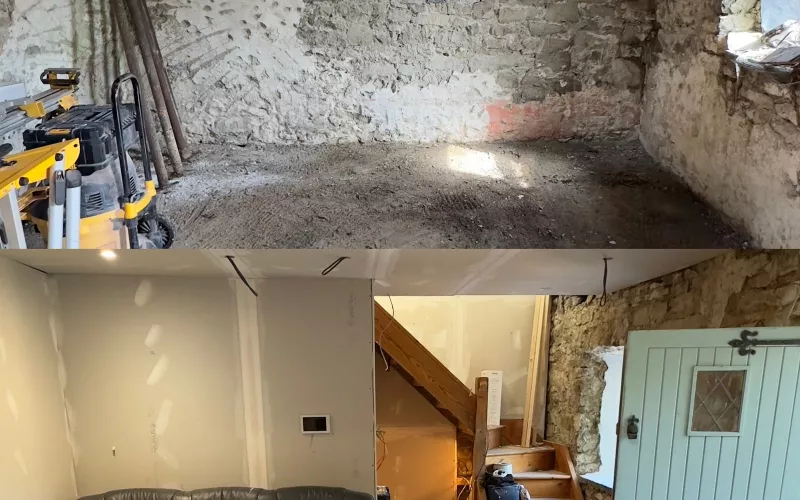
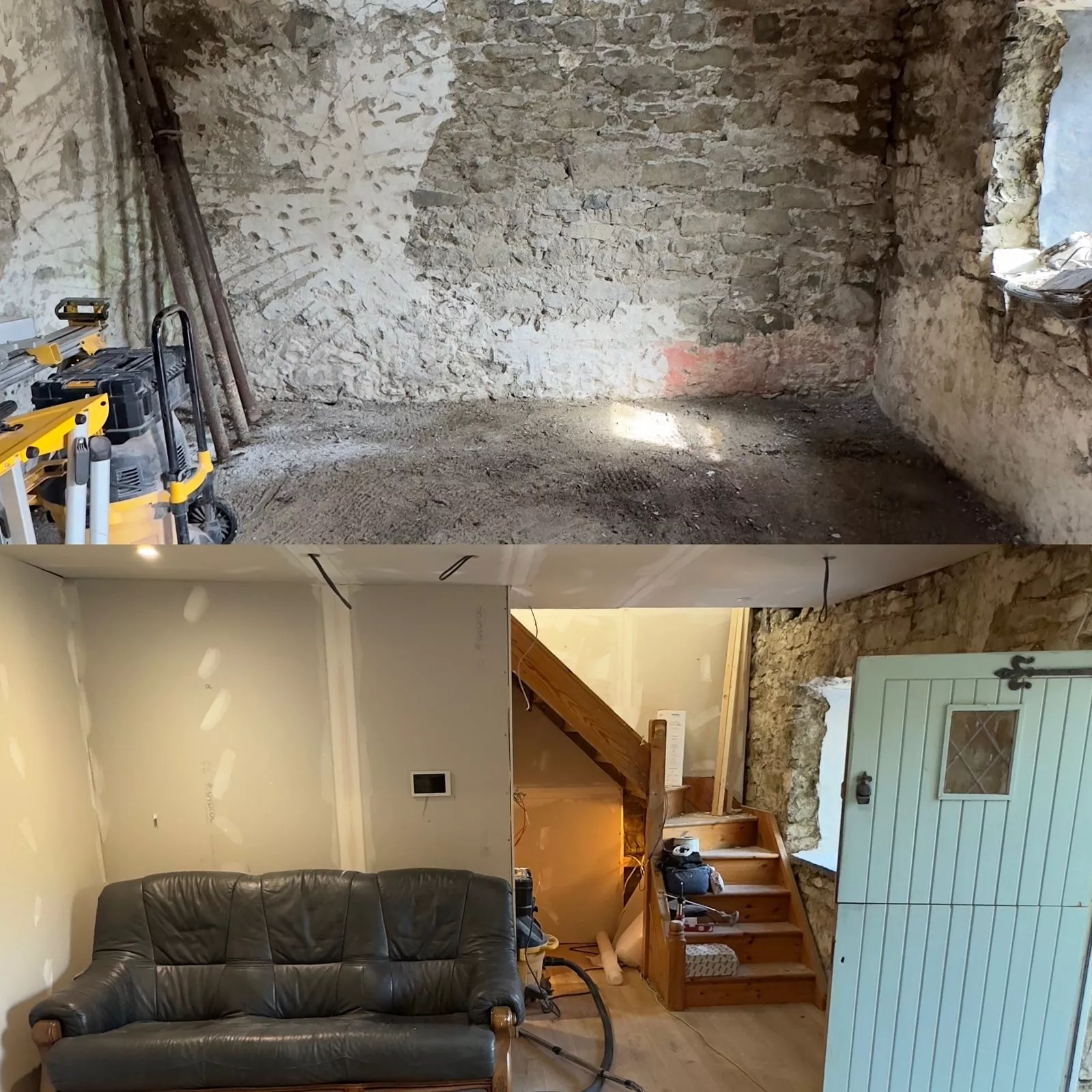
Ivy Cottage is the derelict stone cottage in Roscommon that Kieran McGuire, our founder, bought as a personal project and brought back as a home. He posts the renovation on Instagram as @myhomestead.ie, and every photo here is his own.
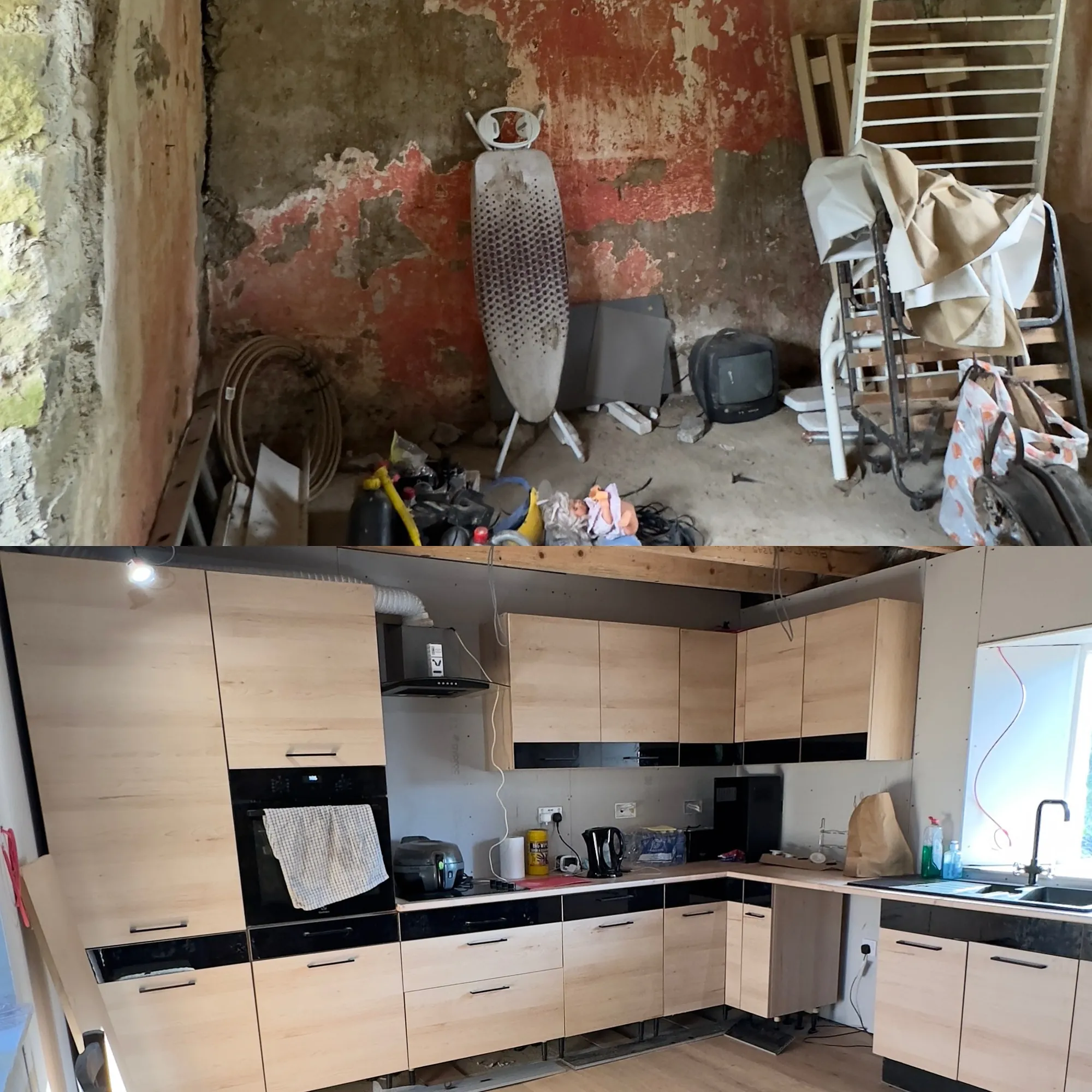
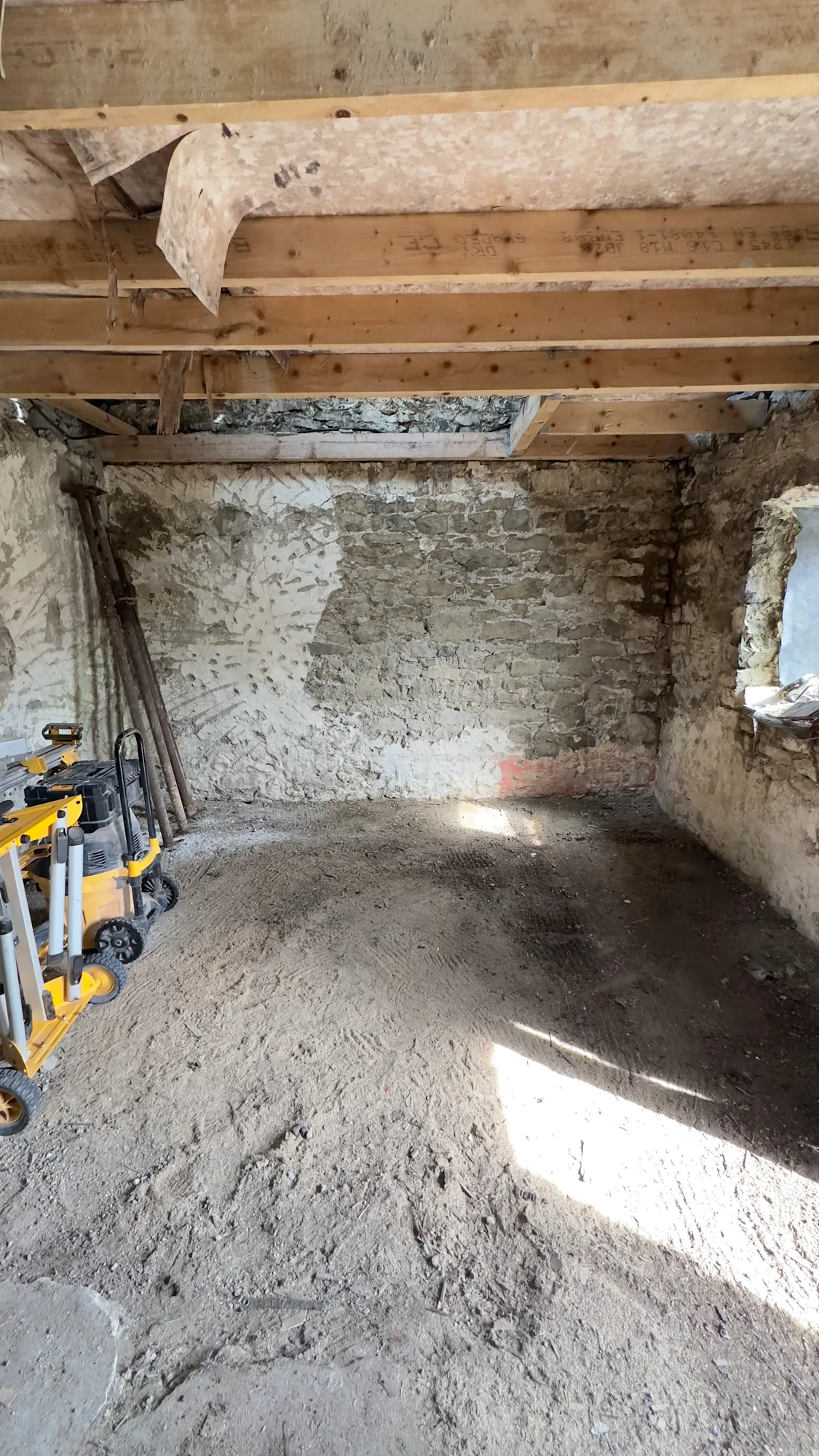
Kieran did not take this loan, or the grant. He paid for the work from his savings, and what he did instead of a Stage 1 Cost Plan is the useful part: he kept a spreadsheet built around the categories on the grant form, one line per receipt, with a weekly timeline beside it. Tidied up, it is the free Ivy Cottage renovation tracker, and for a loan application it is the right habit from day one, because the council lends against a professional's cost plan and a valuer's end of works figure and then watches whether you keep to them. Eighteen categories with the grant cap beside each, paid and unpaid lines in colour, and a Gantt chart that turns amber a week before a date slips: a document a council officer, a quantity surveyor and you can all read.
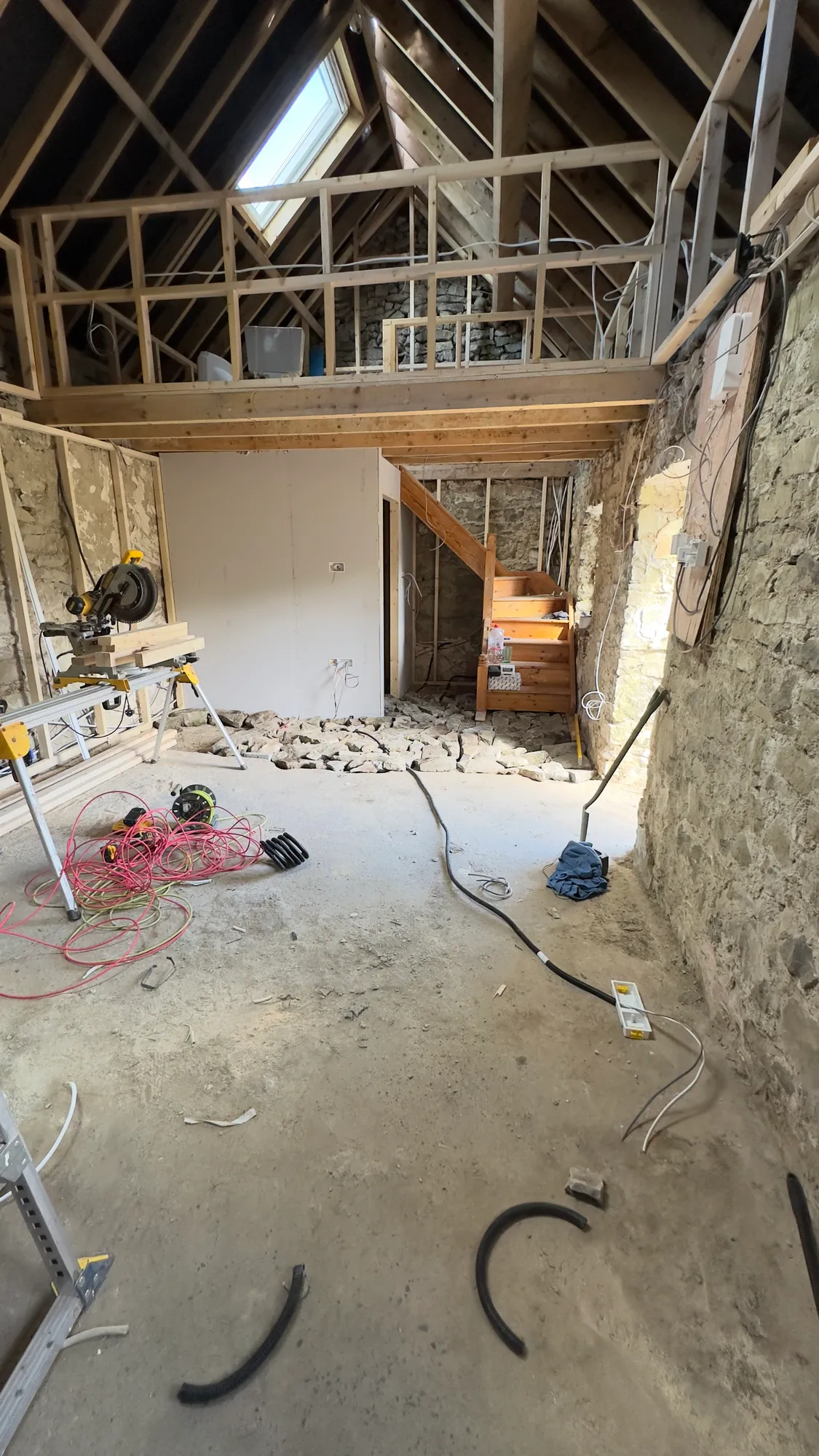
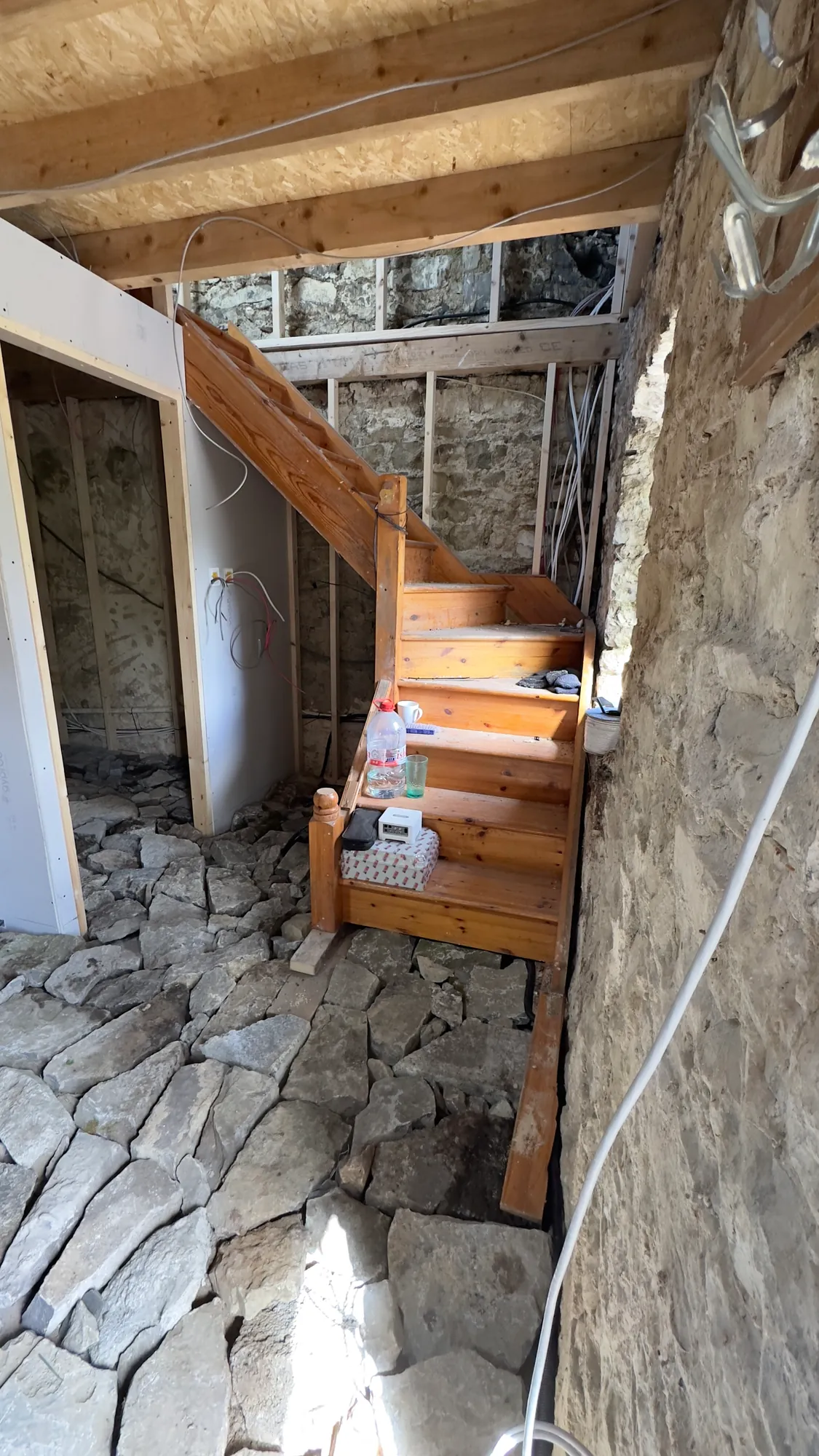
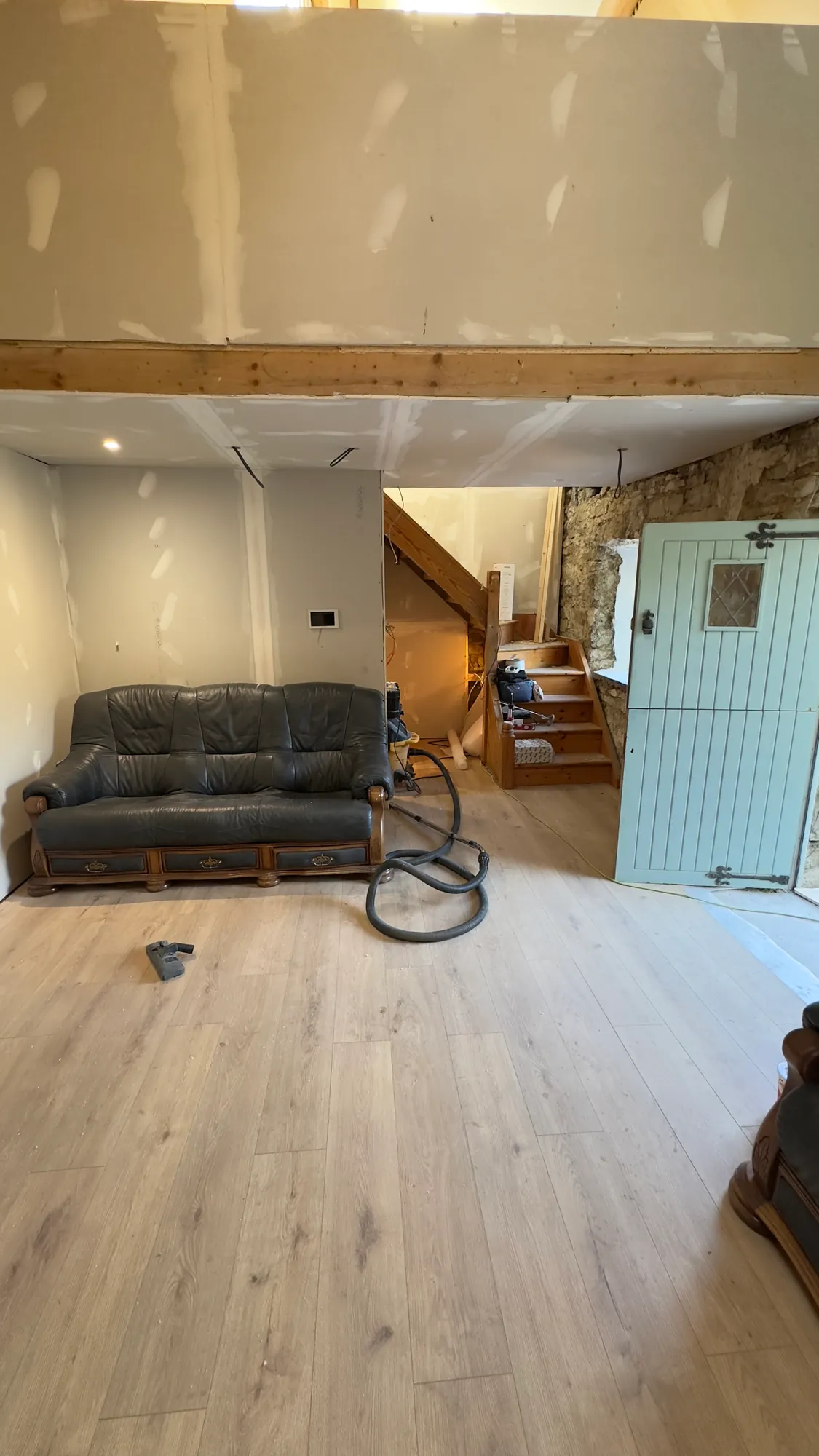
The order of the work matters to a lender too: at Ivy Cottage the new joists and roof timbers went in first, then the stud walls, insulation and first fix cabling while everything was open, then the floors and finishes. The cottage now runs on Crestron: lighting, heating, audio, CCTV and the alarm from one system, and, because it stands on its own services, the water pump and the septic tank as well, the story on our rural property automation page. None of that is expensive if it is in the cost plan at Stage 1 and the cable goes in before the plasterboard: our guide to what to wire at first fix lists the runs, smart home cost in Ireland gives figures for the budget line, and our process page shows how a survey and a design come before any quote.
Questions we are often asked
Can I get the purchase and renovation loan if a bank has offered me a smaller mortgage?
Yes, that is the case it is built for. You need evidence of insufficient offers from two regulated mortgage providers, dated within twelve months, and the amount offered must be equal to or less than the loan you are asking the council for.
What is the most I can borrow in Dublin?
The finished house cannot be valued above €415,000 in Dublin, Kildare or Wicklow, and the maximum loan in that band is €373,500. Within that, the annuity loan is capped at 90%, 85% or 80% of the end of works value for minor works, major works or a derelict house, plus the bridging loan equal to your grant.
What deposit do I need for a derelict house?
20% of the purchase price plus 10% of the renovation cost, against 10% and 10% for a vacant house. At least 3% of the deposit must be savings built up over twelve months or more, and up to 7% can be a gift.
Do I need the grant approved before I apply for the loan?
No, but the council must verify your grant approval or approval in principle before any money is drawn down, and if the house turns out not to qualify for the grant the loan is withdrawn. The site advises getting the grant approval first where you can, because it fixes the grant amount the loan is built around.
When do I pay back the bridging loan?
When the grant is paid out, at the end of the works. The bridging loan is interest only at a variable 3.5% for at most two years, and you can pay it off earlier at no charge.
Can I use the loan on a house I already own?
Yes, as a renovation only loan, if it is the first home you have bought, there is no mortgage on it and it qualifies for the grant. The council takes the first charge on the property.
Sources, all read on 21 November 2026: the Local Authority Purchase and Renovation Loan's own pages on what the loan is, eligibility, how much you can borrow, interest rates and its frequently asked questions, and the Department of Housing's Vacant Property Refurbishment Grant page on gov.ie (last updated 22 October 2026).
If you are costing a vacant house for a loan application and you want the wiring, the heating controls and the security on the plan from the start, or you want a rural house to look after itself while you are at work in Dublin, we would be glad to help.
Book a consultation or call our Dublin office on 01 906 9326.
- Log in to post comments