The septic tank grant pays 85% of the approved cost of repairing, upgrading or replacing a domestic waste water treatment system, up to a maximum of €12,000. It is not open to everyone with an old tank: you qualify through one of three doors, a failed inspection under the National Inspection Plan, a letter of potential eligibility because the house is in an Area for Action, or a letter confirming the house is in a High Status Objective catchment area.
If you are leaving Dublin for a vacant cottage, or buying one in the north county or up in the Dublin mountains, the septic tank is the part of the house nobody photographs and everybody worries about. This guide covers what the septic tank grant pays in 2026, the three routes in, the €50 registration that comes first, the forms and the timing traps, and how our founder's own cottage in Roscommon ended up with its septic tank on the same Crestron system as the lights. Every figure was checked on 31 October 2026 against the Department of Housing's page on domestic waste water treatment systems (last updated 15 October 2026), the 2026 terms and conditions for the three schemes, and the EPA. The scheme is national; the rural water or environment section of the council where the house stands is who you deal with.
What the septic tank grant pays in 2026
| Scheme | Who it is for | Grant |
|---|---|---|
| National Inspection Plan | A system the council inspected under the EPA's plan and failed, with an Advisory Notice | 85% of approved cost, up to €12,000, no minimum |
| Areas for Action | A house in a Prioritised, Local Authority or public health Area for Action, with a letter of potential eligibility | 85% of approved cost, up to €12,000, at least €750 of works |
| High Status Objective catchment areas | A faulty system in a catchment the River Basin Management Plan protects, with a letter from the council | 85% of approved cost, up to €12,000, at least €750 of works |
The "approved cost" is your bill or the council's own view of a reasonable cost, whichever is lower. Approval does not promise the full €12,000: you are paid 85% of what you spend on the approved works, subject to the year's funding. Maintenance, servicing and desludging never qualify, and if a public sewer connection would cost less than fixing the tank, the council may fund the connection instead.
The three doors, and which one a vacant cottage fits
Door one: a failed inspection. Councils inspect systems chosen under the EPA's National Inspection Plan; you cannot ask for one, as South Dublin County Council's page says plainly. You get at least ten working days' notice, the inspector checks that the tank is registered, not leaking or ponding, not piped to a ditch, not taking rainwater, and desludged, and if it fails an Advisory Notice follows within 21 days. That notice is the ticket to the grant. In 2025 the councils inspected 1,466 systems and 863 of them, 59%, failed.
Door two: an Area for Action. The River Basin Management Service (formerly LAWPRO) and the councils work through catchments where septic tanks put a river or lake at risk. A house inside one can receive a letter of potential eligibility; being inside the boundary is not enough on its own, and you cannot self declare. Ask about this route first, because the letter can be requested rather than waited for.
Door three: a High Status Objective catchment. These are the cleanest waters in the country. The Department publishes an Eircode map to check a house before you apply; the map is a first check, not a decision, and the council still has to write to you. In Dublin this door is real: Dublin People reported in January 2025 on a Dún Laoghaire Rathdown public meeting for Glencullen householders about these grants, because the area sits in a High Status Objective catchment under the River Basin Management Plan 2022 to 2027.
For a cottage that has stood empty, the order is: register the system, ask the council's rural water section which scheme the Eircode falls under, and only then get quotes. Do not let a contractor start: under the Areas for Action and High Status Objective schemes no work may begin before written approval, and under the National Inspection Plan scheme nothing may begin before the council has visited.
Who qualifies
- The house is your home. The applicant occupies it as their primary residence; a holiday home does not qualify, a long term private rental may.
- Not on the public sewer, which on the edge of a Dublin town is worth confirming first.
- Seven years old. Not under construction and not built within the last seven years; any pre 2008 cottage passes easily.
- No septic tank grant paid on the system in the last seven years.
- Registered. Registration under the 2012 regulations costs €50 at protectourwater.ie or at the council, and not registering is an offence with a fine of up to €5,000. Roscommon County Council lists a registered system among its grant conditions, so treat it as day one.
- Tax clearance. Each contractor gives a Tax Clearance Access Number and tax reference, or a current eTax Clearance printout from ROS, or the council must refuse. You need a certificate yourself if public grants to you in the year pass €10,000, which a refurbishment grant can do.
The forms, step by step
- The letter. An Advisory Notice after a failed inspection, or a letter of potential eligibility from the River Basin Management Service or the council for the other two schemes. The application form asks for its reference.
- The application. Form DWWTS AfA (a) for an Area for Action or DWWTS HSOCA (a) for a High Status Objective catchment, with a proposal of works by a competent person to the EPA's 2021 Code of Practice. The form asks when the tank was last desludged and whether there are signs of poor percolation.
- Approval in writing. The council checks eligibility, assesses the cost and writes to you. Then the work starts.
- The claim. Within six months of finishing, form DWWTS AfA (b), DWWTS HSOCA (b) or DWWTS NIP (a), with itemised receipts and the competent person's certificate. The council may inspect before it pays.
- If refused, appeal in writing within three weeks; a different officer decides within four weeks.
Fitting it beside the Vacant Property Refurbishment Grant
The septic tank grant and the refurbishment grant are paid by the same council, and you can hold both as long as no item is claimed twice. Our complete guide to the Vacant Property Refurbishment Grant has the figures gov.ie confirmed on 22 October 2026: up to €50,000 for a house empty for two years or more and built before 2008, and up to €70,000 with the derelict top up, which our derelict property grant guide explains. Put the tank, the percolation area and its pipework under the septic tank grant and the plumbing inside the house under the refurbishment grant's Services category. If the cottage is on its own water too, the private well grant is the third scheme to ask the same office about.
Three grants means three sets of receipts. The free renovation tracker Kieran built for Ivy Cottage has a tab for each category on the refurbishment form; give the tank its own lines and mark which grant each receipt belongs to.
Ivy Cottage: a tank on the same system as the lights
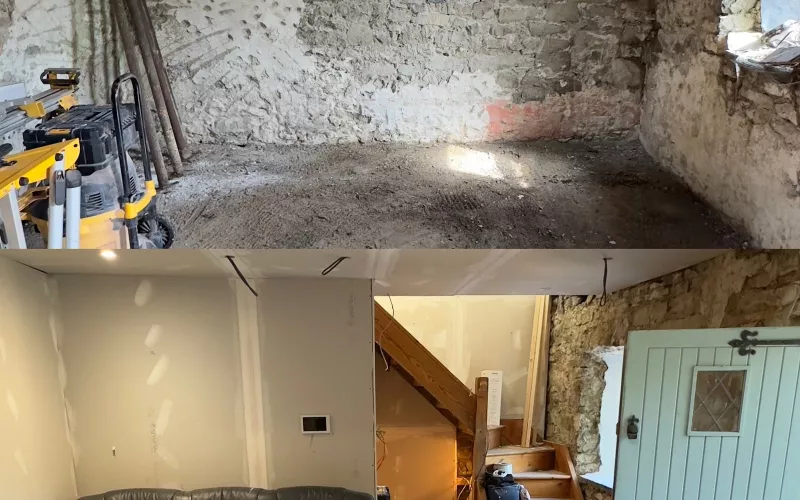
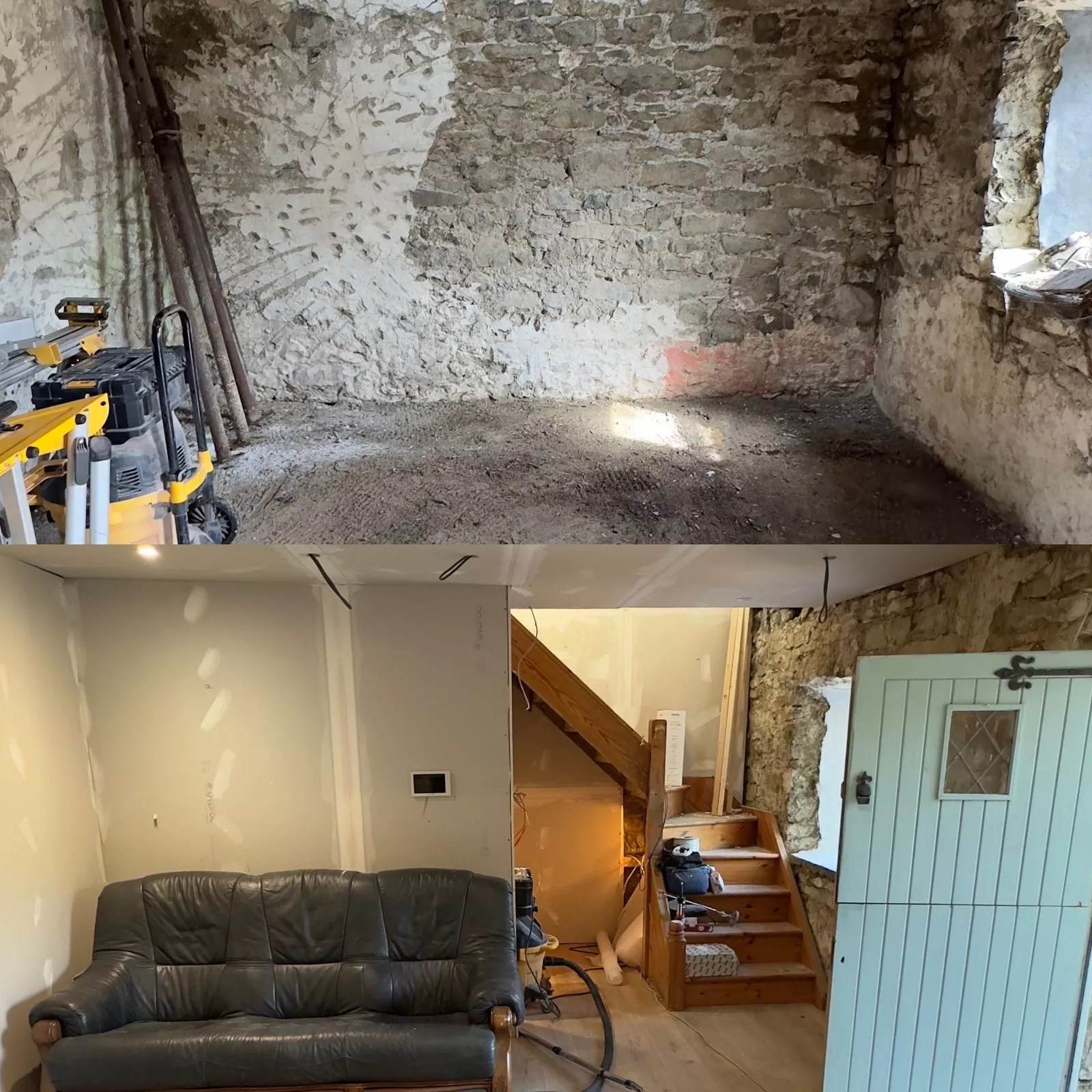
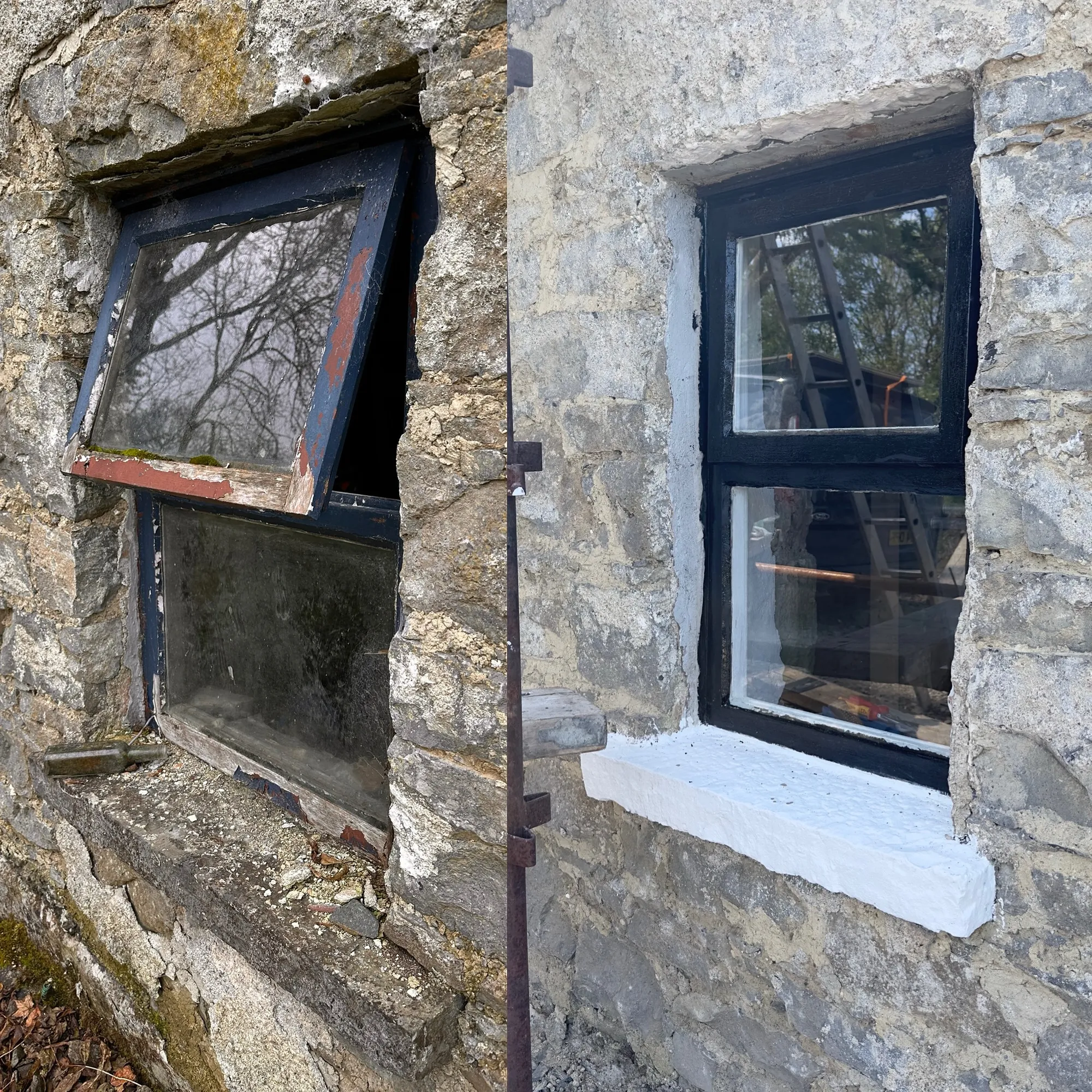
Ivy Cottage is the derelict stone cottage in Roscommon that Kieran McGuire, our founder, bought as a personal project and brought back as a home, on its own well and its own septic tank. He posts the renovation on Instagram as @myhomestead.ie; the photos here are his own.
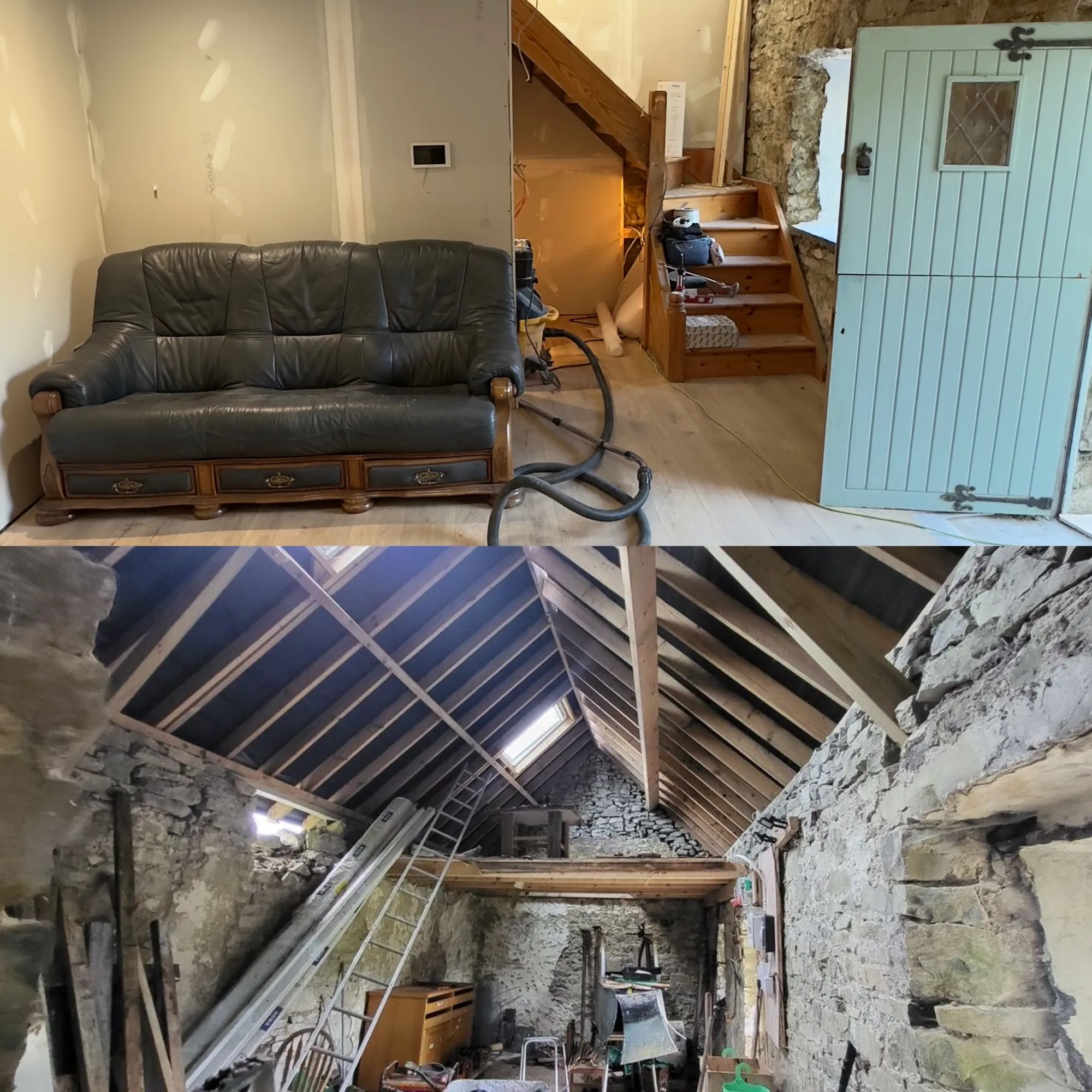
Because the walls were open, the cottage got the kind of wiring we normally put into much bigger houses, and it now runs on Crestron: lighting, heating, audio, CCTV and the alarm from one system, and, because it is a rural house on its own services, the water pump and the septic tank are automated too. The pump story is on our rural property automation page: it turned out to be servicing three separate farms, so Kieran added remote pump control, shut off valves, metering, a camera and leak detection. The septic tank sits on the same system. A treatment system is plant, and plant that can tell you when something is wrong is worth more than plant that cannot.
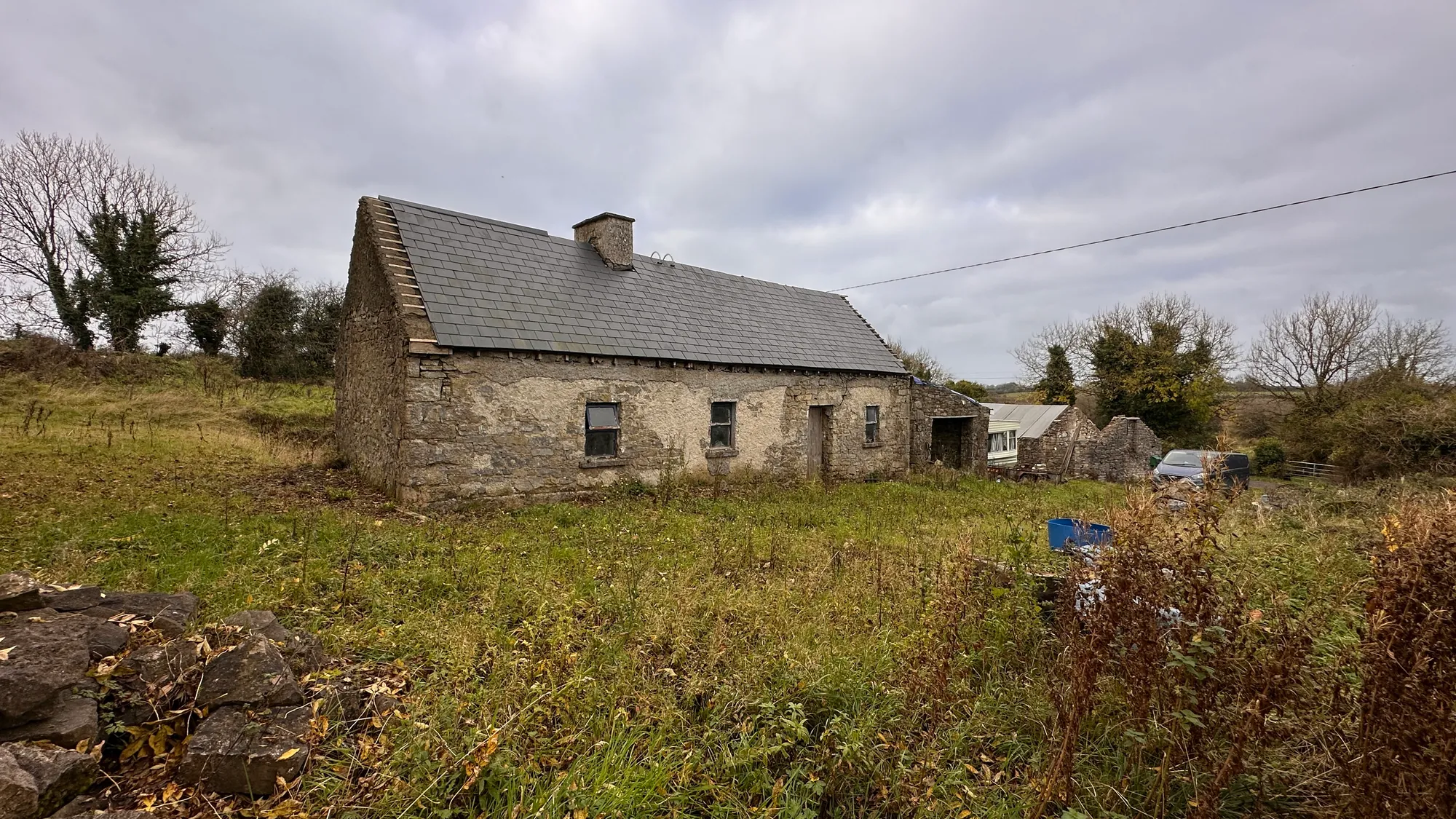
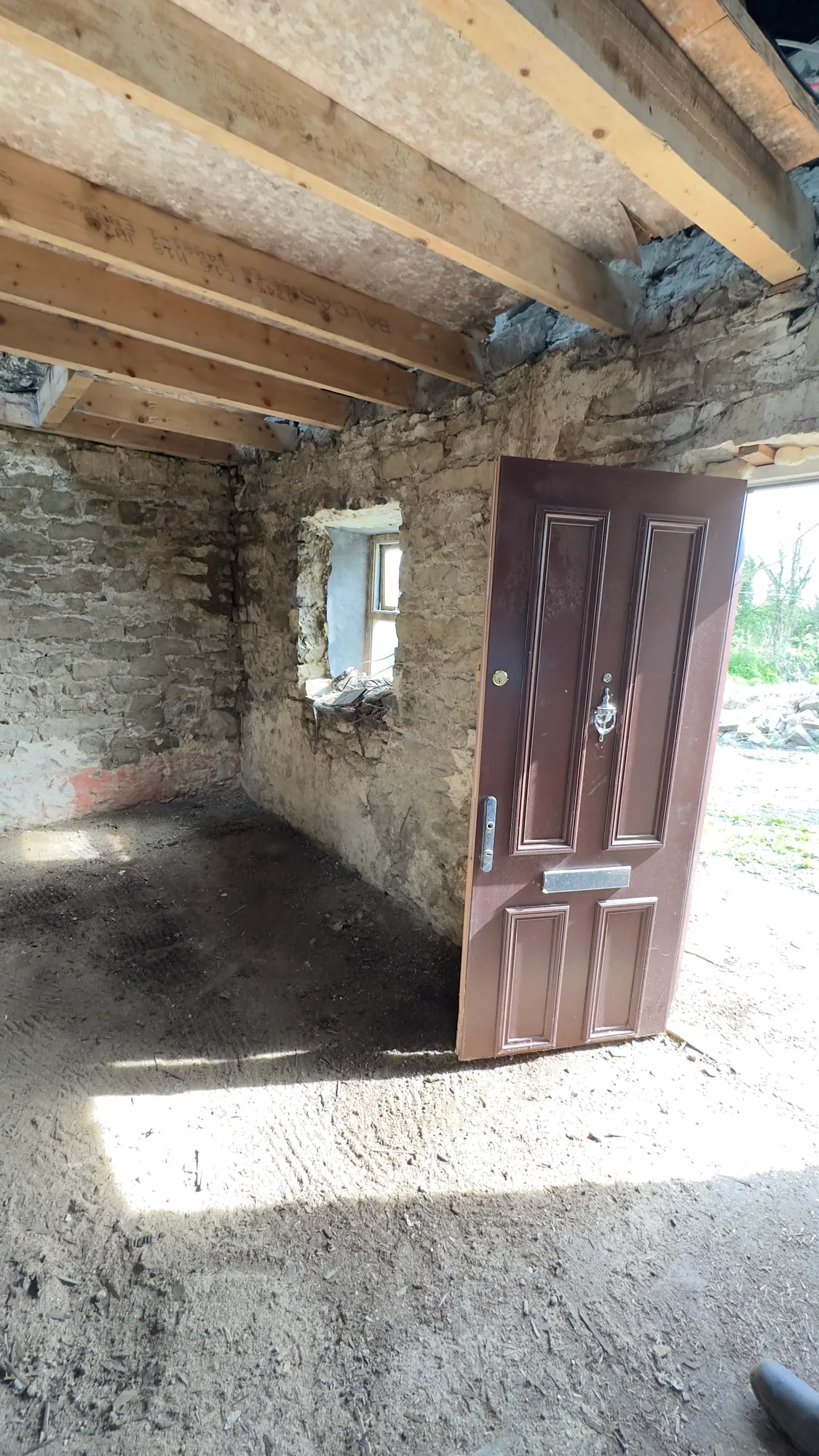
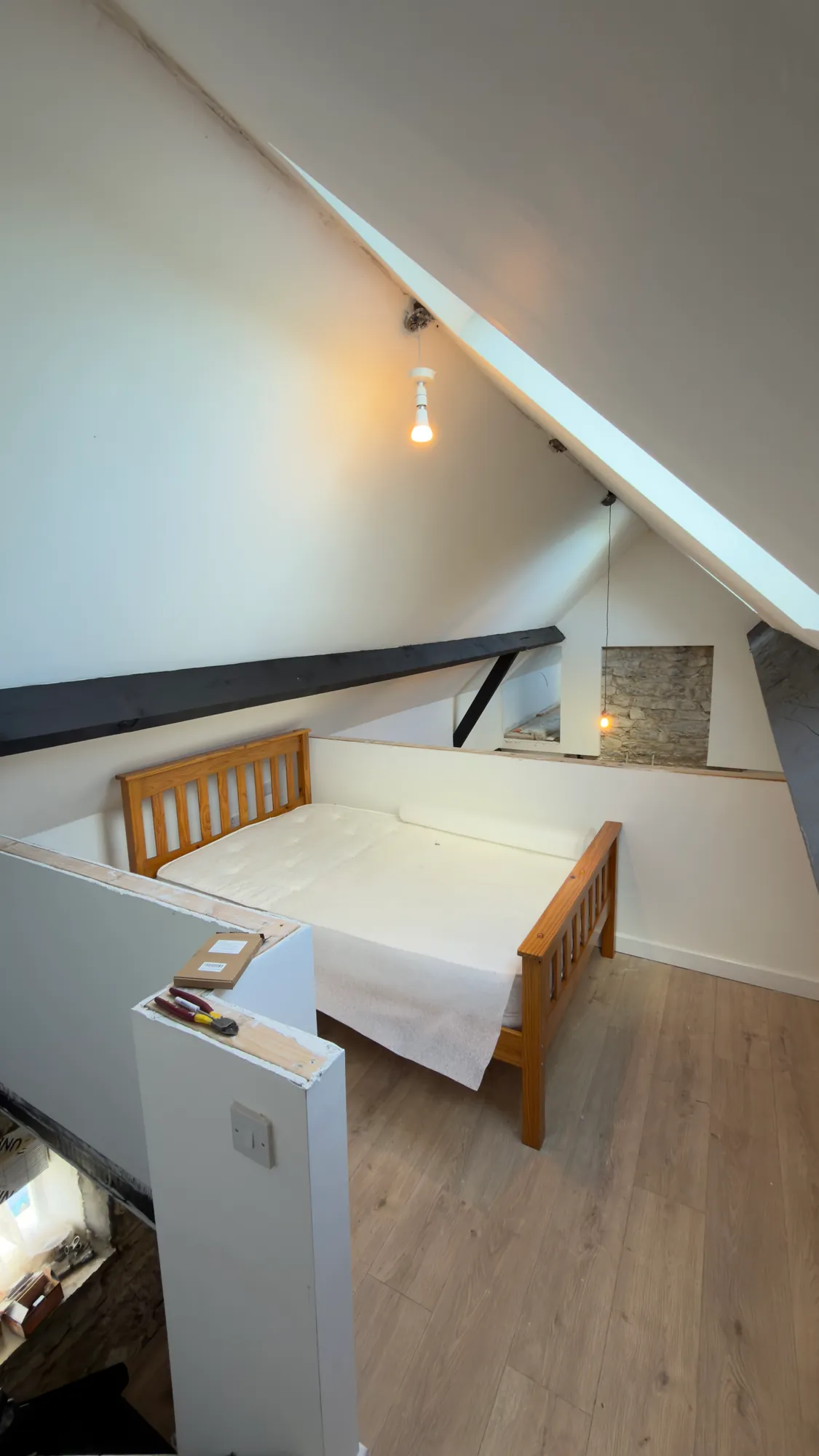
One honest note, as in the other grant guides: Kieran did not claim a grant on Ivy Cottage. He paid from his savings and tracked every euro in the spreadsheet that became the free tracker.
What to plan for the tank while the walls are open
A grant pays for the tank. It does not tell you, at a desk in Dublin on a Tuesday evening, that the pump in a pumped treatment unit has stopped or its alarm has tripped. Three things cost little at first fix and a great deal afterwards: a power feed and a data cable to the unit's control panel, a route for its alarm output back to the house so it reaches a phone rather than a buzzer in a shed, and a leak sensor by the pump chamber. Our guide to what to wire at first fix covers the rest of the house. The same system runs the heating and the lights: our Crestron installer Dublin page shows what that looks like in a small house, smart home cost in Ireland gives honest numbers, and every job starts with a survey and a design, as set out on our process page.
Questions we are often asked
How much is the septic tank grant in 2026?
85% of the approved cost of repairing, upgrading or replacing the system, up to €12,000, under all three schemes. Two of them need at least €750 of works; the National Inspection Plan scheme has no minimum.
Can I just apply because my tank is old?
No. You need an Advisory Notice from a failed inspection, or a letter of potential eligibility for an Area for Action or a High Status Objective catchment. A defective system on its own does not qualify, and you cannot request an inspection.
Does the septic tank grant apply in Dublin?
Yes. The scheme is national and the Dublin councils run it like every other; Dún Laoghaire Rathdown briefed Glencullen householders on it at the start of 2025. Ask the council's water pollution control or rural water section which scheme your Eircode falls under.
Do I have to register the septic tank first?
Yes. Registration under the 2012 regulations costs €50 at protectourwater.ie or at the council, not registering is an offence with a fine of up to €5,000, and the inspector checks for it.
Can I hold the septic tank grant and the Vacant Property Refurbishment Grant together?
Yes, as long as no item is claimed from both. The tank and its percolation area go under the septic tank grant, the plumbing inside the house under the refurbishment grant, and the receipts stay apart from day one.
What if I start the work before the council writes back?
The application is not considered. Nothing starts before written approval under two of the schemes, or before the council's visit under the National Inspection Plan.
Sources: the Department of Housing page on domestic waste water treatment systems and its 2026 terms and conditions for the National Inspection Plan, Areas for Action and High Status Objective catchment schemes; the EPA on inspections and repair and its May 2026 release on the 2025 inspections; South Dublin County Council on septic tanks; Roscommon County Council on the National Inspection Plan; Dublin People on the Glencullen meeting; and the Vacant Property Refurbishment Grant on gov.ie, all read on 31 October 2026.
If you are leaving Dublin for a cottage on its own services, or you want the pump, the tank, the heating and the lights of a rural house to look after themselves while you are away, we would be glad to help.
Book a consultation or call our Dublin office on 01 906 9326.
- Log in to post comments