Good TV wiring in a Cork self build starts outside the house: work out how the signal will reach you, then bring every feed to one comms cabinet and run cables from there to each screen. With the aerial, the broadband and the network all meeting in one place, any TV in the house can show any source, and nothing has to sit under the screen. The time to do it is first fix, while the roof space, the walls and the ground around the house are still open.
Many of the self builds we see around Cork are one off houses on rural sites, from the hills above Bandon to the coast near Kinsale, and many are long single storey or dormer homes. Those houses bring their own questions about signal, cable lengths and outbuildings, so this guide takes them in the order they come up on site.
Start with the signal
Before deciding where the screens go, find out how television will reach the house. In much of the county a roof aerial pointed at the right transmitter works well, but hills and valleys can make reception patchy, and the answer can differ between two sites a few fields apart. A local aerial installer can test the site once the roof is on.
One thing has changed for rural homes. Saorsat, the free satellite service that has filled gaps where the terrestrial signal is weak, is closing in early 2028 because its satellite reaches the end of its life and is not being replaced. If you are building now, do not plan your TV wiring around it. Plan for an aerial where the signal allows, a satellite dish only if you want a pay TV service that uses one, and a solid broadband connection for streaming, which is how more and more households watch anyway.
Bring everything to one place
Whatever the source, every feed should end in the comms cabinet: the aerial cable from the roof space, the dish cables if there is a dish, and the broadband from its entry point. From there, cables fan out to each TV position. This is what makes the system flexible: change provider, add a streaming box or move a screen, and the work happens in the cabinet rather than in the walls.
The cabinet itself needs room for the aerial splitter, a network switch, the set top boxes and any HDMI extenders, with power and some airflow. A utility room or a plant room usually suits a Cork house better than a hall cupboard, which tends to be too small once everything is in.
Long runs in a single storey house
A long bungalow or a house with wings can put the far bedroom a good distance from the cabinet. That matters more for TV wiring than for most other cables.
- Network cable. Cat6 is fine for every room in a normal house, but measure the longest runs on the drawings before first fix rather than guessing.
- HDMI. Do not plan long HDMI leads through the walls. Use Cat6 and a pair of HDMI extenders instead; they are made for exactly this job.
- Aerial cable. Use good quality coax for the long runs and keep the number of joins down. A signal that is only just good enough at the aerial will not survive a cheap splitter and a long cable.
- Labels. Label both ends of every cable with the room and its use. On a long house, unlabelled cables waste hours at second fix.
The TV wall and the recess
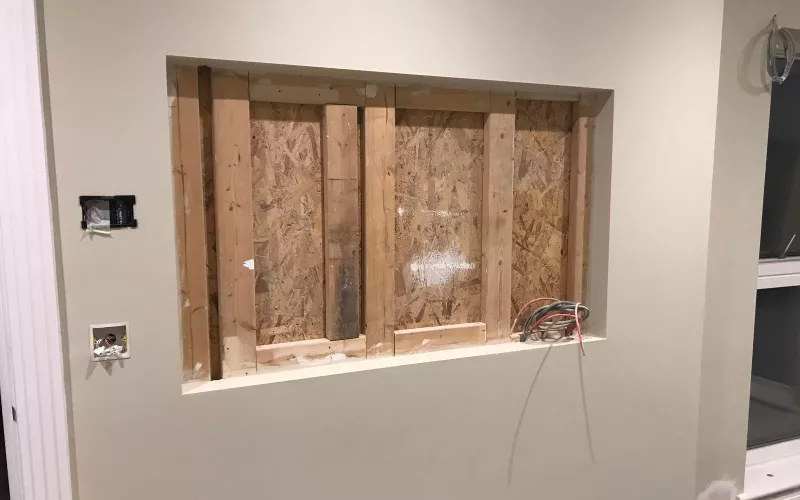
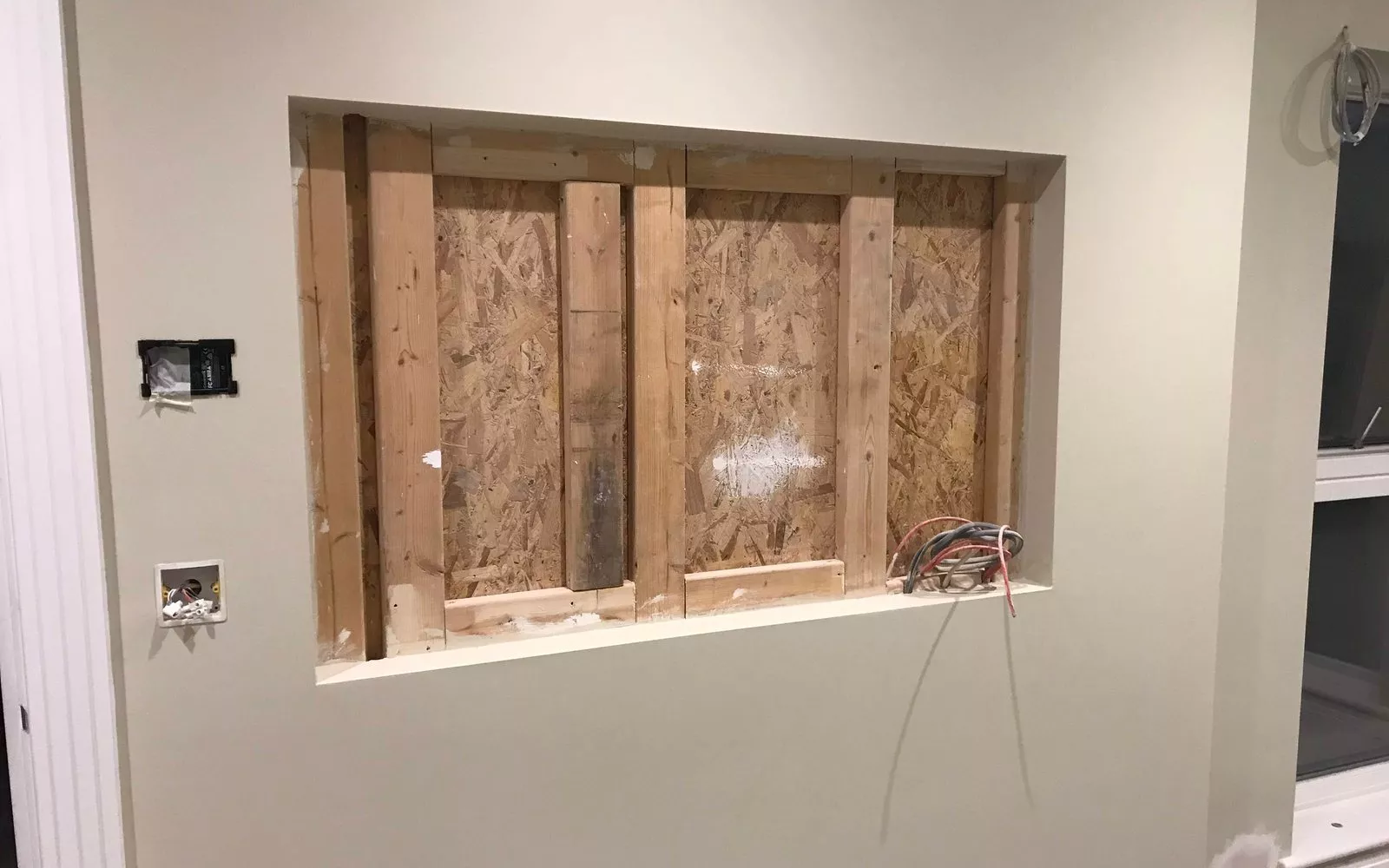
Many Cork self builders want the TV set into a recess or built into joinery, so it sits flush and the cables vanish. That needs more planning than a bracket on a flat wall. The builder or joiner frames the recess at first fix, so they need the screen size, the bracket depth and a little air space for ventilation before they start. The back box, the sockets and the Cat6 and aerial cables go in the back of the recess, with a conduit to low level for anything added later. Our home cinema installation in Cork page shows where this can lead in a dedicated room.
Outbuildings and garden rooms
A garage with a gym, a garden room or a home office across the yard all tend to get a TV sooner or later. Lay a duct from the house to each outbuilding while the groundworks are open, and pull Cat6 and power through it. Running a cable across a finished yard or lawn is a far bigger job than adding one length of duct to the trench the groundworker is already digging.
Your TV wiring plan, stage by stage
| Stage | What to decide or do |
|---|---|
| Design | Mark every screen on the drawings with its height, any recess and the source it will show |
| Groundworks | Ducts to outbuildings, the gate and the broadband entry point |
| Roof on | Aerial position agreed; cable from the roof space to the comms cabinet |
| First fix | Power, Cat6 and aerial cable to a back box at each screen, with conduit to low level, all labelled |
| Second fix | Brackets, screens, HDMI extenders and sources fitted and set up |
| Handover | Everything tested from every room, and the remotes or the app explained |
Who does the work
Usually your electrician runs the TV wiring to our drawings at first fix, and we come back at second fix to fit and set up the screens and the equipment. Our founder, Kieran McGuire, is an electrician, and so are a few of the team, so the drawings we hand over are ones an electrician can follow without guesswork. Our survey and design service covers the TV points along with the rest of the smart home. If you want sound to match the picture, read our speaker wiring guide for Cork self builders, and for music around the house see multi room audio in Cork.
Questions we are often asked
Will I get Saorview on a rural site?
Often yes, but it depends on the site. Ask a local aerial installer to test it once the roof is on, and make sure the aerial cable runs to the comms cabinet either way.
Should I plan for Saorsat?
No. Saorsat is closing in early 2028, so a new house should rely on an aerial where the signal allows and on broadband for streaming.
Can I put the set top box in another room?
Yes. With Cat6 and a pair of HDMI extenders, the box can sit in the comms cabinet and the picture reaches the TV with nothing under the screen.
What size of recess do I need for a TV?
That depends on the screen and the bracket you choose, so pick them, or at least the largest size you might want, before the recess is framed.
Is it worth wiring the garage or garden room?
Yes. A duct laid with the groundworks costs little, and it lets you add Cat6 and power for a TV, Wi-Fi or a camera whenever you need them.
Streaming makes the network as important as the aerial. Send us your plans and we will mark the Wi-Fi access points, list the Cat6 runs to the comms cabinet and send a priced kit list, free and with no obligation: see how our free Wi-Fi design works, and our first fix wiring guide for the rest of the cabling.
Book a consultation or call our Cork office on 021 202 8107.
- Log in to post comments