Good speaker wiring in a Cork self build comes down to three things: a cable from every speaker position back to one rack, ducts in the ground for any garden speakers, and labels on both ends of every run. Settle those before first fix and the speakers, amplifiers and music system can all be chosen later without opening a wall. Leave them until the house is plastered and you are into chasing, surface trunking or wireless compromises.
A lot of the self builds we see around Cork are one off houses on a rural site, often with a vaulted living space, a long single storey wing or a view worth sitting outside for. Those houses suit music in the kitchen, the living room and the garden, but they also stretch the cable runs and make the ceilings harder to work with. Here is how to plan for that while the timber frame or blockwork is still open.
Start with a speaker plan, not a cable order
Before your electrician buys a drum of cable, someone needs to decide where every speaker goes. That means the rooms that will have music, how many speakers each one gets, and whether the living room will be stereo or surround. Our guide to ceiling speakers for Cork homes covers the numbers room by room. The positions then go onto the ceiling plan alongside the lights, smoke alarms and ventilation grilles, so the trades are working from one drawing.
The plan should also show where the cables end. In almost every self build we design, each speaker gets its own cable straight back to a comms rack, in the utility room, a plant room or a press under the stairs. That single location keeps the amplifiers cool and tidy, and it means a room left without speakers today can be added in a few years without any new speaker wiring.
Vaulted ceilings, exposed beams and in wall speakers
Open plan rooms with a vaulted ceiling are popular in new Cork houses, and they change the approach. A speaker high up in a sloping ceiling fires sound at the wrong angle and is hard to reach later, and an exposed beam or a timber ceiling may leave nowhere sensible to hide a cable.
- In wall speakers. In a vaulted room, speakers set into the walls at a sensible height often sound better than ceiling speakers, and the cable drops straight down to floor level. Decide on this before the walls are slabbed.
- Angled ceiling speakers. Some ceiling speakers have a tilted driver that can be aimed back down at the seating. They suit a gently sloping ceiling.
- Beamed and timber ceilings. Agree a cable route with the joiner or frame supplier, such as a groove in the back of a beam or a run in the wall plate, before the boards go on.
- Flat parts of the room. If the kitchen end of an open plan space has a flat ceiling, that may be the best home for the speakers, with the vaulted living end handled from the walls.
Garden and patio speakers: wire them with the groundworks
On a rural Cork site the garden is often the room you use most in summer, and it is also the hardest to wire after the fact. Outdoor speakers need a cable in a duct from the house to each position, laid while the diggers are on site and before the patio, paths and lawns go down. Run a spare duct while you are at it; it costs very little and saves lifting slabs if you want garden lighting or a camera later.
Garden runs are often the longest in the house. Measure them on the site plan, because a long run needs a thicker cable to avoid losing volume. Our outdoor audio page shows the speakers we fit outside, which are made to live outdoors through an Irish winter.
Fire stopping and airtightness where cables pass through
Speaker cables travel through floors, ceilings and walls, and some of those have a job to do beyond holding the house up. Technical Guidance Document B on fire safety in dwelling houses, available from gov.ie, says floors should have a set level of fire resistance, and that openings for cables passing through a fire resisting part of the building should be kept as few and as small as possible and be fire stopped. A tidy plan with grouped runs helps your builder do that properly, rather than having dozens of loose holes drilled at second fix. If a speaker is going into a ceiling that has to resist fire, ask the speaker maker about a fire hood or a tested back box.
The same care applies to the airtight layer. Keep speaker cables in the service cavity where you can, and seal any that must pass through with grommets or airtight tape. Our first fix wiring guide goes through the airtightness detail in more depth.
Speaker wiring at a glance
| Stage | Speaker wiring task | Who |
|---|---|---|
| Design | Mark every speaker, keypad and amplifier position on the plans and agree the rack location | Smart home designer, architect |
| Groundworks | Lay ducts from the house to each garden speaker, with a draw rope and a spare | Groundworker, electrician |
| Frame or walls open | Agree cable routes in beams, vaults and in wall speaker positions | Joiner or frame supplier, electrician |
| First fix | Run each speaker cable to the rack, label both ends, fit back boxes or brackets where needed | Electrician |
| Before slabbing | Photograph every run and check it against the cable schedule | Electrician, smart home designer |
| Second fix | Fit speakers, terminate the rack, programme the system and keypads | 1Install |
Labelling and the rack
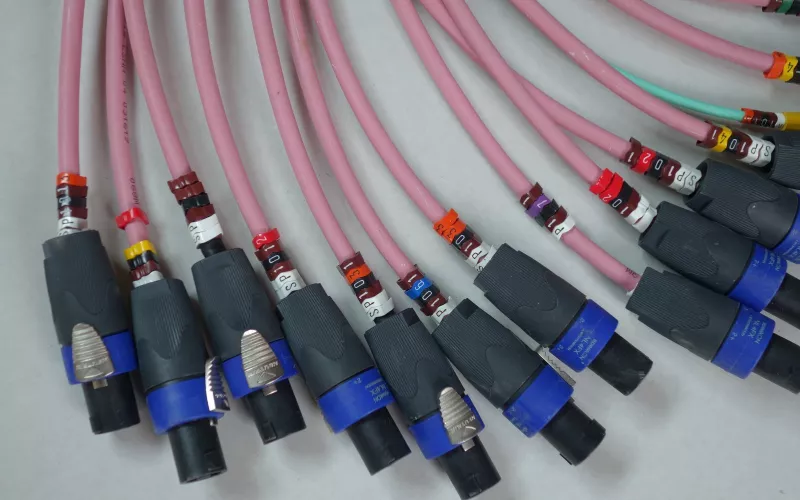
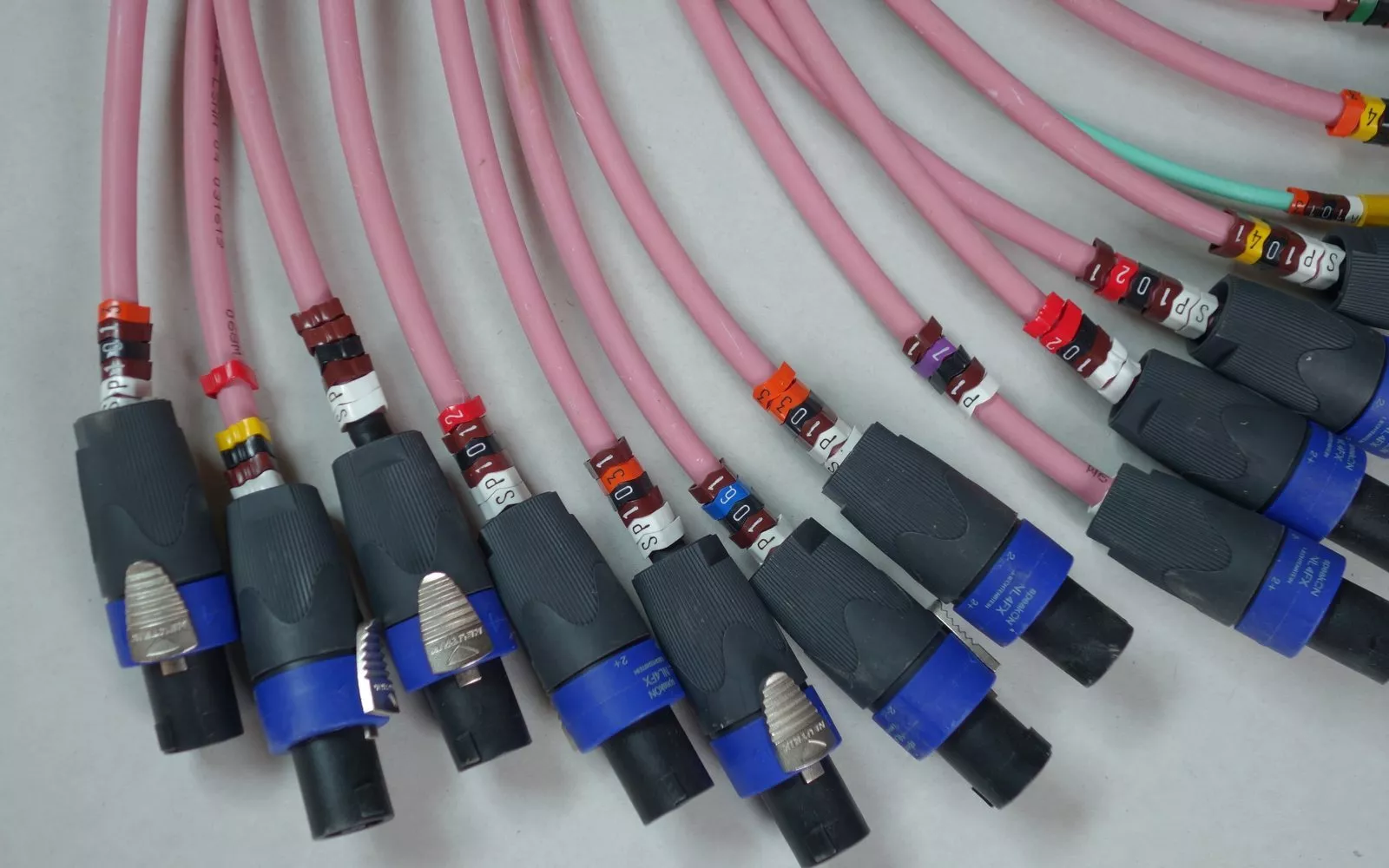
Every speaker cable looks the same once it arrives in the rack, so label each end with the room and the speaker number before it is pulled through, and keep a copy of the cable schedule with the house file. Leave enough slack at the rack end to reach the amplifiers neatly, and enough at the speaker end to work with comfortably. Ask for a photo of every ceiling bay before the slabbing goes on; it is the best record you will ever have of where things run.
Who does what
Usually your electrician pulls the speaker cables to our drawings, and we come back at second fix to fit, terminate and programme the system. Our founder, Kieran McGuire, is an electrician, as are a few of the people on our team, so we understand the first fix from the electrician's side and can walk through the runs with yours before anything is closed up. Our survey and design service produces the drawings and cable schedule, and our multi room audio page for Cork shows the systems we install. If a TV or cinema room is part of the plan, our page on home cinema installation in Cork covers that too.
Questions we are often asked
Is it worth wiring for speakers in rooms we may never use for music?
Usually, yes. A labelled cable coiled in the ceiling costs very little at first fix and keeps the option open for a bedroom, an office or a garden room later.
Are in wall speakers better than ceiling speakers in a vaulted room?
Often they are. In a high or sloping ceiling the sound can arrive from an odd angle, and walls give a more natural stereo image at seated height.
How far can a garden speaker be from the rack?
Quite far, as long as the cable is thick enough for the distance. Measure the run on the site plan and size the cable to suit before it goes in the duct.
Do speaker cables affect fire stopping?
They can. Any cable passing through a fire resisting floor or wall needs the opening kept small and properly fire stopped, so group the runs and agree the details with your builder.
Can we add more speakers later?
If every speaker has its own cable back to the rack, adding a room is simple. Spare cables to likely positions make it simpler still.
Before the speakers, think about the network they will stream over. Send us your floor plans and we will mark where the Wi-Fi access points should go, list the Cat6 runs to the rack and send a priced kit list at no charge. Read how our free Wi-Fi design for self builds works.
Book a consultation or call our Cork office on 021 202 8107.
- Log in to post comments