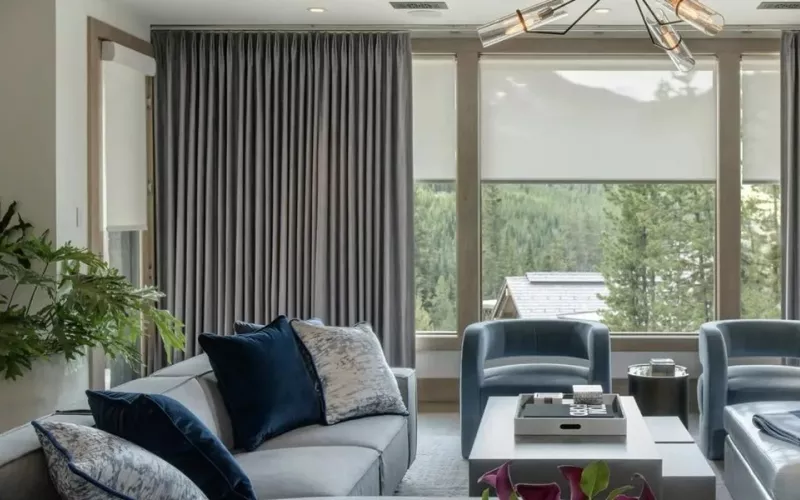
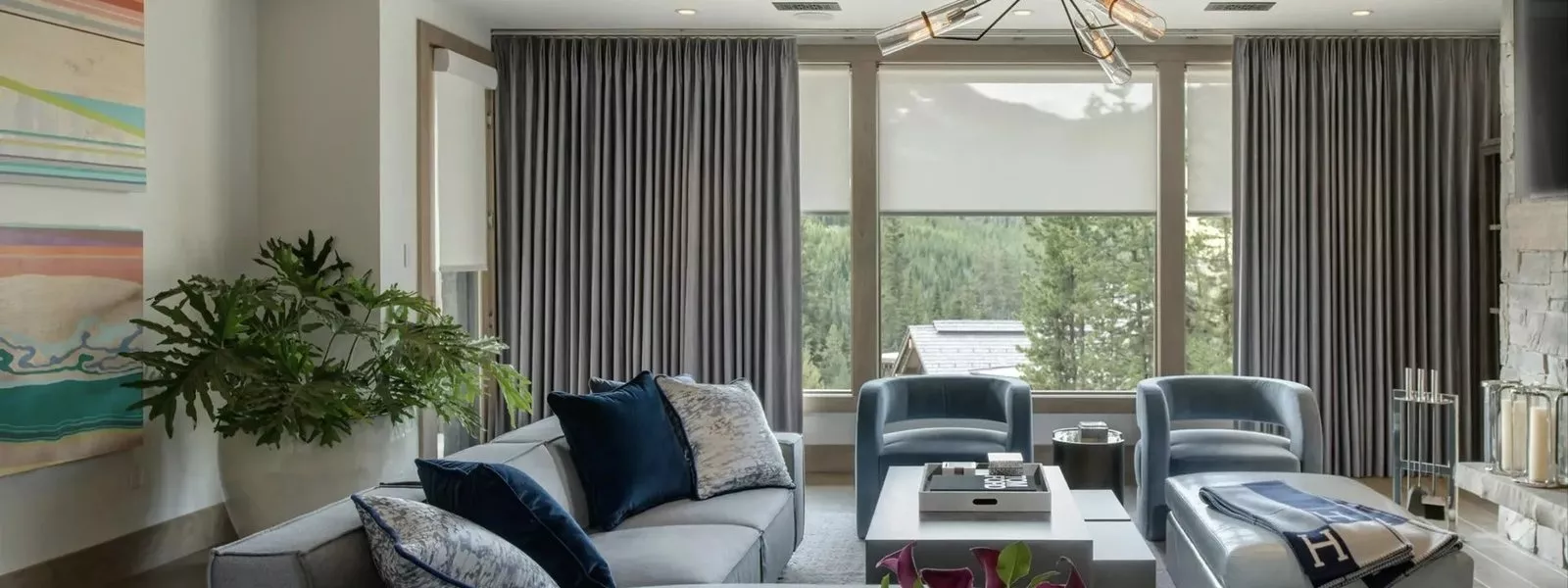
Motorised blinds wiring is one of the cheapest things to get right in a self build and one of the hardest to add later. Choose wired motors, agree a recess or a solid fixing above every window you want automated, and have your electrician run the cable to each one before the plasterers arrive. Do that and the blinds and curtains can be chosen months later, once the house is closed in and the interior is taking shape.
This guide is for people building their own home in Ireland who are somewhere between planning and first fix. You do not need to pick fabrics yet. What you do need to settle now is where the motors go, how they are powered and fixed, and how they will be controlled, because all three are buried in the walls and ceilings once the boards go up.
Why motorised blinds belong in the first fix plan
Most Irish self builds now have big glazing: a glazed gable, sliding doors to the garden, roof lights over the kitchen and tall windows on the stairs. Those are exactly the windows that are awkward to reach and that face the sun for hours, so they are where motorised blinds and curtains earn their keep. Planned early, the motor hides in the ceiling and there is nothing on the wall but a neat keypad. Planned late, you end up with surface cables, plug in transformers or a pelmet box nobody wanted.
There is a safety reason too. The Competition and Consumer Protection Commission's advice on window blinds warns that loose cords and chains are a hidden danger to young children, and recommends choosing blinds without cords or chains where possible. A motorised blind has no cord or chain at all, which is one less thing to worry about in a family home.
Wired or battery motors in a new build
Battery motors are a good answer for an existing house, because they need no new cables. In a self build, with the walls open, wired motors are usually the better choice. They do not need recharging, they suit large and heavy blinds and curtains, and they report their position back to the control system reliably.
Wired systems come in two broad types. Some take mains power to each motor, and others run low voltage power and control from a central panel in a plant room or the comms cabinet. The two need different cables, so decide on the system, or at least the type, before first fix. We work with Lutron, Crestron and Qmotion, and our automated blinds page explains how they differ. If you are leaning towards Crestron, our post on Crestron shades covers the fabric options and the horizontal sheer.
If you are not sure yet which windows will get blinds, run the cable anyway. A cable left coiled and labelled in the ceiling above a window costs very little at first fix; chasing it in after painting costs a lot more and makes a mess.
Recesses, pockets and fixings: what to tell the architect and the window supplier
The neatest finish is a blind that disappears into a recess in the ceiling when it is open. That recess, often called a pocket, has to be drawn in before the ceiling is framed. Talk to your architect about these points at design stage:
- Recess or face fix. Decide window by window whether the blind sits in a ceiling recess, inside the window reveal or on the wall above. Deep reveals in a well insulated house can take a blind inside them, but check the depth against the roll size of the fabric you want.
- Solid fixing. Motorised blinds and curtain tracks are heavy, especially across a wide glazed opening. Ask your builder for timber noggins or another solid fixing behind the plasterboard where every bracket will go.
- Clearance. Window and door handles, sliding door gear and tilt and turn sashes all need room. The fabric should never rub on a handle or a frame.
- Roof lights. Many roof light makers offer their own motorised blinds. Ask your window supplier early, because the power for the blind has to be planned with the roof light, not after it.
- Curtains. A motorised curtain track usually fixes to the ceiling, often in a recess, with the motor at one end. Decide which end, and which way the curtains stack, before the cable goes in.
Your motorised blinds wiring checklist
| Position | What to run | Decide by | Who needs to know |
|---|---|---|---|
| Each blind or curtain motor | The cable your chosen system needs, left at the motor end of the recess or bracket, labelled with the room and window | Before first fix | Electrician, smart home designer |
| Ceiling recess or pocket | A framed recess sized for the blind, with a solid fixing along its length | At design stage | Architect, builder |
| Roof lights | The supply the roof light maker specifies for its blind or opener | When the roof lights are ordered | Window supplier, electrician |
| Keypad by the door of each room | A back box and the control cable, beside the light switches so one plate does both if the system allows | Before first fix | Smart home designer, electrician |
| Central power or control panel | Space and a supply in the plant room or comms cabinet, if the system uses one | At design stage | Electrician, architect |
| Comms cabinet | Room for the blinds processor or gateway beside the network switch | At design stage | Electrician |
Every cable that passes through the airtight layer has to be sealed properly, as our first fix wiring guide explains. Blinds cables often run into the ceiling right above the glazing, which is a part of the house the airtightness tester looks at closely.
Controlling the blinds: keypads, scenes and the rest of the house
A blind on its own remote is handy. A blind that is part of the house is much better. With the blinds on the same system as the lighting, one "good morning" button can open the bedroom blinds and bring up the lights, and a "film" button can close the living room and dim the lamps. Our lighting design guide covers how to plan those keypads and scenes.
Blinds also help the heating. On a sunny afternoon, closing the blinds on large south and west facing glass can stop a room overheating, and on a winter evening closing them early helps keep the heat in. If you are planning heat pump controls as well, it is worth having both on the same system so they can work together. When you are away, the blinds can open and close on a timetable so the house looks lived in.
Plan keypads where people actually stand: by the door of each room and beside the main glazing. Combining blind and light buttons on one plate keeps the walls tidy and avoids a row of separate switches.
Who does the work
Blinds involve more trades than most smart home systems. The architect draws the recesses, the builder frames them, the electrician runs the cables, and the interior designer or curtain maker chooses the fabrics. We pull those together. We design the motorised blinds and curtains, supply the motors, fabrics and tracks, install them and programme them into your keypads and app. Our founder, Kieran McGuire, is an electrician, and so are a few of our team, so we understand how the blinds cabling sits alongside the rest of the electrics and the airtight layer.
Our survey and design service puts every motor, recess, keypad and cable on the drawings, with a cable schedule your electrician can follow. We work from our offices in Skerries, Co. Dublin and in Cork; see our pages for motorised blinds in Dublin and motorised blinds in Cork.
Questions we are often asked
When should I decide on motorised blinds in a self build?
Before first fix, and ideally at design stage if you want ceiling recesses. The fabrics and colours can wait until much later, but the recesses, fixings and cables cannot.
Can I add motorised blinds later without wiring?
Yes, battery motors work on most windows. In a new build, though, wired motors are usually the better choice for large blinds and curtains, and running the cable now costs far less than chasing walls later.
What cable does a motorised blind need?
It depends on the system. Some motors take mains power at each window and others take low voltage power and control from a central panel. Choose the system, or at least the type, before your electrician starts first fix.
Do motorised blinds work if the internet goes down?
Yes. A well designed system runs inside the house, so the keypads and scenes keep working without the internet. You lose control from your phone while you are away until it comes back.
Can motorised curtains and blinds be on the same keypad as the lights?
Usually, yes. With most lighting control and home automation systems, one keypad by the door can control the lights and the blinds in that room, which saves a second plate on the wall.
Your blinds, lights and app all rely on a solid home network, so plan that at the same time. Send us your floor plans and we will mark the Wi-Fi access point positions, list the Cat6 runs back to the comms cabinet and send you a priced kit list, free and with no obligation: here is how our free Wi-Fi design for self builders works.
Book a consultation or call Dublin on 01 906 9326 or Cork on 021 202 8107.
- Log in to post comments