Heat pump controls work best when they are planned with the heat pump design, before first fix, not chosen from a catalogue after the floors are poured. Let the heat pump's own controller run the plant, keep the heating zones few and sensible, and run a cable to every thermostat position and to the underfloor manifold so the heating can join your smart home later. A heat pump rewards steady, gentle control far more than a boiler ever did.
This guide is for people building their own home in Ireland with an air to water or ground source heat pump, usually with underfloor heating downstairs and either underfloor or radiators upstairs. It covers what to decide, what to wire and who does what. One point first: we do not supply or install heat pumps. Your heat pump installer designs the system; we plan and install the controls around it and link them to the rest of the house.
Who designs what in a heat pump self build
Three people shape your heating controls. The heat pump designer works out the heat loss of each room, the size of the unit, the flow temperatures and the pipe layout of the underfloor heating. Your electrician wires the heat pump, the cylinder, the manifold and the thermostats. If you want a smart home, your smart home designer decides how the heating appears on the keypads, touch screens and app alongside the lighting, blinds and security.
Problems start when these three never talk. A heat pump designed for one zone ends up with a thermostat in every room, or a manifold sits in a cupboard with no cable to the comms cabinet. Ask for the heat pump design early, share it with your electrician and your smart home designer, and agree who supplies the room thermostats and the wiring centre at the manifold.
How a heat pump wants to be controlled
A boiler blasts heat for an hour and switches off. A heat pump is at its most efficient when it runs for long periods at a low flow temperature, and most modern units adjust that temperature to the weather outside, which is called weather compensation. When it is cold outside the water runs a little warmer; on a mild day it runs cooler. The SEAI's Homeowners Guide to Heat Pump Systems advises leaving a heat pump on for long periods, and says that using its heating controls will typically cut your energy use by up to 20%.
For heat pump controls, that means:
- The heat pump's own controller stays in charge. It looks after weather compensation, defrost, the hot water cylinder and the compressor. Room thermostats and the smart home should tell it what the house needs, not switch it on and off like a boiler.
- Fewer, bigger zones. Every zone that closes reduces the flow the heat pump has to work with. A handful of zones that make sense for how you live usually beats a separate thermostat in every room.
- Small setbacks, not big swings. Dropping a well insulated house a degree or two overnight is fine. Turning the heating off all day and expecting a heat pump to bring it back up quickly is not how these systems are meant to work.
The Building Regulations set the minimum. Under the current Technical Guidance Document L for new homes, a heat pump needs weather compensation or room temperature control and a timer for the space heating, the hot water needs its own temperature and time control, and larger homes are generally split so that living and sleeping areas are controlled separately. Your heat pump designer and BER assessor will confirm what applies to your house.
Zones and thermostats: where to put them
Start from the heat pump design, then think about how the family will use the house. A sensible starting point for many Irish self builds looks like this:
- Living areas. The kitchen, dining and living space downstairs, usually on underfloor heating. If there is a stove or a lot of south facing glass, a separate zone stops that room overheating the rest.
- Bedrooms. Most people like bedrooms a little cooler, so the sleeping areas are often a zone of their own.
- Bathrooms and en suites. Often warmer, and sometimes on their own loop or a towel rail circuit.
- Rooms used now and then. A home office, a guest room or a garden room may deserve its own zone so it can be set back when nobody is in it.
Put each thermostat on an inside wall, away from direct sun, the stove, the oven and draughty doors, at a height people can reach. In a smart home the thermostat can be a sensor in a keypad or a small discreet plate rather than a bulky dial, which keeps the walls tidy and saves the "wall acne" self builders worry about.
Your heat pump controls wiring checklist
| Position | What to run | Decide by | Who needs to know |
|---|---|---|---|
| Each thermostat or room sensor | A cable from the position back to the manifold wiring centre, or a Cat6 cable if the smart home will read the sensor | Before first fix | Heat pump designer, electrician |
| Underfloor manifold | Power for the wiring centre and pump, and a Cat6 cable to the comms cabinet | When the manifold position is fixed | Plumber, electrician |
| Heat pump outdoor unit | The supply the installer specifies, plus the control cable or data link to the indoor controller | At design stage | Heat pump installer, electrician |
| Hot water cylinder and indoor controller | Power, and a Cat6 cable to the comms cabinet for the app and the smart home | Before first fix | Heat pump installer, electrician |
| Main keypad or touch screen | A back box and a Cat6 cable where you will control the house, usually the kitchen | Before first fix | Smart home designer, electrician |
| Outside temperature sensor | Cable to a shaded, north facing wall if the heat pump uses a wired sensor | Before the external finish goes on | Heat pump installer, builder |
| Comms cabinet | Room for the heating interface or gateway beside the network switch | At design stage | Architect, electrician |
Seal every cable that passes through the airtight layer, as our first fix wiring guide explains. Thermostat and sensor cables are small, but there are a lot of them.
Linking the heating to your smart home
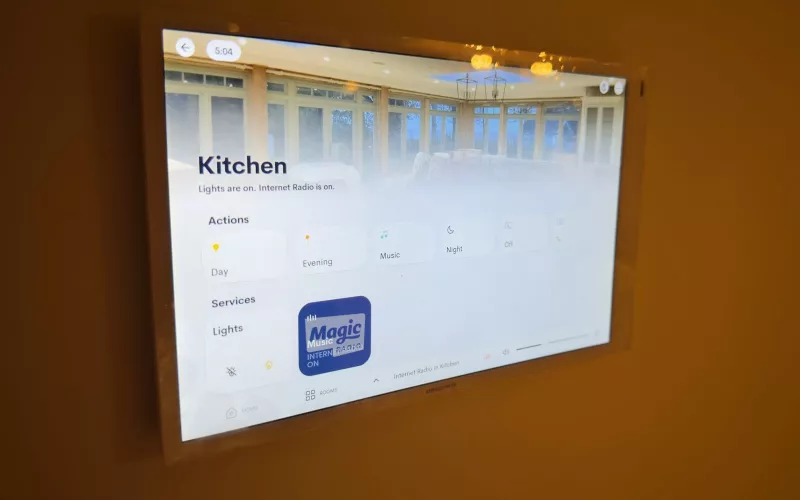
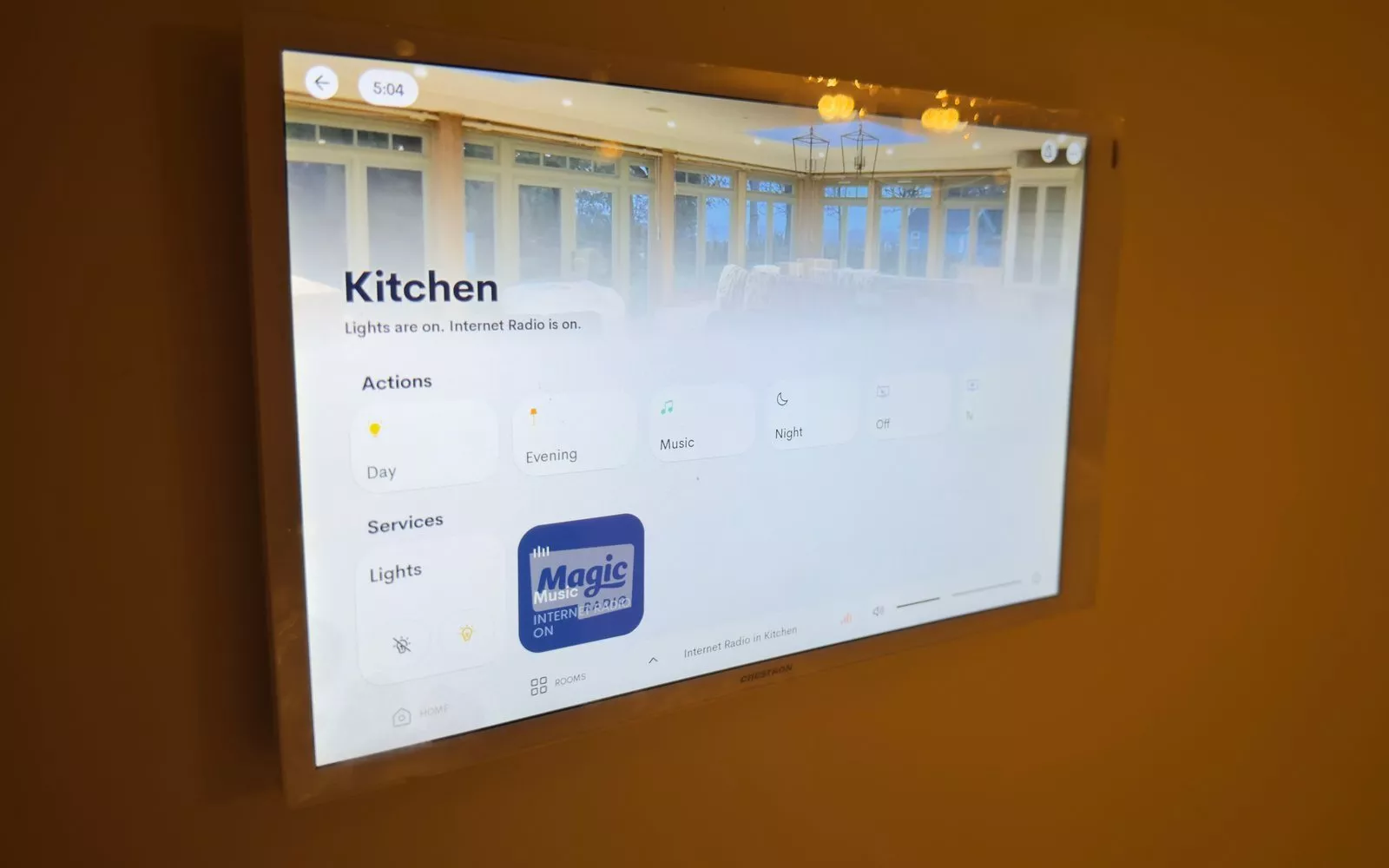
With home automation, the heating sits on the same keypads, touch screens and app as everything else. You can see and change the temperature of each zone from one screen in the kitchen, set the whole house back with an "away" button as you leave for a holiday, and give the hot water a boost before guests arrive. The same "goodnight" button that sets the alarm in our security wiring guide can also drop the bedrooms to their night setting, and the lighting scenes from our lighting design guide can sit on the same keypad.
The key is choosing a heat pump that can talk to the rest of the house. Before you sign off the heat pump order, ask your installer whether the unit has a documented way for another system to connect, such as a gateway or an open protocol like Modbus, rather than only its own app. Then check that your chosen smart home system supports it. Our guide to choosing a home automation system explains how the main systems differ. Done this way, the heat pump keeps control of its own efficiency, and the smart home simply asks for the temperatures you want.
All of this runs over your network, so the comms cabinet needs a good wired network with a cable to the heat pump controller and the manifold, not just Wi-Fi.
Who does the work
We plan and install heating controls: thermostats and room sensors, zoning with the manifold wiring centre, and linking the heat pump to the smart home. We work to your heat pump installer's design and do not install the heat pump itself. Kieran McGuire, who founded 1Install, is an electrician, as are a few of our team, so we know how the controls cabling has to fit around the rest of the electrics and the airtight layer.
Our survey and design service puts every thermostat, sensor and cable on the drawings, with a cable schedule your electrician can work from. We can check the cabling before the walls are closed, then come back after the heat pump is commissioned to set up the controls, programme the scenes and show the family how to use them.
Questions we are often asked
Do I need a thermostat in every room with a heat pump?
Not usually. A heat pump works best with a few sensible zones, and too many zones can work against it. Agree the zones with your heat pump designer first, then place a thermostat or sensor in each one.
Can I use a smart thermostat with a heat pump?
Yes, if it is one the heat pump manufacturer supports or it works through the heat pump's own controller. A thermostat made for switching a boiler on and off can stop a heat pump from running in the steady way it should.
Will the heating work if the internet goes down?
It should. The heat pump's own controller and the thermostats keep heating the house without the internet; you lose remote control from your phone until it comes back. That is one reason we keep the heating logic in the house, not only in an app.
Can I get an SEAI grant for the heat pump in my self build?
Not the heat pump grant. When we checked in October 2026, SEAI said a home must have been built and occupied before 2021 to qualify, so a new build does not. Check the SEAI website for the current rules before you budget.
When should I decide on the heating controls?
At the same time as the heat pump design, and before first fix. That is when the thermostat positions, the manifold cable and the link to the comms cabinet are cheap to add.
The heating, the cameras and the app all lean on your network, so it is worth planning that now too. Send us your floor plans and we will mark where the Wi-Fi access points go, list the Cat6 runs back to the comms cabinet and send a priced kit list, free and with no obligation: here is our free Wi-Fi design for self builders.
Book a consultation or call Dublin on 01 906 9326 or Cork on 021 202 8107.
- Log in to post comments