On a rural self build the video doorbell and any smart lock should go on the door your household actually uses, which is often the back or utility door rather than the front. Wire each of those doors with a Cat6 cable back to the comms cabinet at first fix, and the doorbell, the lock and any outbuilding doors will work reliably even where mobile signal and Wi-Fi are poor. Here is how we plan it for country houses.
This guide is for people building their own home in Cork, from a one off house outside Bandon or Mallow to a coastal site in west Cork, where the house is often set well back from the road, visitors come round the side, and a garage or shed sits across the yard.
Start with how people arrive
Before anyone chooses a video doorbell, walk through the plans and ask a simple question: which door will the postman, a neighbour and your own family use? On many rural houses the formal front door is opened a few times a year, while everyone else comes through the utility, the back porch or the garage. A doorbell on a door nobody uses is money wasted, and a lock that only covers the front door leaves the real entrance on an ordinary key.
So we mark up every external door and decide, door by door, whether it needs a doorbell, a smart lock, an alarm contact, a light, or just a good mechanical lock. That list then becomes the cable schedule.
Door by door checklist
| Door | Common choice | Cable at first fix |
|---|---|---|
| Main front door | Video doorbell or door station, motorised lock if the door is made for it | Cat6 to the door station, power and control cable to the frame |
| Back or utility door | Keypad or fob lock for the family, alarm keypad nearby | Cat6 or control cable to the frame, alarm cable |
| Garage side door | Battery smart lock or a wired lock if the garage has power and a network | A data cable in a duct from the house |
| Shed, workshop or garden room | Battery lock, an outdoor camera, a light on a sensor | Power and a data cable in a duct laid at groundworks |
| Gate at the road | Video intercom with a gate release | Ducts and cable to the pillar, or fibre on a long drive |
For the gate end, our guide to video intercoms and electric gates for Cork self builds covers long drives and the cable limits that come with them.
Why a wired video doorbell beats a battery one in the country
Most battery doorbells and many smart locks rely on the home Wi-Fi, and some fall back to the phone network for alerts. In a rural Cork house both can be a problem: thick block walls, foil backed insulation and a door at the far end of the house weaken the Wi-Fi, and mobile coverage can be patchy. The result is a doorbell that rings on your phone after the visitor has gone.
A Cat6 cable from the comms cabinet to each door station fixes that. It gives a steady connection, and many door stations can take their power over the same cable, so there is no battery to charge on a cold wet doorstep. Run a second cable to wherever you would like to answer the door inside, such as a screen in the kitchen, even if you only use your phone at first. Your broadband matters here as well, because answering the door from work depends on it; our guide to self build broadband in Cork explains the ducts and the entry point.
Put the router, the network switch and the door station power on a small battery backup in the comms cabinet. A short power cut is common in the country, and the doorbell and lock should not stop working with it.
Smart locks for the doors your family uses
A motorised lock built into a door needs power carried into the door leaf through a concealed cable transfer, and that has to be agreed with the door maker before the doors are made. For the back or utility door this is often the most useful upgrade in the house: children come home from school to a code, a neighbour can feed the dog, and nobody hides a key under a pot.
For the garage, the shed or the workshop across the yard, a battery smart lock that fits the existing cylinder is usually the practical answer, as long as the network reaches it. Whatever you choose, keep a mechanical key for every door and make sure each one opens from the inside without a code or an app.
Keyless entry fitted by a business counts as access control in Ireland, a licence category of the Private Security Authority. 1Install is PSA licensed for intruder alarms and CCTV, so check that whoever installs and commissions your access control holds the PSA access control licence. We plan the doors, run the cabling and link the door stations, the alarm and the lighting into one system; our security wiring guide for self builders has more on the alarm and cameras.
Choose devices that stay secure
A video doorbell is a camera and a microphone on the outside of your house, and a smart lock controls who gets in, so the security of the device itself matters. Since 1 August 2025, under the European Union's Delegated Regulation (EU) 2022/30, radio equipment that can communicate over the internet must meet cybersecurity requirements before it is sold here, including protecting the network and, where the device processes personal data, protecting that data and your privacy. We read that as a reason to buy from established brands through proper channels, not as a guarantee that any one product is secure.
The rest is up to you and your installer: change any default login, keep the firmware up to date, give the doorbell and cameras their own part of the network, and point the camera at your own door and drive rather than the road. Our founder, Kieran McGuire, is an electrician, as are a few of our team, and we set the network up this way as standard on the systems we commission.
Bringing it together
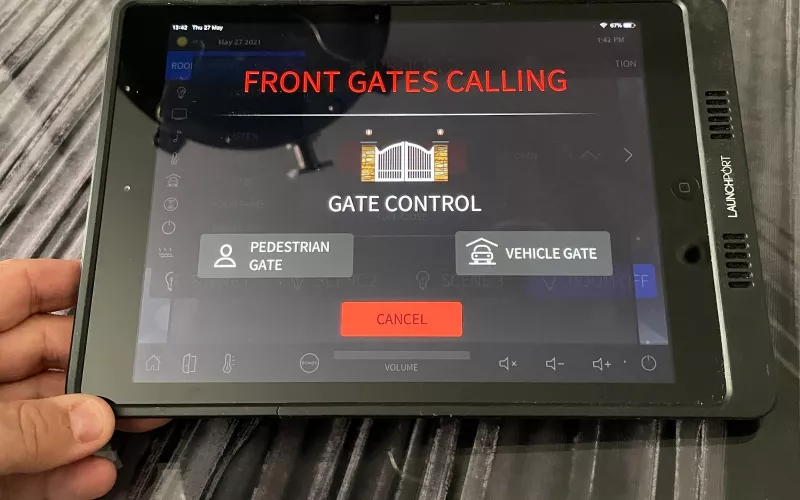
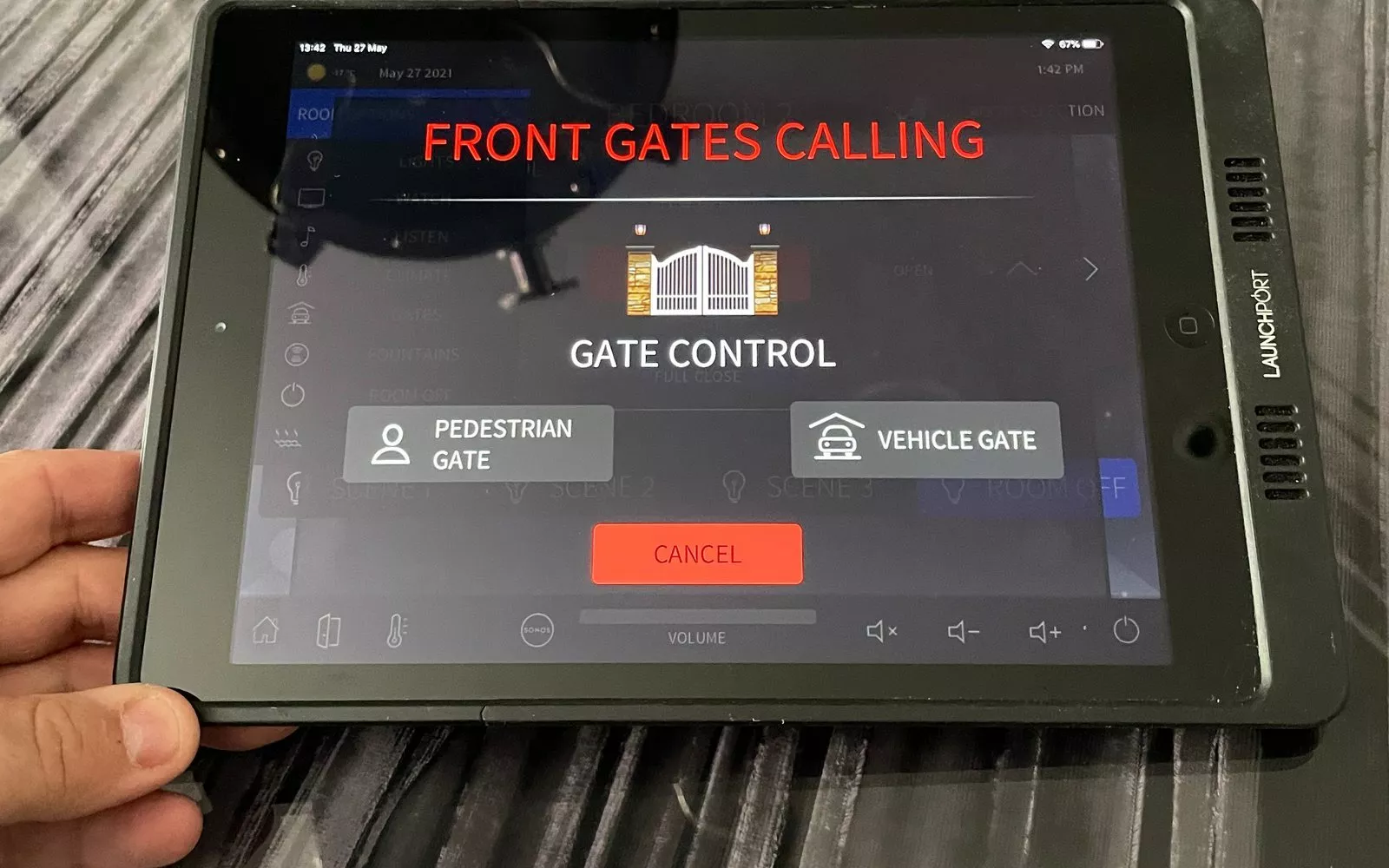
With the doors wired, the pieces can work as one: a doorbell call can show on a touch panel in the kitchen, unlocking the back door at night can light the yard and the hall, and a "going out" button can lock the doors and set the alarm. Our Crestron page for Cork shows one way to do it, and our rural automation page covers monitoring on farms and country properties. Our survey and design service puts every door, cable and device on one set of drawings for your electrician; a design consultation or site survey costs 440 euro plus VAT and covers up to 4 hours.
Questions we are often asked
Which door should have the video doorbell on a rural house?
The one visitors actually come to. On many country houses that is the back or side door, so plan the cable there, and add the front door too if you want both.
Will a video doorbell work with poor Wi-Fi?
A wired one will. A Cat6 cable to the door station removes the Wi-Fi problem completely, and many door stations take their power over the same cable.
Can I put smart locks on a shed or garage?
Yes. A battery lock suits most outbuilding doors, as long as the network reaches it. Lay a duct with a data cable to the building at groundworks.
Are smart locks safe to use in a power cut?
Choose locks with a mechanical key override and put the lock power and the network on a battery backup. Every door should still open from the inside by hand.
Do the new EU rules make every smart doorbell secure?
No. They set minimum cybersecurity requirements for connected radio devices sold here, but setting the device up properly and keeping it updated still matters.
Your doorbell, locks and cameras all lean on the network, so plan it while the plans are still on paper. Send them to us and we will mark the access points, list the Cat6 runs to the comms cabinet and any outbuildings, and price the kit, free and with no obligation; the free Wi-Fi design offer for self builders tells you how.
Book a consultation or call our Cork office on 021 202 8107.
- Log in to post comments