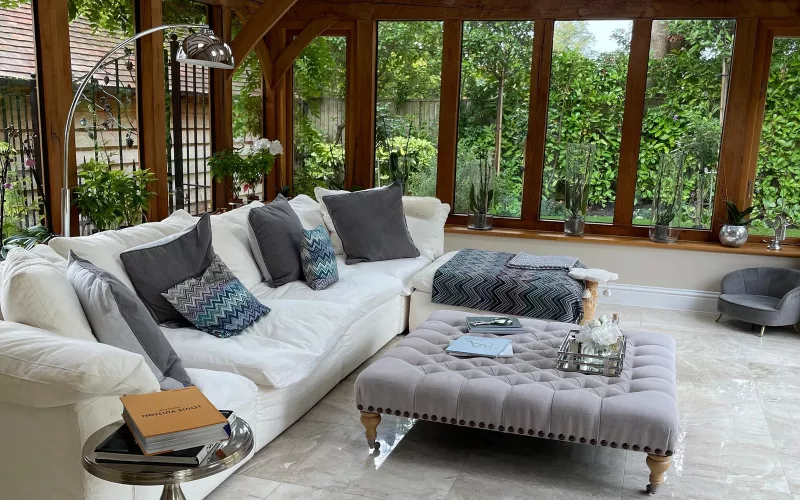
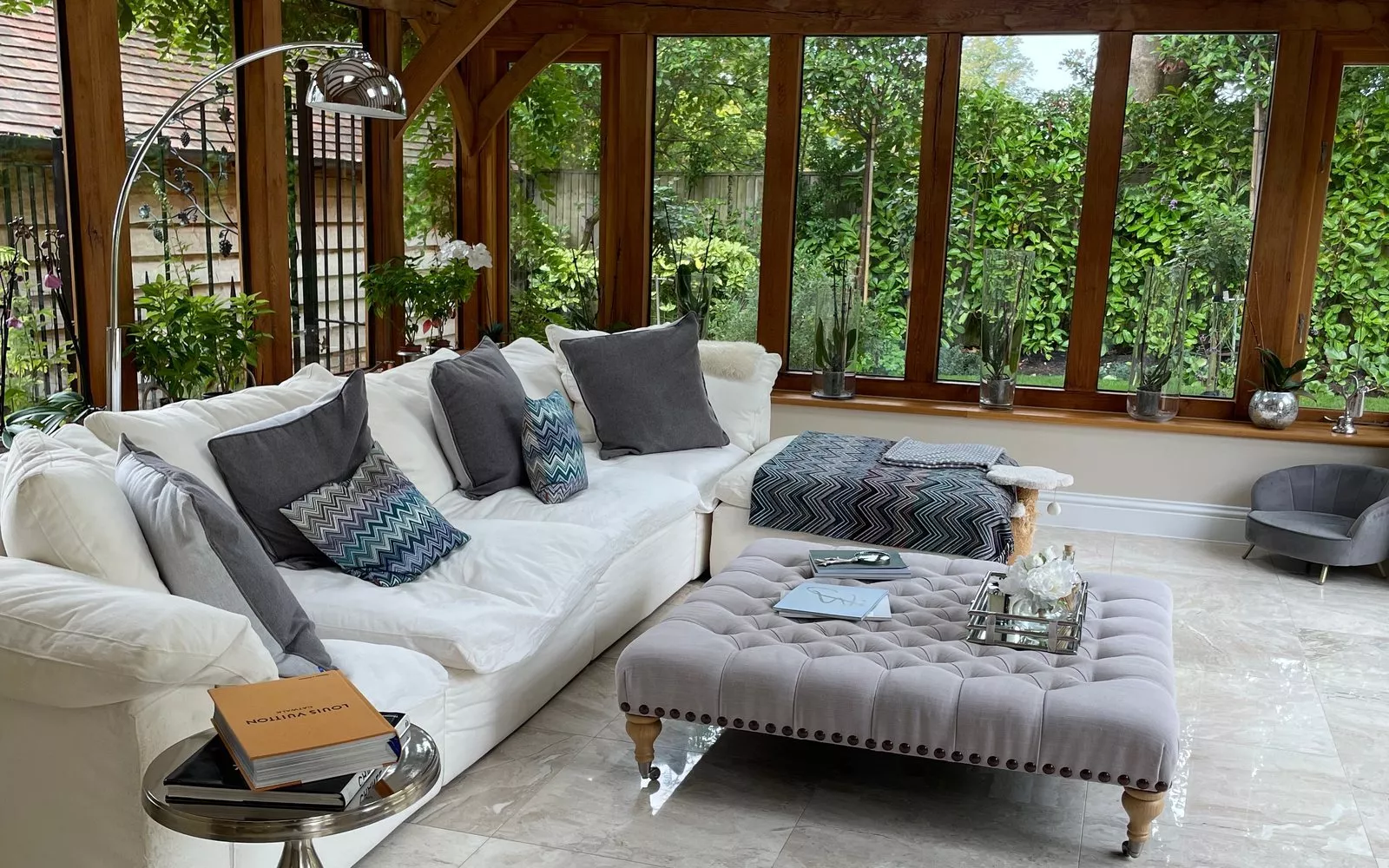
Motorised blinds make the brightest rooms in a Cork home usable all year: the garden room that is too hot by lunchtime, the kitchen with a glass roof, and the living room where the sun off the harbour makes the TV unwatchable. Set to move by themselves, they cut glare, protect privacy and keep out the worst of the summer sun without anyone having to remember.
Cork homes have been gaining glass for years. Oak framed garden rooms, glazed rear extensions in Douglas and Rochestown, sea facing living rooms around Kinsale and Crosshaven, and new energy efficient houses with large south and west windows. All of them are lovely on a grey February afternoon. On a still day in July, some of them are hard to sit in. This guide goes through those rooms one by one and what motorised blinds can do in each.
Warm rooms in well insulated houses
An article in The Irish Times on climate resilient homes (15 October 2026) set out the problem clearly. Pat Barry, chief executive of the Irish Green Building Council, is quoted: "Remember that insulation also keeps the heat out." The article explains that south and west facing glazing lets in a lot of solar heat, which can then be trapped inside a well insulated house.
The same piece says that internal blinds help, but that external shading such as awnings, external blinds, shutters and planting is preferred, and that retrofitting external shading can be costly. It also points to good ventilation, with vents secure enough to leave open overnight. So blinds are one part of the answer, not the whole of it. For most existing Cork homes, though, internal blinds are the part you can add without changing the outside of the house, and motorising them is what makes them work.
Motorised blinds room by room
Garden rooms and orangeries
Glazing on three sides and often overhead is the hardest case. Roller blinds on the side windows and roof blinds overhead, all motorised, let you shade the side the sun is on and keep the rest open to the garden. Because the glass is high and awkward, motors are usually the only practical way to have blinds here at all.
Kitchens with a glass roof or roof lights
Midday sun through a roof light lands straight on the worktop and the people working at it. A blind in each roof light, closing on a schedule from late morning on sunny days, keeps the kitchen bright without the heat building up.
Sea facing living rooms
Light reflecting off the water comes in low and can be dazzling. A solar screen fabric cuts that glare while keeping the view, which is the reason for the big windows in the first place. Close it fully at night for privacy from the road or the path below.
Bedrooms
Blackout fabrics, often with curtains in front, keep bedrooms dark on early summer mornings. A morning scene can open them slowly at the time you choose.
New estates and overlooked gardens
In newer homes in Carrigaline, Ballincollig or Glanmire, the rear glazing often faces the neighbours. A sheer or screen fabric gives daytime privacy while letting the light in.
Which fabric for which window
| Window | Main problem | Fabric and control |
|---|---|---|
| Garden room side glazing | Heat and glare in the afternoon | Solar screen, lowered by schedule on the sunny side |
| Roof lights and glass roofs | Overhead heat at midday | Roof blinds, closed from late morning on sunny days |
| Sea or harbour facing windows | Low reflected glare | Solar screen by day, fully closed at night |
| Bedrooms | Early light | Blackout, with a bedtime and a morning scene |
| Overlooked rear glazing | Privacy | Sheer or screen fabric, closing at dusk |
Why blinds that move by themselves work better
Blinds only keep heat out if they are closed before the sun reaches the glass. In a family home that rarely happens by hand: everyone is out, or busy, and the blinds come down once the room is already warm. Motorised blinds can follow a schedule, close as part of a scene, or close when a room gets too warm. An Away scene can close everything at dusk so the house looks lived in.
The blinds we fit come from Lutron and Crestron: roller blinds, Roman blinds, curtains and shades. New builds get wired motors; for windows already in place, battery or wireless motors avoid new cabling. They can share keypads with your lighting control, so one button sets the lights and the blinds together. For the Lutron side, see our Lutron installer in Cork page; for Crestron's latest fabrics, our post on Crestron shades.
Building or extending?
Plan power and a recess above each window before plastering, so the blinds disappear into the ceiling when open. Our self build guide to motorised blinds wiring covers that step. If you want external shading as well, raise it with your architect early, because it changes how the outside of the house is detailed.
More on what we fit is on our motorised blinds in Cork page and our blinds and curtains page. Our Cork team covers the city and county, from Montenotte and Blackrock to Kinsale and West Cork, plus Kerry, Waterford and Limerick; see our Cork page.
Questions we are often asked
Can you motorise blinds in a glass roof?
Yes. Roof blinds need to be planned for the shape and pitch of the glazing, and motors are the practical way to work them.
Will motorised blinds keep a garden room cool?
They help a great deal if they close before the sun gets in, and good ventilation helps too. External shading does more, but it is a bigger change to the building.
Do I need new wiring for motorised blinds?
Not always. Battery and wireless motors mean most existing windows can be automated without new cabling.
Can blinds be controlled from my phone?
Yes, and by keypad, voice, schedule or scene as well.
Are motorised blinds noisy?
Very little. Lutron and Crestron design their motors to run quietly enough for a bedroom.
If you have a Cork room that is too bright or too warm to enjoy, we will look at each window with you and plan motorised blinds that look after it every day.
Book a consultation or call our Cork office on 021 202 8107.
- Log in to post comments