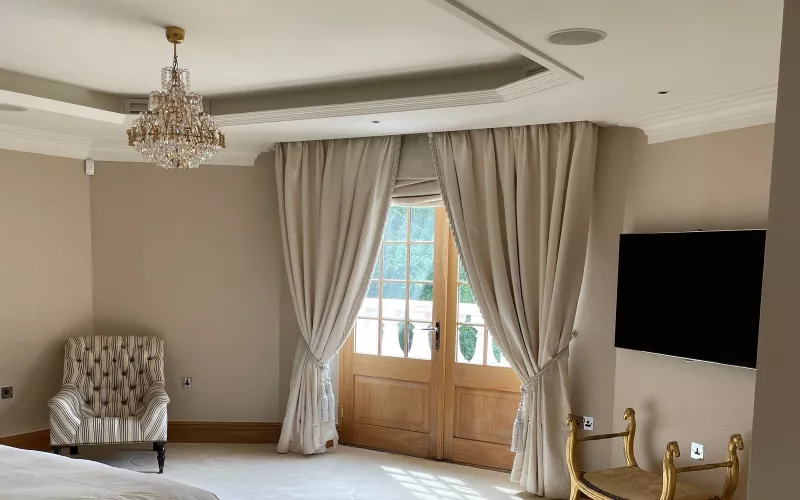
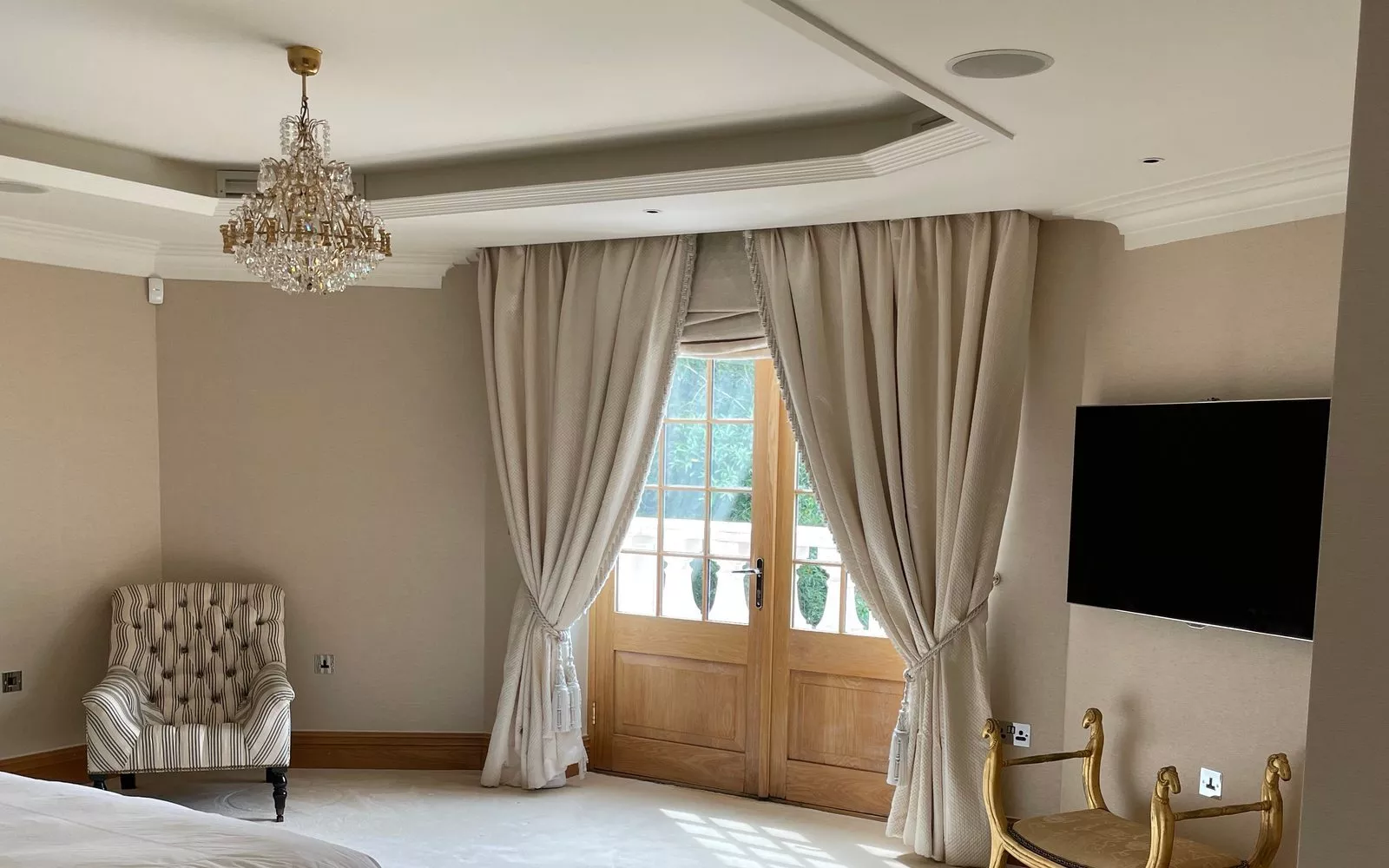
Speaker wiring is one of the few parts of a smart home that has to be decided before the plasterboard goes up, because every speaker needs its own cable back to an amplifier. Mark each speaker position on the drawings, run a home run of good speaker cable from every one of them to the comms cabinet, and you can choose the speakers themselves months later. Get that right at first fix and music, TV sound and announcements can reach any room without a single cable on show.
This guide is for people building their own home in and around Dublin, from a one off house in Fingal or north Kildare to a replacement dwelling on a suburban plot. It covers what to decide now, what to tell your electrician and your mechanical contractor, and how the cables should end up in the rack. If you have not yet worked out how many speakers each room needs, start with our guide to how many ceiling speakers a Dublin home needs, then come back here for the wiring.
Why speaker wiring belongs in the first fix plan
A ceiling speaker is quick to fit at second fix, but only if the cable is already sitting above the hole. Chasing a cable across a finished ceiling means cutting the plasterboard, making good and repainting, and in a new A rated house it can also mean breaking the airtight layer you paid to have tested. Speaker cable is cheap. Labour after the decorators have finished is not.
There is also a design reason. Where the speakers go depends on the lights, the smoke alarms, the ventilation grilles and the joists, so the speaker positions should be drawn on the same reflected ceiling plan as the lighting. Our lighting design guide for self builders explains how that drawing comes together.
Central amplifiers or local amplifiers?
Before anyone pulls a cable, decide where the amplifiers will live. There are two common approaches, and they need different speaker wiring.
- Central amplifiers in the comms cabinet. Every speaker cable runs back to one rack, usually in a utility room, plant room or under the stairs. This is the approach we use on most self builds. It keeps all the equipment in one cool, accessible place, and any room can be added to the system later without new cables.
- Local streaming amplifiers. A small amplifier sits near each room, often in a cupboard or a ventilated recess, with a network cable to it. This suits a house where only two or three rooms will ever have music, but each location needs power, a network point and somewhere hidden that does not overheat.
If you are not sure, wire for the central option. A home run from every speaker to the comms cabinet works with either approach, while a cable that stops in a hall cupboard only works with one.
Choosing the speaker cable
The longer the run, the thicker the cable needs to be, or the speaker loses volume and bass. Sonos gives a clear rule of thumb in its guide to choosing a speaker wire gauge, measured from the speaker to the amplifier:
| Run from speaker to amplifier | Cable size Sonos recommends |
|---|---|
| Under 24 m | 16 AWG (1.3 mm) |
| 24 m to 61 m | 14 AWG (1.6 mm) |
| 61 m to 92 m | 12 AWG (2 mm) |
| Over 92 m | Not recommended |
In a typical two storey self build most runs back to a central rack are well under 24 m, but a long single storey house or a garden room at the end of the site can push past that, so measure the longest runs on the drawings before ordering. Whatever the size, buy proper speaker cable rather than spare mains flex, keep it away from mains cables where they run in parallel, and label both ends with the room and the speaker number.
Your speaker wiring checklist, room by room
| Area | What to run at first fix | Things to watch |
|---|---|---|
| Kitchen and open plan living | A speaker cable to every ceiling speaker position, all home run to the comms cabinet | Keep speakers clear of the extractor, island pendants and ventilation grilles |
| Living room or TV room | Cables for front, surround and, if you want it, height speakers, plus a sub position and the TV wall | Decide on stereo or surround now; it changes the number of cables |
| Main bedroom | A stereo pair or one stereo speaker, and a cable to the TV position if there will be one | Keep speakers away from the bed head so music is not right above you |
| Bathrooms and en suites | A cable to one speaker suitable for damp rooms | Choose a moisture resistant speaker and keep it away from the shower |
| Patio and garden | Speaker cable in a duct to each outdoor speaker position | Lay the duct while the groundworks are open |
| Keypads and volume controls | A back box and a Cat6 cable at each keypad position, beside the light switches | One plate for lights and music keeps the walls tidy |
| Comms cabinet | Space, ventilation and power for the amplifiers beside the network switch | Amplifiers make heat; a closed cupboard needs airflow |
Ceilings, back boxes and the airtight layer
A new Dublin home is usually built to a high standard of airtightness, often with a membrane or airtight board above the top floor ceiling, and many have mechanical ventilation with heat recovery ducted through the ceilings. Both affect your speaker wiring.
On the top floor, the best place for speaker cables and speakers is in the service cavity below the airtight layer, so nothing has to pierce it. Where a cable must pass through, it should be sealed with a grommet or airtight tape, as our first fix wiring guide describes. A back box behind each ceiling speaker helps too: it stops the speaker drawing insulation dust into the room, keeps the sound in the room rather than in the void, and gives the speaker a consistent enclosure to work in.
Ventilation ducts are the other thing to watch. They are bulky, they often run along the same joist bays as the speakers, and they are usually installed by a different contractor. Send the speaker positions to your ventilation installer before they start, and ask them to keep the marked bays free.
TV sound and a cinema room
If the living room will have a surround sound system, plan the speaker wiring with the TV wall. That means cables for the front speakers either side of the screen or a soundbar position under it, surrounds behind or beside the seating, a subwoofer position with power and a cable, and an HDMI or network route from the TV wall to the rack. If you are thinking about a dedicated room, our page on home cinema installation in Dublin shows what goes into one.
Who does the work
On most self builds the electrician pulls the speaker cables to our drawings, and we fit, connect and programme everything at second fix. Our founder, Kieran McGuire, is an electrician, and several of our team are too, so we know how speaker wiring has to fit around the rest of the first fix and we can talk your electrician through it on site. Our survey and design service gives them a drawing with every speaker, keypad and cable, and a cable schedule they can tick off. For the systems themselves, see our page on multi room audio in Dublin.
Questions we are often asked
Can I run speaker wiring now and choose the speakers later?
Yes, and that is what we recommend. Fix the positions and run the cables at first fix, leave the ends coiled and labelled in the ceiling, and pick the speakers once the house is closed in.
Should speaker cables go back to one place?
In most self builds, yes. A home run from every speaker to the comms cabinet lets you use central amplifiers, change the system later and add rooms without new cables.
Do ceiling speakers need back boxes in a new build?
They are a good idea, especially on the top floor. A back box keeps insulation and dust out of the speaker, stops sound leaking into the void and helps protect the airtight layer.
What cable do I need for garden speakers?
Speaker cable rated for the conditions, run in a duct laid while the groundworks are open. Measure the run, because garden speakers are often the furthest from the rack.
Will the music still work if the internet goes down?
Music already stored or played from a source in the house will, and so will the keypads. Streaming services stop until the broadband returns.
Streaming music, keypads and the app all rely on the home network, so plan it alongside the speakers. Send us your plans and we will mark the access points, list the Cat6 runs to the comms cabinet and send a priced kit list, free and with no obligation. Here is how our free Wi-Fi design for self builders works.
Book a consultation or call our Dublin office on 01 906 9326.
- Log in to post comments