A Cork home typically needs three or four security cameras in the city and suburbs, and six or more on a rural property with a long drive, a yard or outbuildings. Just as important as the number is the lighting: cameras only give useful pictures at night if the outside lights are planned and tested with them.
Cork has every kind of house, from terraces in the city and semis in Douglas or Ballincollig to detached homes along the harbour and farmhouses well up a lane. A camera plan that suits one makes little sense for another. This guide gives a starting point for each, looks at the rural questions we are asked most, and explains why An Garda Síochána's own advice links cameras and lighting. We hold a PSA licence for intruder alarms and CCTV.
How many security cameras? A guide by property
The figures below are starting points we use when we walk a property, not fixed numbers. Each entrance, path and outbuilding you want covered adds to them.
| Property | Cameras to start with | What they cover |
|---|---|---|
| City terrace or apartment with a door to the street | 1 to 2 | Front door; a yard or back door if there is one |
| Suburban semi-detached | 3 to 4 | Front door, drive, side gate, back garden |
| Detached house in its own grounds | 4 to 6 | Each door, the drive, both sides and the rear |
| Rural home with a long drive and outbuildings | 6 or more | Road entrance or gate, the yard, sheds, garage, each door |
The rural questions
Covering the entrance at the road
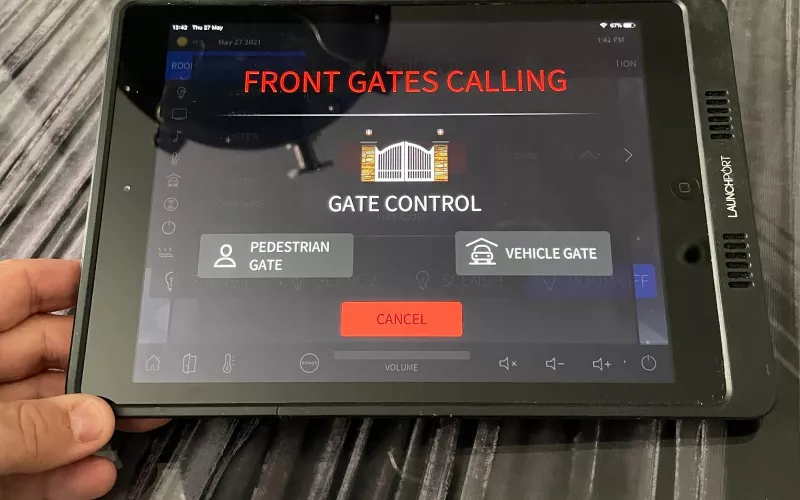
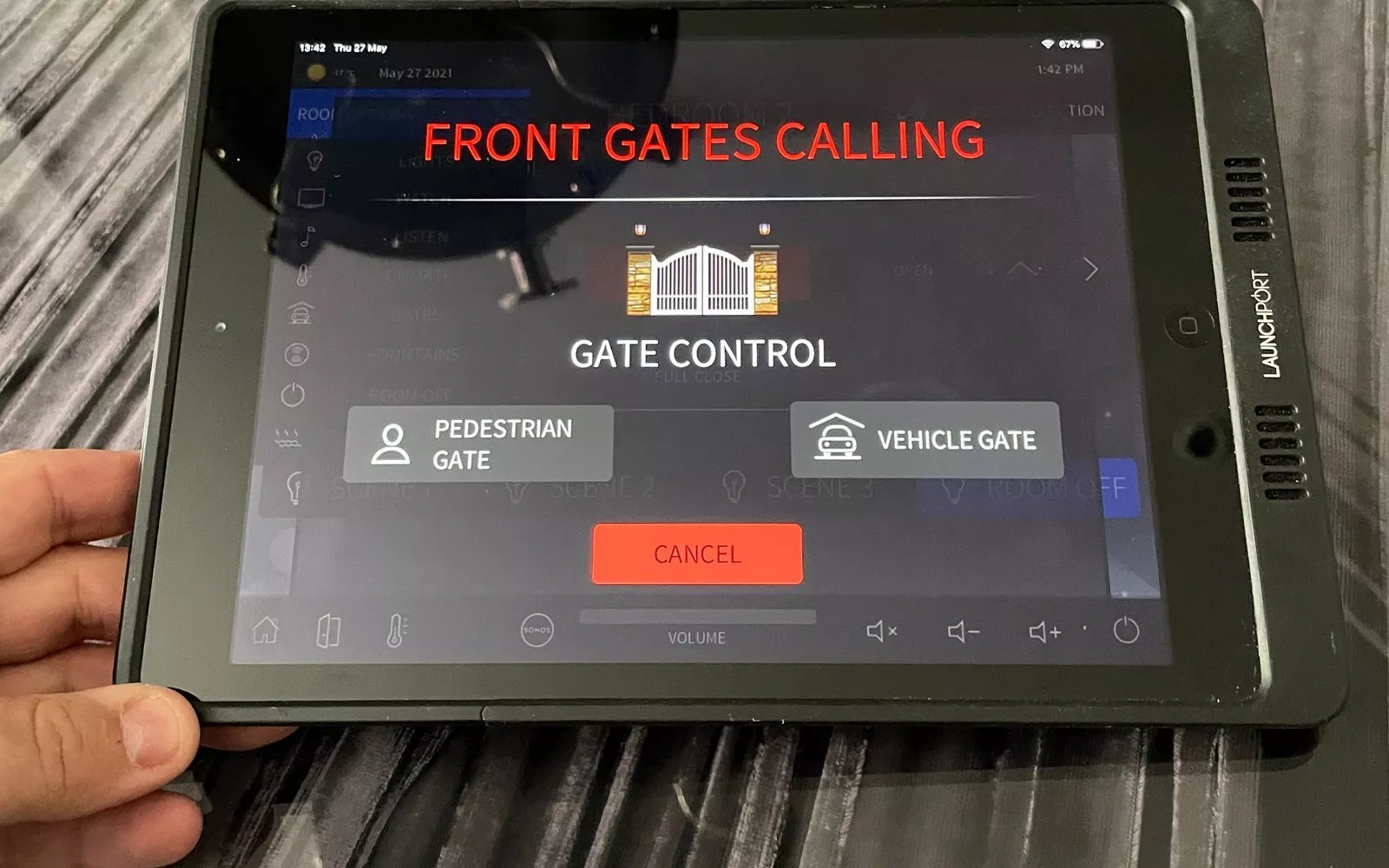
On a long drive, the camera that matters most is often at the gate, not the house. It tells you who is coming before they reach the door. A gate camera is usually paired with a video intercom so callers can be answered on a phone or a touch screen, as in the photo above. Our guide to video intercoms and gates for Cork self builds covers the cabling.
Sheds, yards and garages
Machinery, bikes and tools are often kept away from the house. A camera on each outbuilding door, fed back over a buried cable or a fibre link, means the house recorder sees the whole yard.
Weak broadband and power cuts
Cameras record locally even if the internet drops, so slow rural broadband affects viewing from your phone, not the recording itself. A small backup power supply keeps the recorder and network running through short power cuts.
Plan the lighting with the cameras
An Garda Síochána's information sheet Home Security Lighting (HS5, August 2020) says that if you also have a CCTV system, you should make sure the lighting is compatible with the cameras, and test on site in different light levels. The same sheet advises:
- Floodlights triggered by movement, mounted high on the wall and out of easy reach.
- Porch lights on a dusk to dawn sensor or a timer.
- Even lighting that avoids shadows and dark areas.
- Beams aimed so they do not light up the neighbours' house or the sky.
In practice that means we look at the cameras and the lights as one job. A camera pointed straight into a floodlight shows nothing useful, and a dark corner hides exactly what you installed the camera to see. Each view should be checked after dark as well as in daylight, which is the site testing the Garda sheet describes.
For lighting that works with the rest of the house, see our lighting control in Cork page and our guide to outdoor lighting for a Cork self build.
Keeping the house looking lived in
The Garda page Securing your home notes that the majority of burglaries take place in unoccupied homes, and lists the signs burglars look for, such as curtains drawn during the day, post piling up and lights that are either never on or on all day. Cameras tell you what happened; lights and blinds on a schedule help stop it happening. In a smart home, the same system that runs the cameras can vary the lights and blinds while you are away, which suits holiday homes in West Cork as well as family homes in the city.
Where the cameras should not point
Data protection rules apply once a camera records beyond your own property, such as a public road or a neighbour's garden. In rural areas this often means the gate camera, because the entrance sits right on the road. Careful angles and the privacy zone feature on modern cameras let you see the gate without recording passing traffic. Our security wiring guide covers this in more detail.
Making the cameras useful day to day
- Alerts that matter. Set motion zones so a tree in the wind does not wake you, but a car at the gate does.
- One app. Cameras, the gate and the intercom can all appear in a single smart home app.
- A strong network. Outdoor cameras and outbuildings need a properly designed network, which our Wi-Fi networks page explains.
- Looked after. Updates and checks under 1Install Care keep the recorder and cameras secure.
Questions we are often asked
How many security cameras does a farmhouse need?
Count the entrances and the buildings you want to protect. Six is a common starting point once the gate, yard and sheds are included.
Will infrared night vision do without outside lights?
Infrared records in the dark, but lights add colour, detail and a clear signal to anyone approaching. The Garda advice is to make sure lighting and cameras work together.
Can cameras work with no broadband?
Yes. They record to a recorder in the house; broadband is only needed to view them away from home.
Can I see the gate camera on my TV or touch screen?
Usually, yes. Camera feeds and gate calls can be shown on smart home touch screens and apps.
Are you licensed to install CCTV?
Yes, we hold a PSA licence covering intruder alarms and CCTV. Always ask to see an installer's licence before you hire them.
If you would like a camera and lighting plan for your Cork home or farm, we will walk the property with you, by day and if needed after dark, and mark where each camera and light should go.
Book a consultation or call Cork on 021 202 8107.
- Log in to post comments