This Control4 rescue in Cork is still under way, and this page follows it from start to finish. Part 1 covers what we found: a large Control4 home with an overloaded equipment rack, a failing network, problems with the CCTV and nobody able to say what went where.
Years of additions to the system had left the equipment racks overflowing with cables. We were asked to put it right, and we are rebuilding the racks and the network so that what is left is clean, labelled and documented.
We design, install and support Control4 systems in Cork with our own Cork engineers, and we take over systems that other companies installed. Our Control4 installer in Cork page has more on what we do.
How this series works
This is one page that grows with the job. Part 1, below, describes the system as we found it and the work so far. Part 2, further down, shows the finished racks and network in new photos, with a short before and after video. It sits on this page, so the whole project stays in one place.
- Part 1: what we found and the work so far, which is this part.
- Part 2: the finished racks and network, with new photos and a before and after video.
| Project | Control4 rescue in Cork |
|---|---|
| Location | Cork, Ireland |
| Type of work | System rescue |
| Systems | Control4, network, CCTV and rack rebuild |
| Status | Rack rebuild complete. Part 1 and Part 2 are on this page. |
Part 1: what we found
The house is large, and the equipment that runs it sits in racks. The brief was short: the racks were overflowing with cables, the network was giving trouble, there were problems with the CCTV, and nobody could say what went where. Every photo in this part was taken before the job was finished.
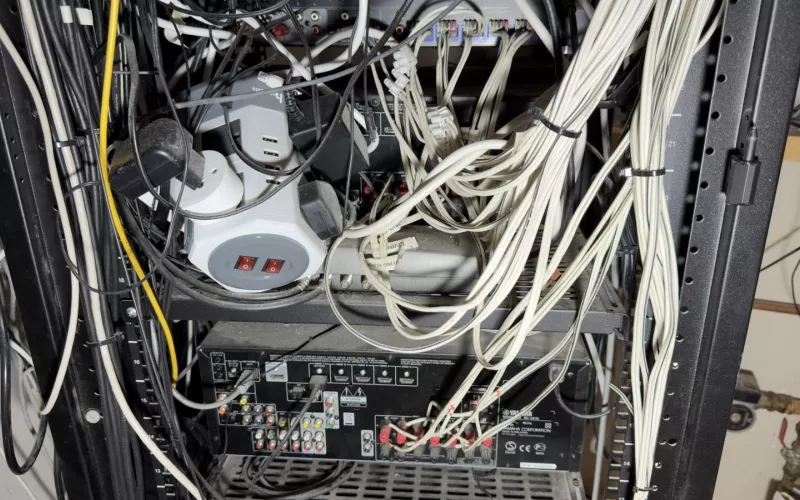
The original rack. The first photo shows the front of the rack as we found it. Blue patch leads are heaped over the network switches instead of running neatly to their ports, loose power cables hang down the front and a mass of cables sits above the rack. A Control4 CORE 5 controller, a 1U rack mounted unit that Control4 describes as coordinating audio and video, lighting, security and climate, sits below the switches. The second photo looks at the cabling behind the old rack, where white, grey and black cables are knotted together on a perforated shelf.
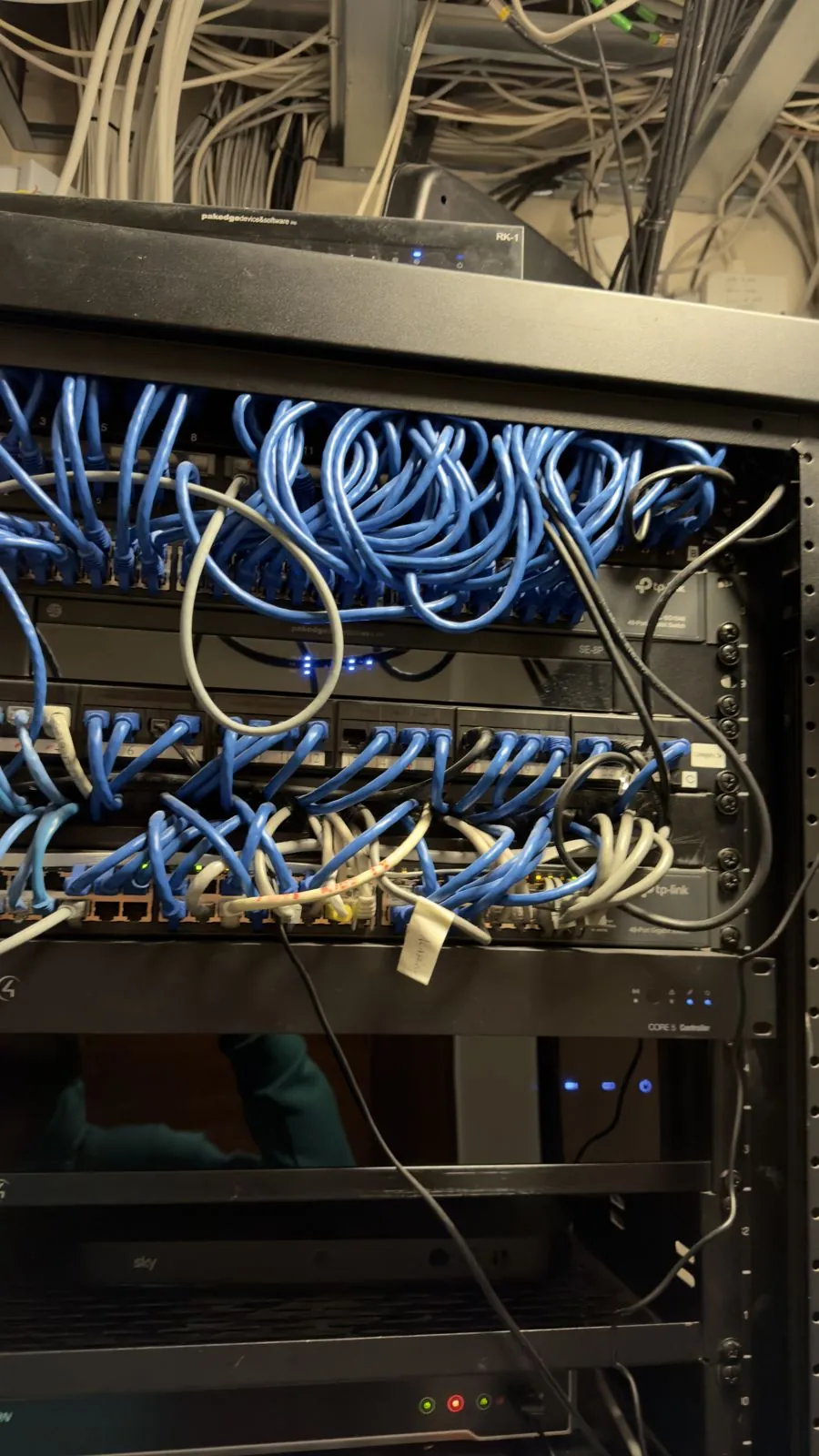
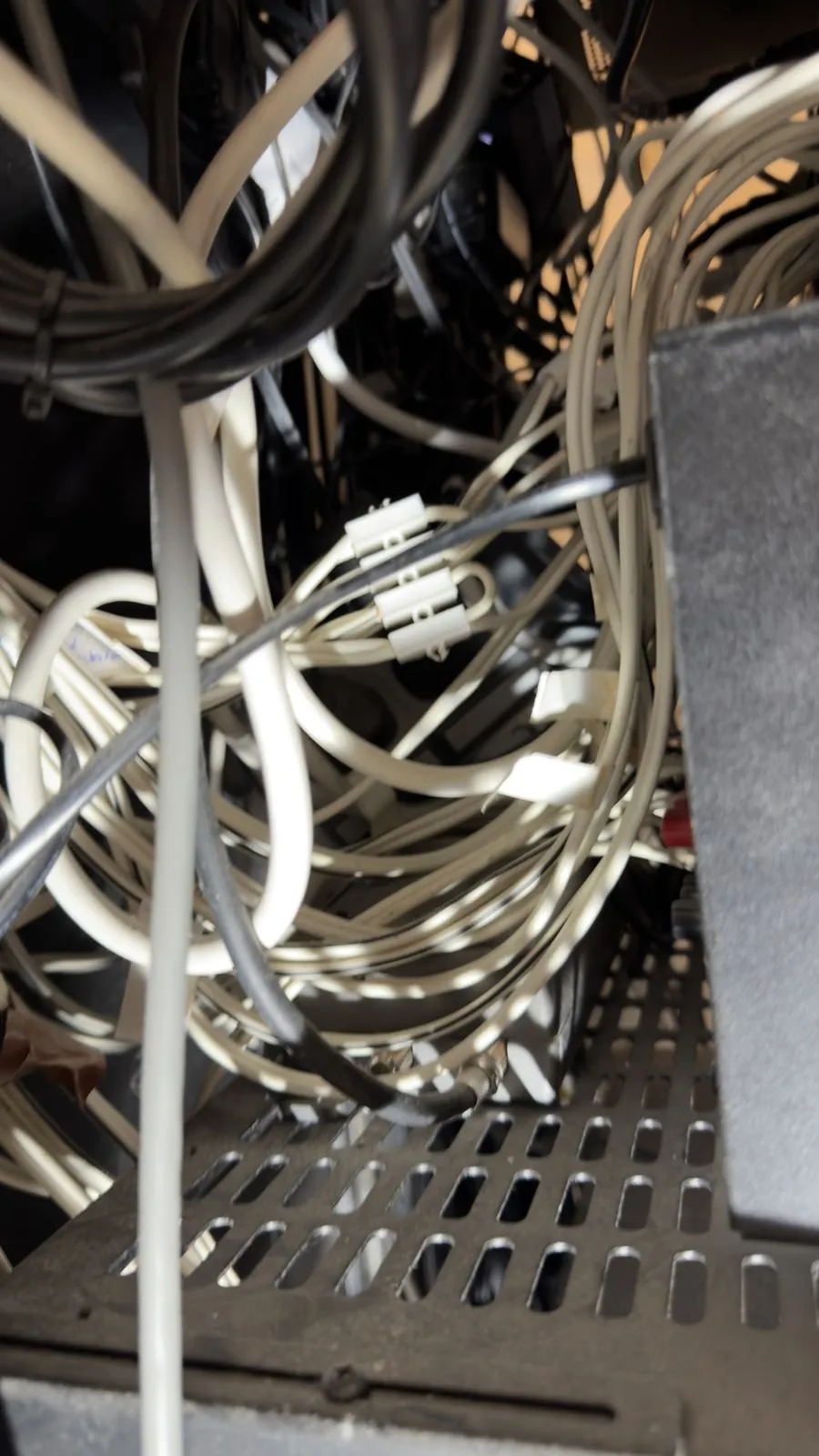
The photos show the front of the original rack and the cabling behind it.
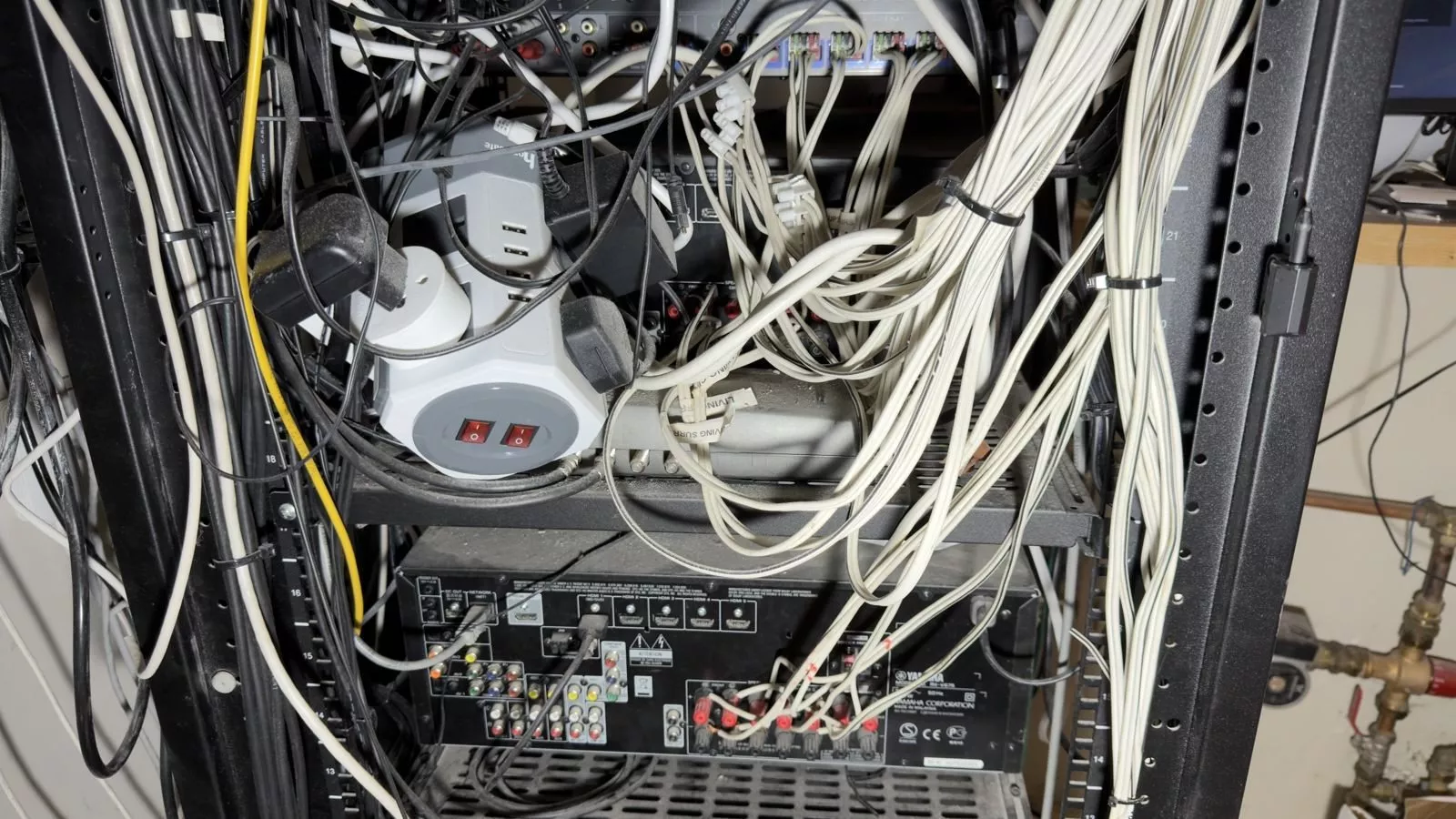
Overloaded patching and power. The main photo at the top of this page shows the rear of an overloaded rack. Power adaptors and a multi way power unit are piled on a shelf above an AV receiver, and thick bundles of white cable run down the side of the rack, some of them to the receiver's speaker terminals.
Why an overloaded rack causes problems
A rack like this rarely fails all at once. It fails a little at a time, and in ways that are hard to pin down:
- Faults are slow to find. When leads are heaped on top of each other and nothing is labelled, the only way to trace a fault is to pull leads out one at a time and see what stops working, which can cause new faults.
- Connections work loose. A lead that is twisted, pulled tight or pushed sideways can lose its connection now and then, so the symptoms come and go.
- Heat builds up. Cables piled across the front of equipment restrict the airflow, and equipment that runs hot can fail early or behave oddly.
- Power is hard to follow. Adaptors and multi way units crowded together are hard to inspect, and it is often unclear which device is on which supply.
- There is no record. If nobody can say what each cable does, every change carries a risk and the next engineer has to start from nothing.
A fault that looks like a problem with the control system can start in the wiring, the network or the power around it. That is why we survey all of them before we change anything.
Our Control4 rescue plan
On this job the work covers six stages:
| Stage | What we do |
|---|---|
| Survey | Survey the Control4 system, the network and the CCTV as they stand |
| Trace, test and label | Trace and test every cable, then label it |
| Rebuild the racks | Rebuild the racks with new patching, cable management and power |
| New network | Put in a new network |
| CCTV | Get the CCTV system working |
| Test and document | Test Control4 throughout and record what is where |
Our rescue projects page explains how we assess and document a failing system before we change anything, and the same thinking runs through this job. The documentation at the end matters as much as the rebuild, because it is what lets the next engineer open a rack and understand it.
The work so far
The next two photos were taken during the job.
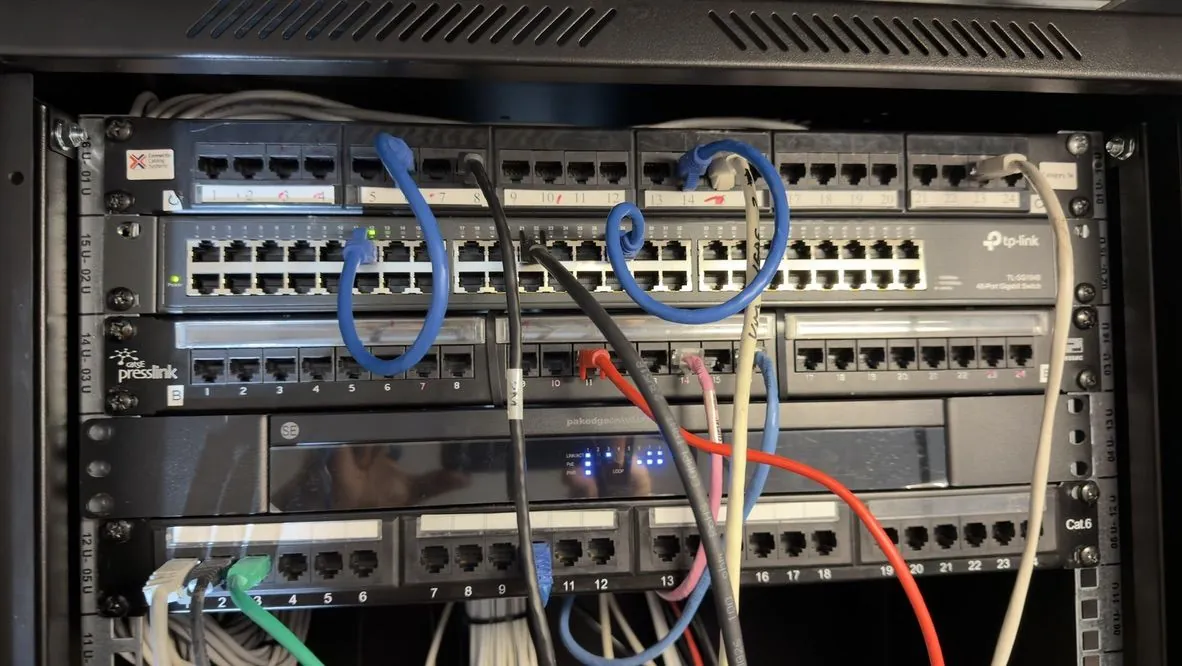
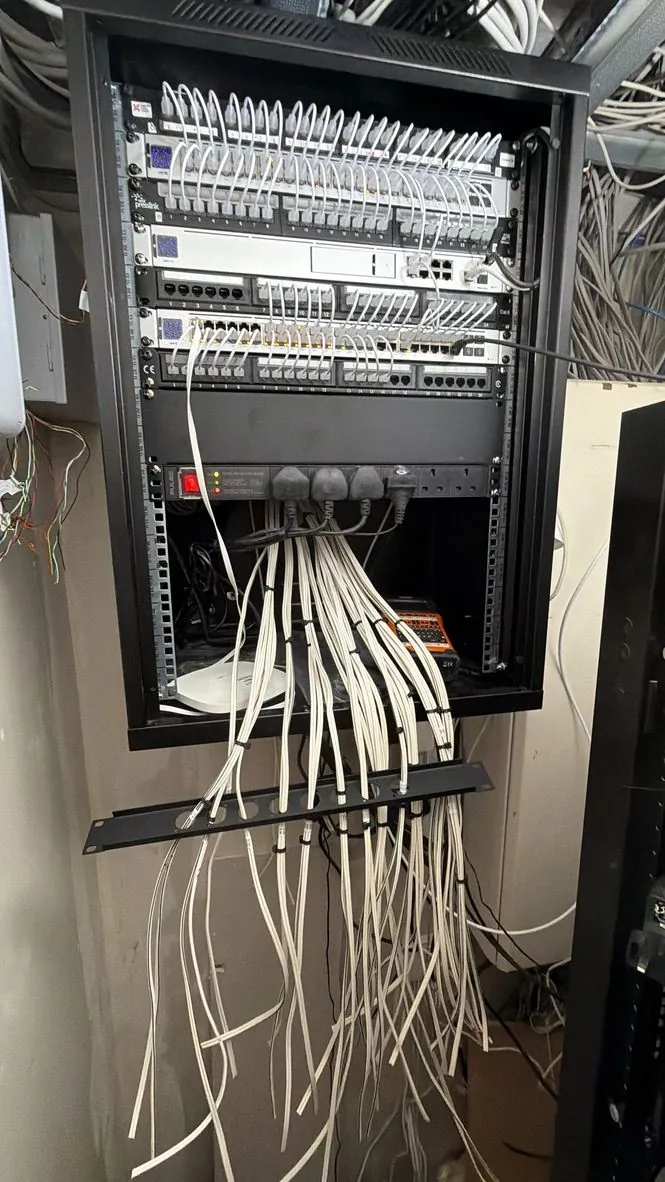
In the first, patch panels and a 48 port switch have only a few leads connected. In the second, a wall cabinet is being rebuilt: patch panels and switches are joined with short white patch leads, a rack power strip sits below them and long cables are tied in groups through a cable management bar. A handheld label printer sits at the bottom of the cabinet, because labelling is part of the job.
Signs your own system needs a rescue
You do not need a rack like the one in the photos to have the same problems. These are the signs we look for:
- Faults that come and go. Things that stop working and then fix themselves often point to loose connections, a network that is struggling or a weak power supply.
- Cameras or devices that drop off the network. That usually means the network needs attention, and our Wi-Fi and network design page shows how we plan one.
- Nobody can say what a cable does. Without labels and drawings, every repair starts with guesswork.
- The system has grown without a plan. Years of additions leave equipment, adaptors and leads wherever there was space.
- The installer has moved on. A system with nobody looking after it tends to collect small faults until they add up. Our Control4 system rescue project shows what that looked like in another house.
Part 2: the finished racks and network
The racks are rebuilt. Where Part 1 showed leads heaped over the switches and cables knotted behind the rack, the equipment now sits in two clean racks: a wall cabinet for the network and speaker connections, and a floor standing rack for the control, video and audio equipment. Watch the before and after, then see the finished photos.
The wall cabinet: network, power and speaker connections
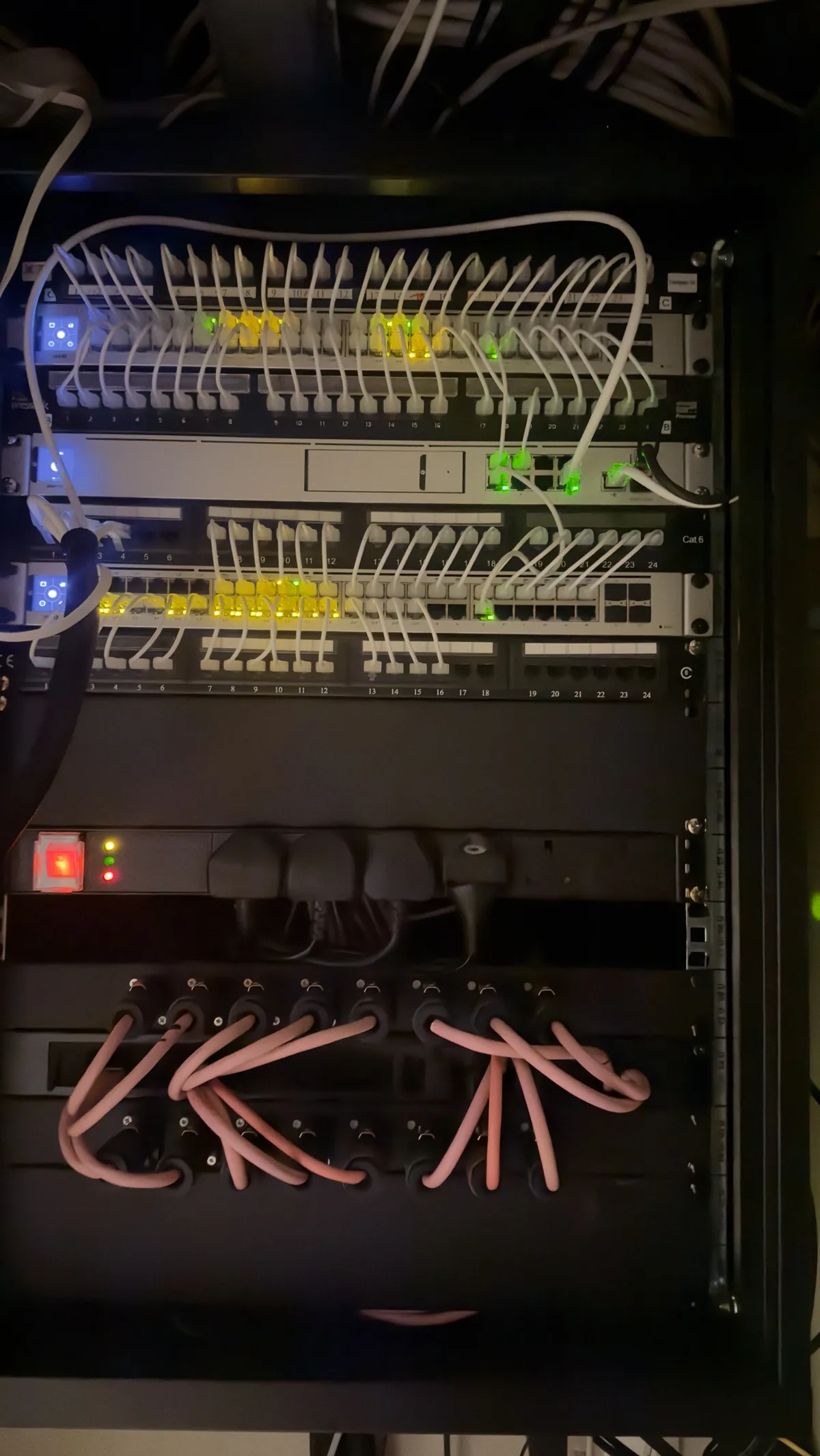
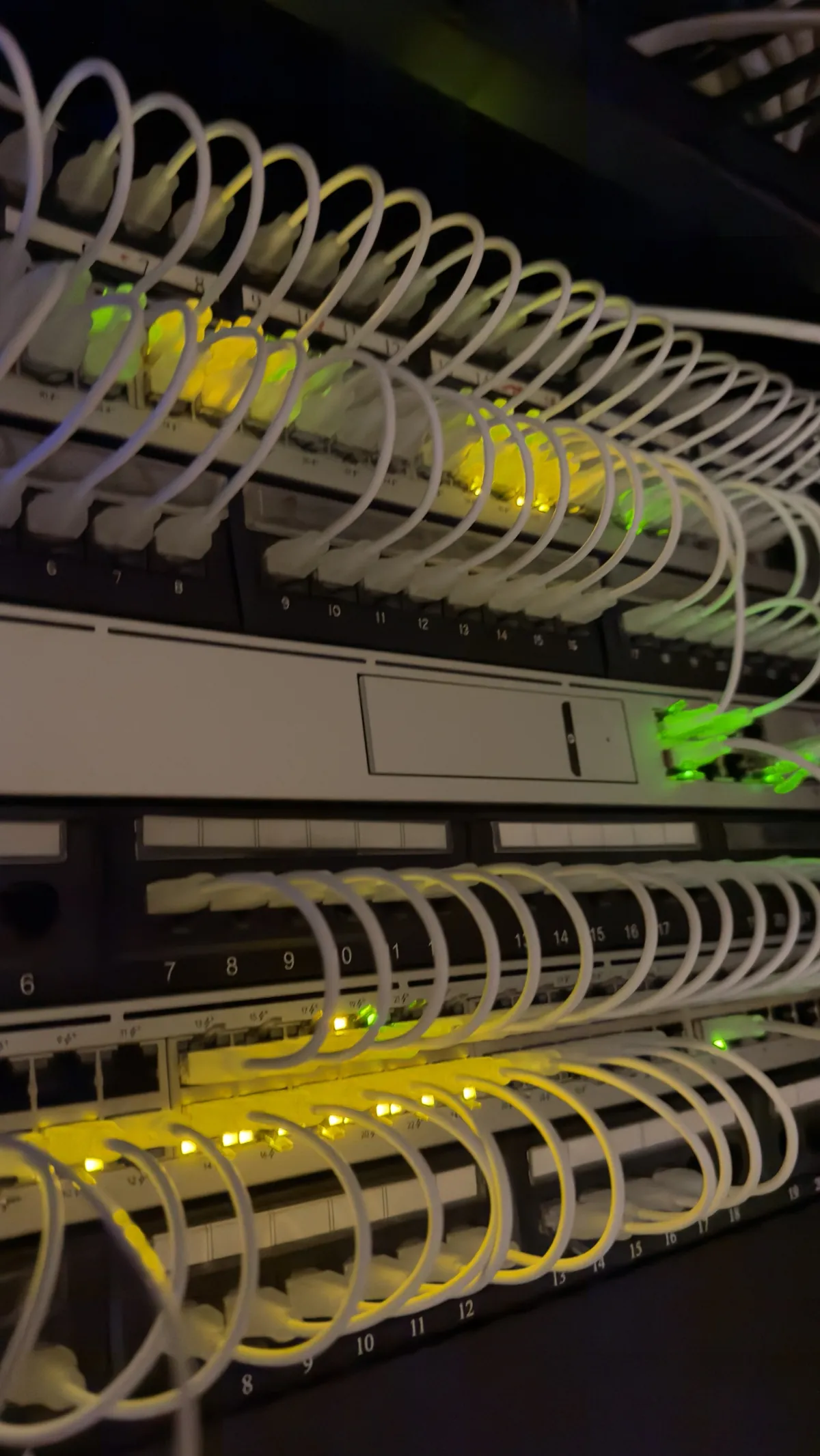
The wall cabinet holds two network switches, each with its own 24 port Cat6 patch panel, joined by short white patch leads that run straight from the panel to the switch. Below them sit a surge protected power strip and two rows of eight Speakon speaker panels, with the pink speaker cable dressed in neat loops. The close up shows how even the leads are.
The equipment rack: control, video and audio
The floor standing rack holds the Control4 controllers, the Sky boxes, the CCTV recorder and the multichannel amplifiers, with power run through OvrC enabled power controllers so a locked up device can be restarted remotely. Every shelf and unit has its own place, with space to add equipment later.
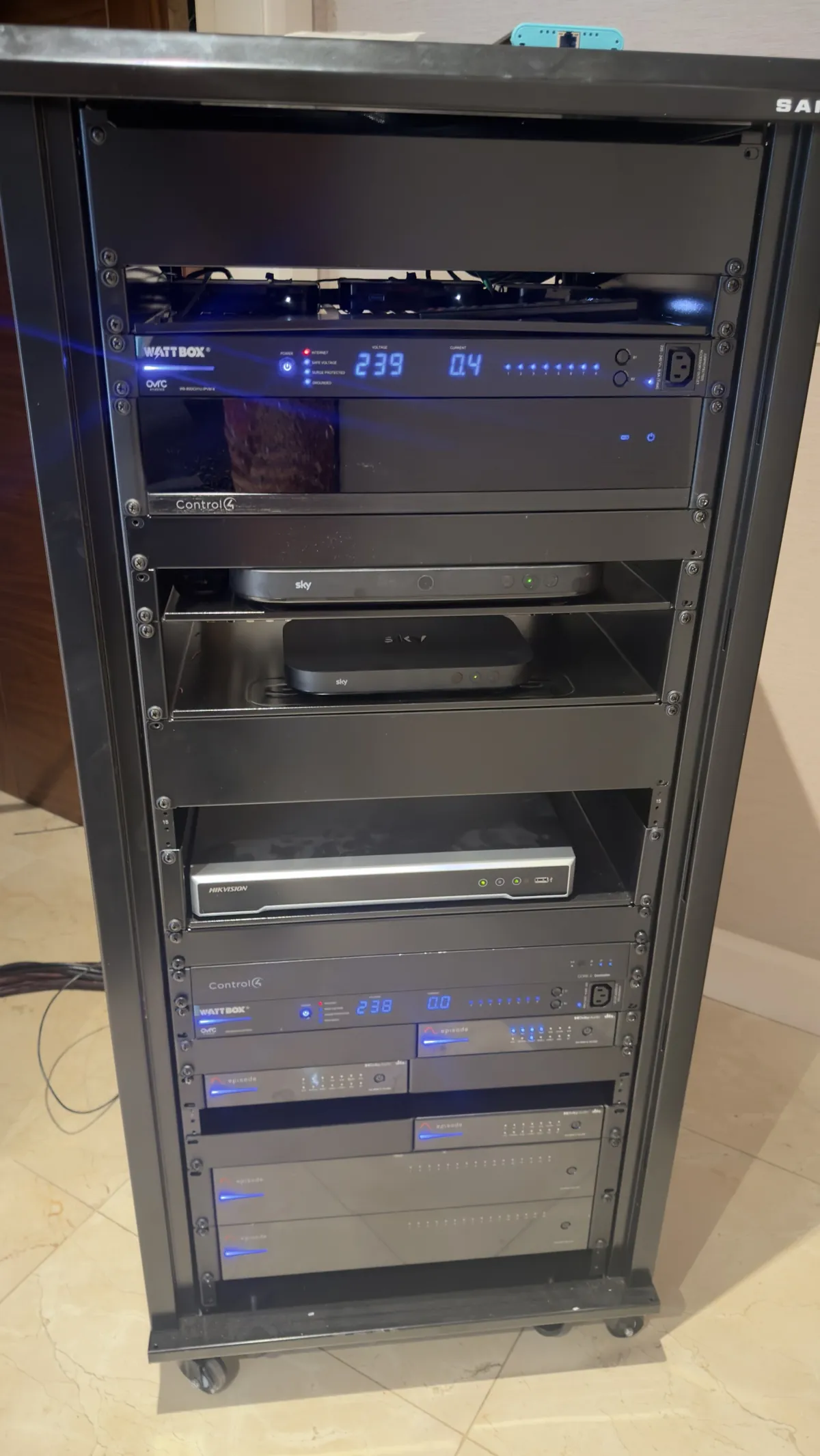
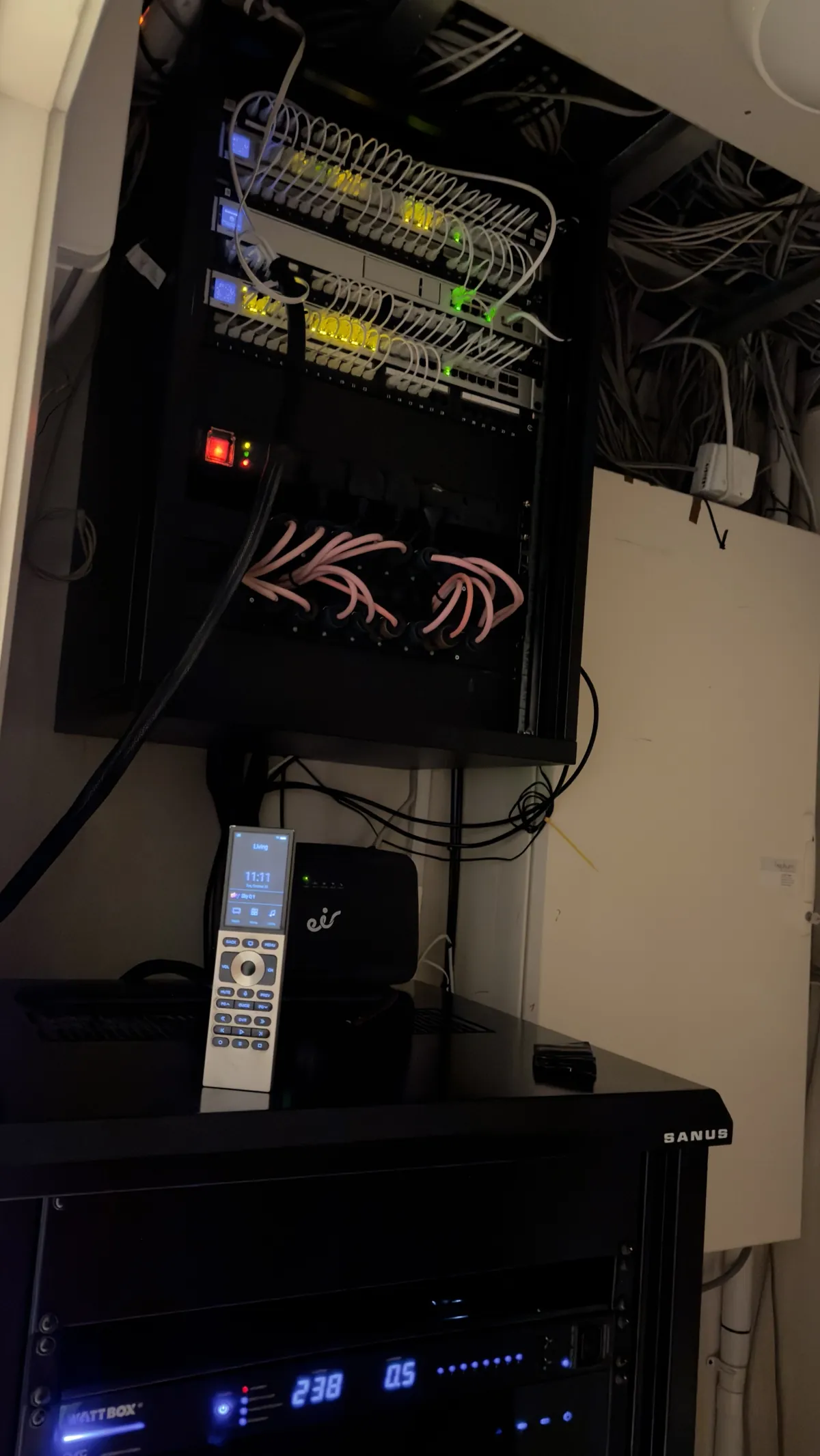
What changed
| Part 1: as found | Part 2: as finished |
|---|---|
| Patch leads heaped over the switches | Short matching leads, one per port, straight from panel to switch |
| Loose power cables and adaptors on a shelf | Surge protected power strips and power controllers |
| Speaker cables knotted together | Two rows of eight Speakon panels with the cable dressed neatly |
| Nobody could say what went where | Racks that can be read at a glance |
What happens next
If you have a Control4 system with a rack like the one in the first photo, we can survey it and tell you plainly whether it needs a rebuild or something smaller. See our survey and design step for how that starts.
Questions we are often asked
What is a Control4 rescue?
A rescue is when we take over a system that is not working properly, often one that another company installed or that has grown over the years. We survey what is there, trace and test the cabling, put right the faults and record the result, so that the next engineer can see what goes where.
Can you rescue a system that another installer put in?
Yes. A system does not have to be one of ours for us to survey it and work on it. We find out what is installed and what is not working, then tell you whether it needs a few fixes or a rebuild before any work starts.
Why does a tidy, labelled rack matter?
It makes the system dependable and cheaper to look after. When every lead is labelled and routed properly, a fault can be found quickly, a new device can be added without disturbing the rest and any engineer can pick the system up. In a rack like the ones in the photos, the same fault can take much longer to trace.
Does the Control4 system have to be replaced?
Not always. The wiring, the network and the power around the controller are often where the faults start, and putting them right can make an existing Control4 system dependable again. We look at all of them at the survey, and if the system itself is the problem we say so.
How long does a rescue take and what does it cost?
It depends on the size of the house, how much cabling there is and how far the system has drifted from a clean setup, so we cannot give a figure without a survey. After the survey we send a written report and talk through the next steps with you. Our smart home cost page gives a starting point.
Book a consultation or call Dublin on 01 906 9326 or Cork on 021 202 8107.
- Log in to post comments