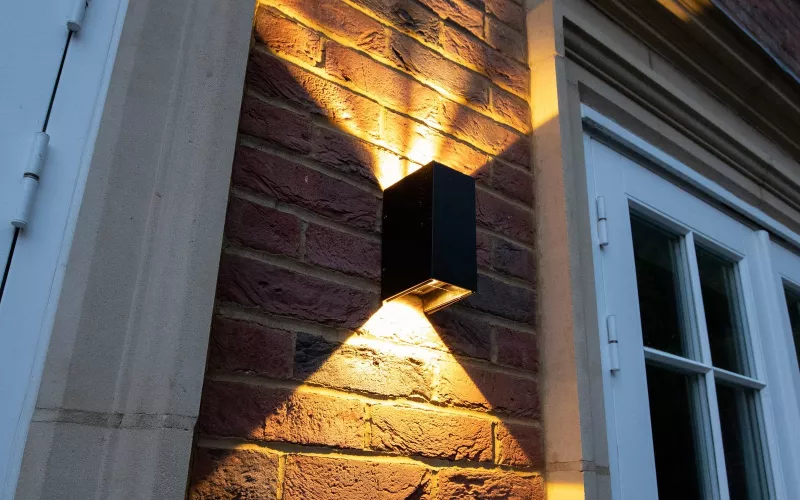
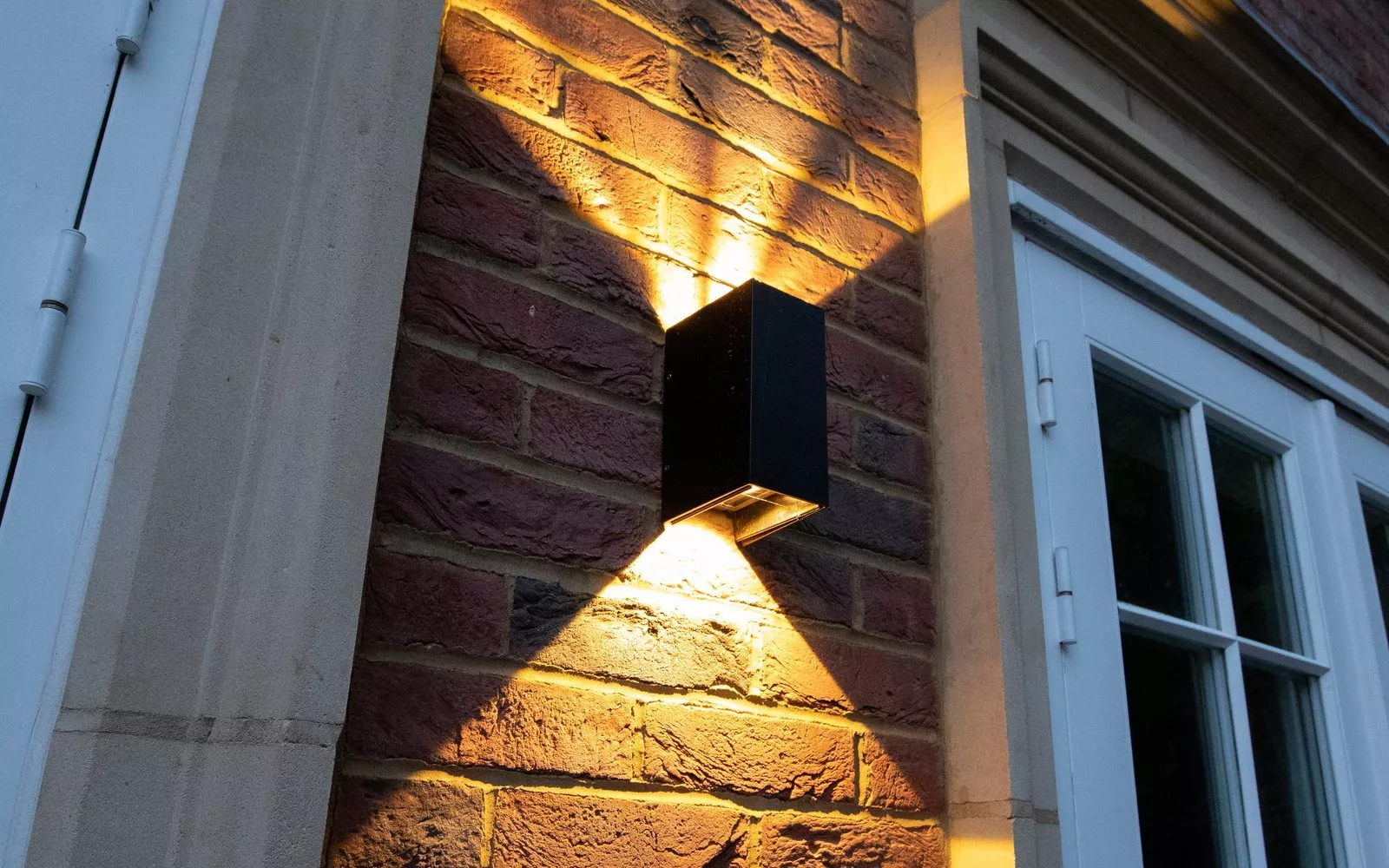
Outdoor lighting on a rural self build has a different job from a town garden: it has to get you safely up a long drive, across a yard and to the back door on a wet winter night, without turning the house into a beacon that can be seen across the valley. The way to get both is to plan the circuits, ducts and controls during groundworks, and to choose low, warm, shielded lights that go off when nobody needs them. This guide sets out how we approach it on one off houses in the country.
It is written for people building their own home in rural Cork, on sites from the hills above Bantry and Skibbereen to the farmland around Fermoy, Kanturk and Macroom, where the nearest street light may be a few kilometres away and the stars are part of the reason you chose the site.
Start with what each area of the site needs
Before choosing a single fitting, walk the site plan and decide what each area is for after dark. A rural house usually breaks down like this:
- The entrance and drive: enough light to find the gate, the intercom and the edges of the drive, not a lit runway.
- The parking area and front door: light to step out of the car, find the keys and see the step.
- The yard, garage and outbuildings: light that comes on when you are working there and goes off when you leave.
- The terrace and garden: soft light for evenings outside, on a separate circuit from the working areas.
- The boundary, trees and hedges: usually left dark.
That list then drives the circuits, the ducts and the controls. It is far easier to draw on the site plan than to fix once the drive is tarred.
Outdoor lighting that keeps the night sky dark
Dark Sky Ireland's lighting handbook gives practical limits for homes that suit a rural Cork site. As we read it on the day of writing, it treats under 1000 lumens a fitting as acceptable for domestic use and says 500 lumens is enough for most needs, asks for domestic fittings to be mounted no higher than 3 metres and angled downwards, says to turn exterior lighting off when it is not needed, and asks you to avoid lighting wildlife, including trees, water and likely nesting places.
On a farm or a hillside that matters. A single unshielded floodlight on a gable can be seen from miles away, dazzles anyone coming up the drive and lights the hedgerows that bats and birds use at night. Several small, low fittings pointed at the ground give better light where you walk and far less glare.
Ducts and circuits for a long drive and outbuildings
| Area | What to lay at groundworks | Control |
|---|---|---|
| Entrance and pillars | Ducted power and data to each pillar, shared with the gate and intercom cables | On at dusk, low level overnight or off |
| Drive | A duct along the drive edge with draw ropes, and drawpits at bends | Movement sensors near the house, a timer further out |
| Parking and front door | Circuits from the house to wall lights by the door and garage | Movement sensor, plus a button inside |
| Yard and outbuildings | Power and data in a duct to each outbuilding, with its own lighting circuit | Switch or sensor at the door, off by itself after a set time |
| Terrace and garden | Ducts under paving, cable to beds and steps | Scenes from the house |
Many rural sites already need a trench to the gate for the intercom and to the garage for power. Lay the lighting ducts in the same dig. Our video intercom and gates guide for Cork self builds covers the entrance, and our EV charger wiring guide covers the supply to a detached garage.
Security lighting that does not annoy anyone
Outdoor lighting and security work together. Cameras see better with a little steady light, and a movement sensor that lights the yard tells a visitor they have been seen. The mistake is a bright sensor floodlight that trips every time a fox crosses the yard. Use lower output fittings, aim the sensors at the paths people actually use, and link them to the alarm and cameras so they do something useful. Our security wiring guide for self builders explains the cabling for alarms, cameras and access.
Control from the house
With the outdoor circuits run back to a lighting control system, the yard can come on when you open the back door, the drive can light your way home from the car and switch off behind you, and everything outside can go off with one press at bedtime. Our lighting control page for Cork shows the systems we install, and our lighting page covers indoor and outdoor design.
Who does the work
Outdoor cabling has to cope with weather, machinery and long distances, so cable sizes and protection need to be chosen properly and the work certified by a Registered Electrical Contractor. Kieran McGuire, our founder, is an electrician, as are several of our team, and we design the outdoor lighting with the electrics in mind. Our survey and design service gives your electrician drawings and a cable schedule. Our site survey or design consultation is 440 euro plus VAT for up to 4 hours.
Questions we are often asked
How bright should outdoor lighting be on a rural house?
Less bright than most people expect. Dark Sky Ireland says 500 lumens is enough for most domestic needs; several low fittings beat one powerful floodlight.
Should the drive be lit all night?
Rarely. Light the entrance and the area near the house, and use sensors or a timer so the lights are off when nobody is coming or going.
Can the drive lighting share a trench with the gate cables?
Usually, yes, in separate ducts. Agree the spacing and cable types with your electrical contractor before the trench is filled.
Will outdoor lights disturb bats and birds?
They can. Keep light off trees, hedges and water, use warm, shielded fittings and switch them off when they are not needed.
Can outdoor lighting be added after we move in?
Some can, but crossing a finished drive or yard means cutting it. Laying spare ducts at groundworks keeps your options open.
Before first fix, send us your floor plans and we will design the Wi-Fi for free, with access points, Cat6 runs to the comms cabinet and outbuildings, and a priced kit list, no obligation. The free Wi-Fi design offer for self builders tells you what to send.
Book a consultation or call our Cork office on 021 202 8107.
- Log in to post comments