Solar panels and a home battery are far easier to add to a new house while it is still on paper: the roof is laid out around the panels, the inverter and battery get a proper home, and the cables are run before the plasterers arrive. Plan those three things at design stage and the system can go in at second fix, or years later, without lifting a single slate. Leave them out and you end up with surface trunking down a gable wall and a battery in the hot press.
This guide is for people building their own home in and around Dublin, whether that is a one off house in north county Dublin, a replacement dwelling on a suburban site or a new home on family land in Meath or Wicklow. It covers the roof, where the equipment lives, what to run at first fix and the paperwork that goes with a system that exports to the grid.
Start with the roof, not the panels
The best time to decide on solar panels is when the architect is still drawing the roof. A few choices at that stage make a big difference later:
- Orientation. A roof slope facing south, south east or south west gives the most output. An east and west split works well too, spreading generation across the morning and evening when most families are at home.
- Clutter. Roof lights, vent pipes, a chimney or a dormer all break up the space for panels. Group them on the slope that will not carry solar.
- Shading. Neighbouring houses, mature trees and your own chimney cast shadows that move with the seasons. A designer can model this before the roof is built.
- In roof or on roof. Panels can sit on rails above the slates or be set into the roof in place of them. That choice affects the roofer's work, so it has to be made early.
A self build has its own planning permission, so show the panels on the planning drawings from the start. For panels added to a house later, the planning exemptions for houses were widened in 2022: the Government's announcement of the rooftop solar exemptions explains that the old roof area limit on houses was removed, with extra care needed for protected structures and Architectural Conservation Areas.
Where the inverter and battery should live
Solar panels make direct current, and an inverter turns it into the power the house uses. A battery stores what you do not use straight away. Both are heavy boxes that need ventilation, room to work on and a short cable run to the consumer unit, and both make a little noise and heat.
On Dublin self builds we usually put them in a utility room, a plant room beside the heat pump cylinder, or an integral garage. The attic is rarely a good choice: it gets hot in summer, it is hard to reach, and a battery is not something you want to carry up a stira. Agree the spot early so the wall can take the weight and the space is not given away to shelving.
What to run at first fix
Even if the panels will not go on for a year or two, the cables can go in now while the walls and ceilings are open. This is the list we give the electrician.
| Item | Why it is there |
|---|---|
| A duct or cable route from the roof space to the inverter position | So the solar cables can come down inside the house, not down the outside wall |
| A suitable cable from the inverter position to the consumer unit | The inverter feeds the house through its own protected circuit |
| Space in the consumer unit for the solar and battery protection | So adding the system later does not mean a new board |
| A Cat6 cable from the comms cabinet to the inverter and battery | For monitoring and updates, more reliable than Wi-Fi through block walls |
| A draw cord in every duct | So the final cables can be pulled through in minutes |
| Airtight sealing where cables pass through the airtight layer | Every hole through the membrane needs a grommet or tape, not a dab of silicone |
Your electrician will size every cable and choose the protection to suit the equipment and the wiring rules. Our first fix wiring guide covers the wider cabling plan, including the comms cabinet those Cat6 runs go back to.
Registering the system with ESB Networks
A solar system that runs alongside the grid has to be registered with ESB Networks. The ESB Networks micro generator page explains that a micro generator on a single phase supply is limited to 25 amperes, about 6 kVA, and on a three phase supply to 16 amperes per phase, about 11 kVA. Systems within those limits go through the NC6 route; larger ones need a separate mini generation application.
That has a knock on effect for a new house. If you are thinking about a larger array, two electric cars and a heat pump, talk to your electrician about whether a three phase supply makes sense before the connection is applied for. Changing it after the house is built is a much bigger job.
Solar panels and the rest of the smart home
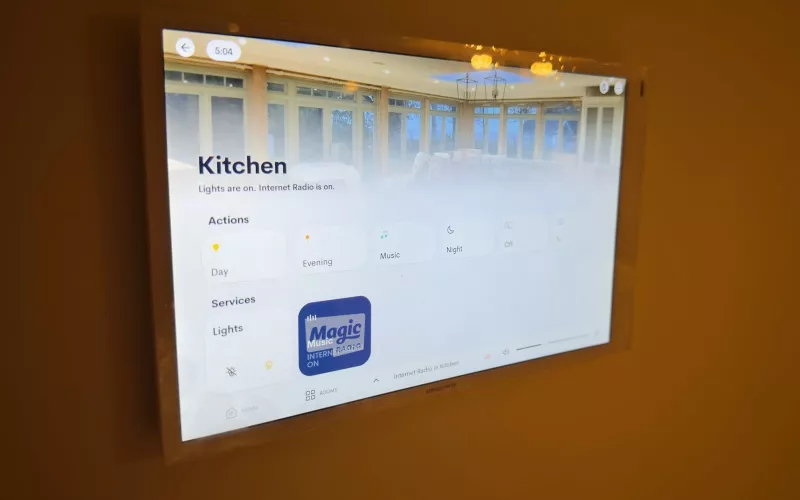
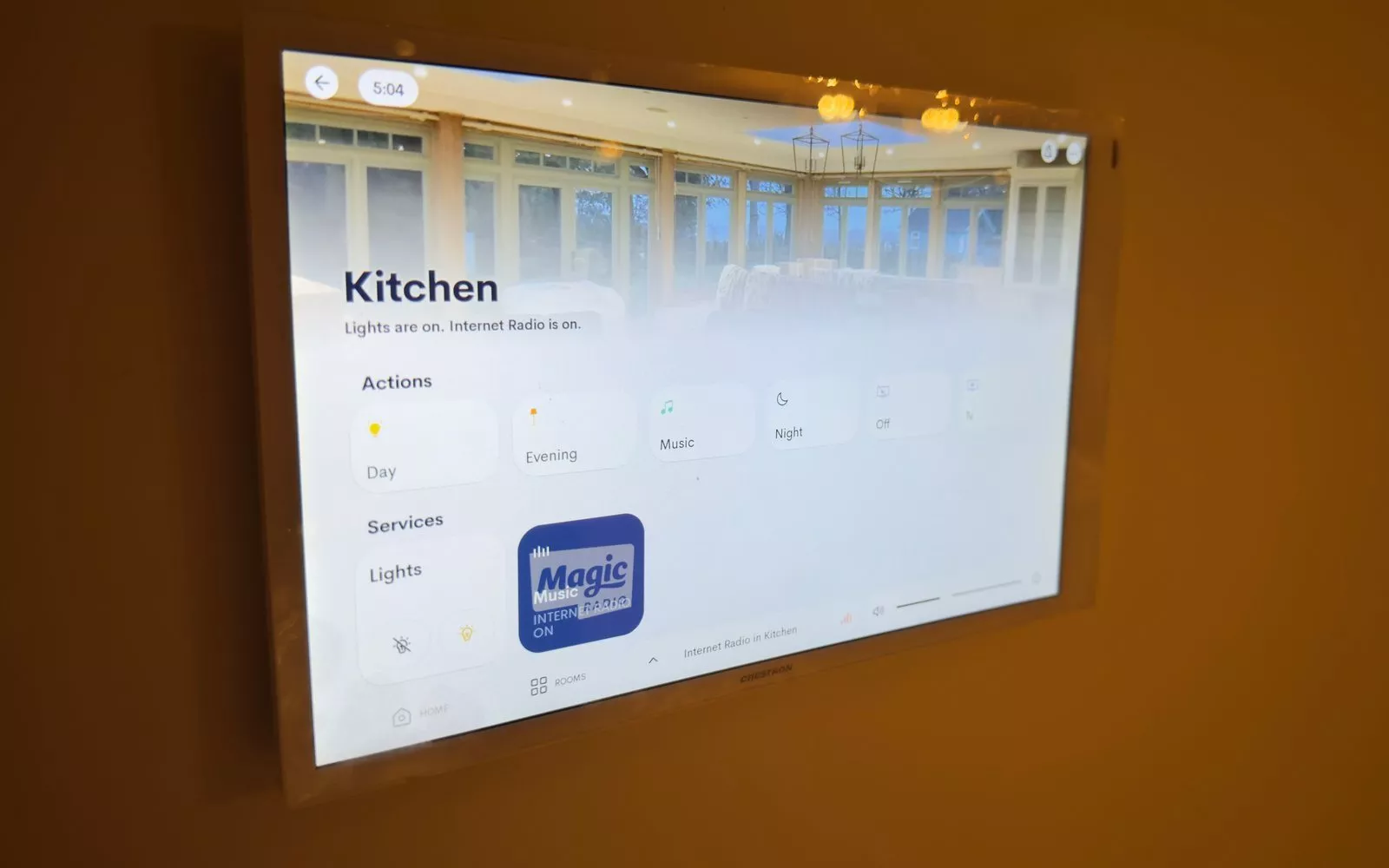
The real value of solar panels comes from using the power you make. That means the heat pump, the hot water, the EV charger and the battery working to a plan rather than each doing its own thing. A smart home can show what the roof is generating on a wall panel or a phone, run the hot water when the sun is out, and hold the car charging until the battery is full.
Our home automation page shows how those systems come together on one app, our guide to heat pump controls for a self build covers the heating side, and our EV charger wiring guide for Dublin self builds explains the charger cabling that pairs naturally with solar.
Who does the work
We design, supply and install solar panels and home batteries as part of the wider smart home, and we draw the cable routes so your electrician can run them at first fix. Our founder, Kieran McGuire, is a qualified electrician, as are several of the team, so the consumer unit, the inverter circuit and the controls are planned by people who wire them for a living. Our survey and design service puts the panels, the battery, the ducts and every other cable on one set of drawings with a cable schedule.
Questions we are often asked
Should I fit solar panels during the build or later?
If the budget allows, during the build, because the scaffolding is already up and the roofer can work around them. If not, run the ducts and cables now so the panels can follow without any damage to the finished house.
Do I need a battery?
Not always. A battery stores daytime power for the evening, which suits families who are out during the day. If someone is home most of the day, the heat pump and hot water can soak up much of the output instead. Either way, plan the space and the cable so a battery can be added later.
Will solar panels keep my lights on in a power cut?
Only if the system is designed for it. Most grid connected systems switch off during a power cut for safety, and only some battery systems can run chosen circuits on their own. If that matters to you, say so at design stage.
Can the system be monitored from my phone?
Yes. Most inverters and batteries have an app, and a wired network connection keeps it reliable. A smart home can bring that information onto the same screen as the heating and lighting.
Where should the battery go?
Somewhere cool, dry, ventilated and easy to reach, close to the consumer unit. A utility room, plant room or garage usually works far better than the attic.
Monitoring, smart charging and the controls all depend on a solid network, so it pays to plan the Wi-Fi alongside the solar. Send us your floor plans and we will mark the access points, list the Cat6 runs back to the comms cabinet and send a priced kit list, free and without obligation: our free Wi-Fi design offer for self builders explains how it works.
Book a consultation or call our Dublin office on 01 906 9326.
- Log in to post comments